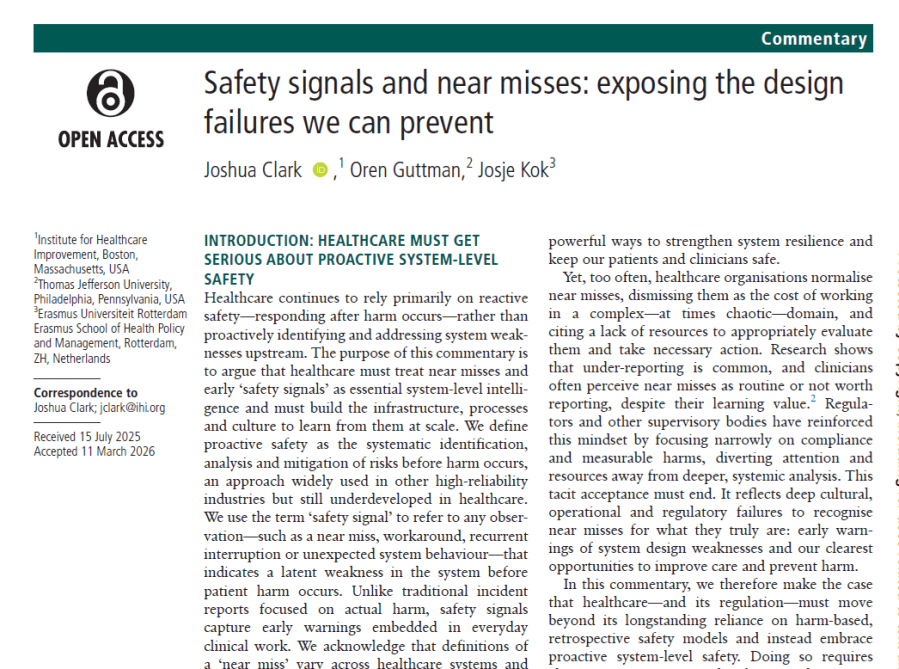
A brief discussion paper on safety signals and moving away from reactive harm-based safety. Full article provided under open access licence (see end of post). PS. Check out my YouTube: https://www.youtube.com/@safe_as_pod Extracts: · “Healthcare continues to rely primarily on reactive safety—responding after harm occurs—rather than proactively identifying and addressing system weaknesses upstream” · “‘safety signal’ … refer[s]… Continue reading Safety signals and near misses: exposing the design failures we can prevent
Dr Drew Rae: Does the limited New View / HOP / Safety-II empirical evidence challenge its credibility?
Does the limited empirical interventional evidence underpinning New View / HOP / Safety-II approaches challenge their credibility? Here Dr Drew Rae unpacks his perspective on how this is often framed as a confused question. We also discuss the limited evidence behind Risk Matrices, which prompts the foundational question: what are they actually used for?
Does sleep affect strength gains?
Does sleep affect strength gains? Are any particular types of strength more or less affected by sleep loss? We unpack a systematic review to find out.
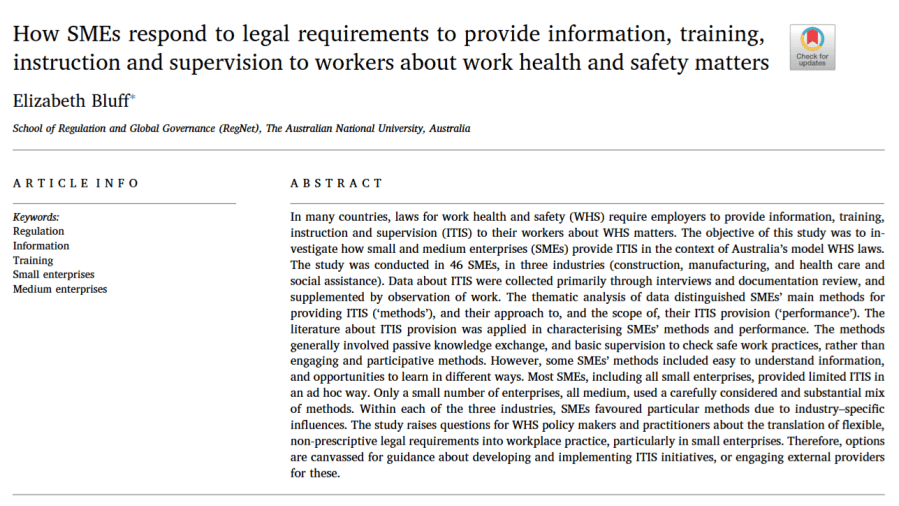
How SMEs respond to legal requirements to provide information, training, instruction and supervision to workers about work health and safety matters
This article explores how small to medium enterprises (SMEs) provide information, training, instruction and supervision (ITIS) to their workers regarding WHS matters. Note that I’ve skipped HEAPS in this paper, so consider it a superficial overview. 46 SMEs were included. Background: · They highlight the general requirements for employers to provide ITIS to their workers,… Continue reading How SMEs respond to legal requirements to provide information, training, instruction and supervision to workers about work health and safety matters
Leader walkarounds – just for show or genuine improvement activities?
How effective are leadership walkarounds for improving elements of safety? Can they backfire, and be more exercises of peacocking? E.g. Being seen, but not really caring. This ep unpacks these questions via several studies.
Does higher diversity = higher firm performance?
How does diversity affect firm performance? And if so, which types of diversity impact performance the most? https://youtube.com/shorts/TdAoD6WEiY0
Circus of Safety video discussion about safety science, audits and more
I was recently on the Circus of Safety discussing a few topics – why not check it out? Link: https://open.spotify.com/episode/0Hb1VfsDdDRkiDvVzQoVaJ?si=lHkVqdFOR_G8NaLUiZH4uA
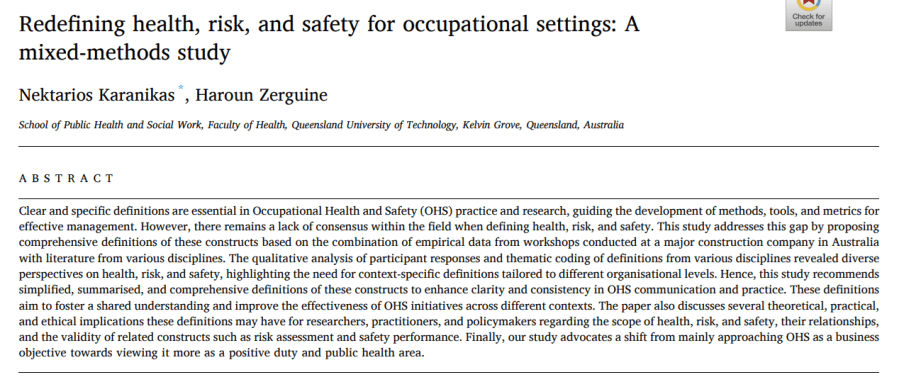
Redefining health, risk, and safety for occupational settings: A mixed-methods study
What are your definitions of safety, health and risk? In this study Karanikas Haroun Zerguine collected answers from 55 participants in an Australian construction company. Shared under an Open Access licence. PS. Check out my YouTube channel – link in comments. First they identify a dozen or more definitions for each based on existing work: · For… Continue reading Redefining health, risk, and safety for occupational settings: A mixed-methods study
Is ‘safety’ the presence of capacities?
What is your definition of ‘safety’? For some, safety is defined as the presence of capacities. Here, Drew Rae discusses his thoughts, and scientific logics, of this definition. #safety #hse #risk #science #safetyscience #safetyii

