While on the topic of risk (see the post from yesterday – link below), the first two images have a group of definitions. Images 2/3 below highlight one perspective from Prof Terje Aven. And, without excluding other definitions, here they argue that risk can include: “identified events and consequences, assigned probabilities, uncertainty intervals, strength of… Continue reading Definitions of risk and risk as a product of the strength of knowledge
Risk as a social construction and notes on quantification – from Prof Terje Aven
Really interesting pod with Prof Terje Aven discussing risk science. Some extracts: · “there is often a difference between experts’ risk judgments and people’s risk perception. But this difference can be explained also by the fact that people’s judgments could incorporate aspects of uncertainty not covered by the experts’ risk perspectives” · “Experts often restrict their assessment… Continue reading Risk as a social construction and notes on quantification – from Prof Terje Aven
Safe As 61: Another deep dive on human performance in barrier systems
How should we plan, design and integrate human performance into our risk control and barrier systems? This episode draws on four sources: Spotify: https://open.spotify.com/episode/4ML522ibTw8Uso8NzSkCP6?si=KLOq-dafQbqj6kggn1l1Nw Shout me a coffee (one-off or monthly recurring)

95% of accidents due to human error is implausible – more likely a design problem: Don Norman
Apt reflections from Don Norman about error. While he could believe that 1 to 5% of accidents may primarily result from human error, a claim of 75-95% is implausible. If the percentage is so high, then “clearly other factors must be involved. When something happens this frequently, there must be another underlying factor”. Norman remarks… Continue reading 95% of accidents due to human error is implausible – more likely a design problem: Don Norman
Failures of critical controls, risk normalisation, and weak governance: Callide investigation report findings
Extracts from the Callide investigation, involving a significant boiler pressure event. Thanks to @wade n for flagging this report. Not going into the event details – so check out the report. Extracts: · “The incident reflects a systemic failure to manage both technical and organisational risks, highlighting the critical need for integrated system reviews, clearly defined… Continue reading Failures of critical controls, risk normalisation, and weak governance: Callide investigation report findings
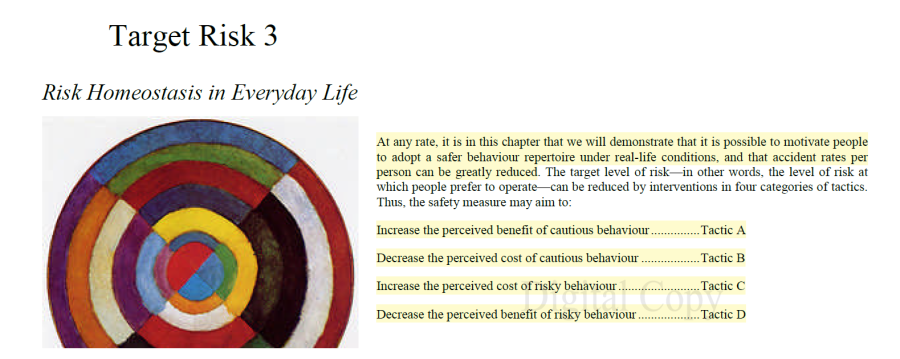
Safe As E60: Psychology of risk and motivating less risky decisions
How can we motivate–or even design for–more desirable, safer decisions on health, safety and life, and disincentivise riskier decisions? This episodes explores Gerald Wilde’s four tactics of motivating safer behaviour, from his book ‘Target Risk 3’. Spotify: https://open.spotify.com/episode/40zBw6nzY04Fzvp77zWcnB?si=zDd6ZxY4SqyhRlWJ2oyzZw Shout me a coffee (one-off or monthly recurring)
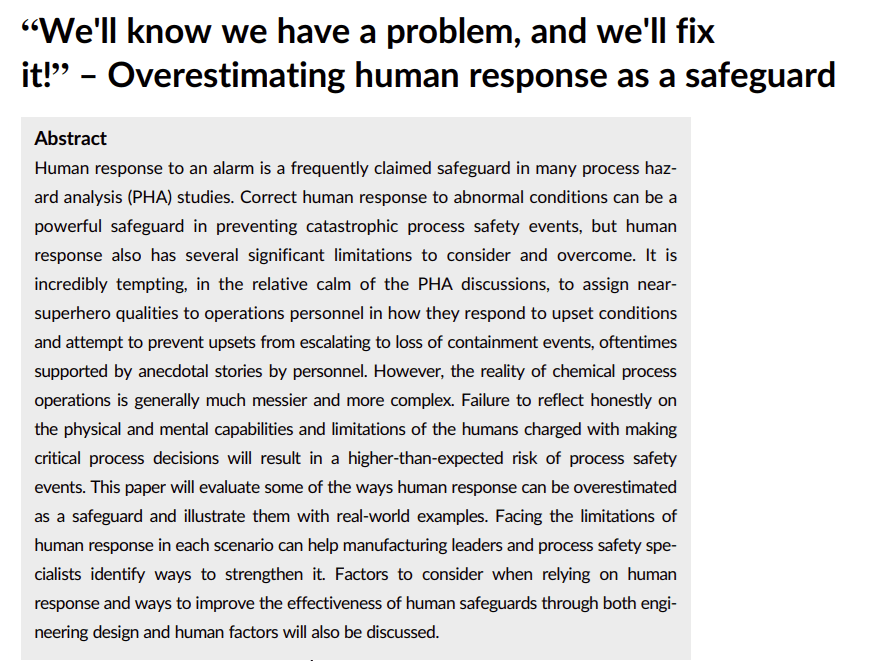
“We’ll know we have a problem, and we’ll fix it!” – Overestimating human response as a safeguard
This article discusses some of the mistakes or assumptions about human performance in complex environments. Extracts: · “Humans are not great at assessing risk. Engineers tend to be an optimistic lot, ready to solve any problem by relying on their technical skills and experience” · And while it’s “incredibly tempting, in the relative calm of process hazard… Continue reading “We’ll know we have a problem, and we’ll fix it!” – Overestimating human response as a safeguard
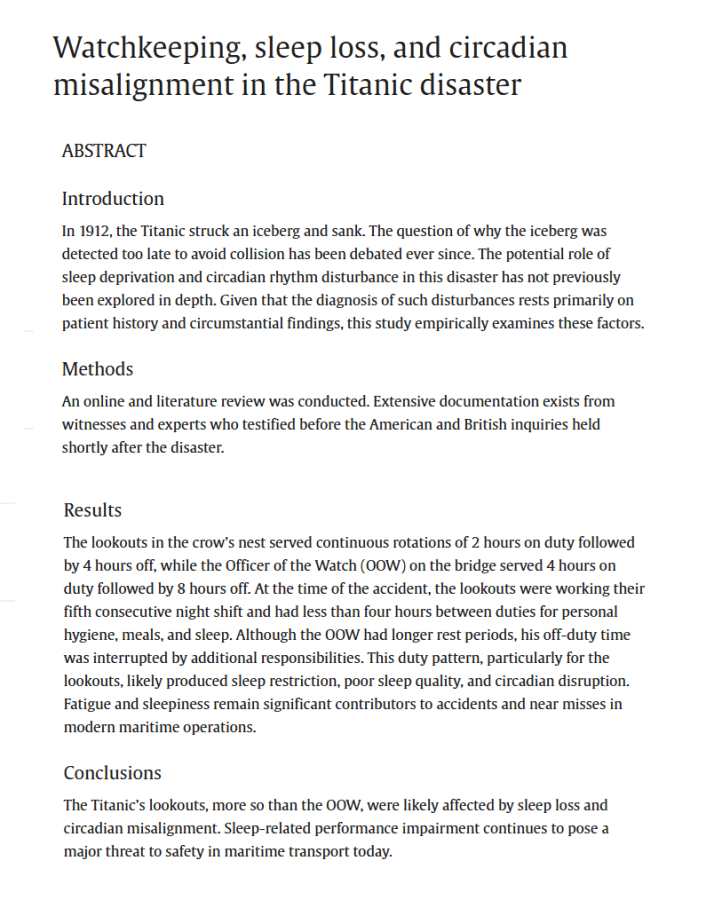
Watchkeeping, sleep loss, and circadian misalignment in the Titanic disaster
Was fatigue a contributor to the Titanic disaster? Quite possibly. This study draws on several sources to try and piece together the probable effects of sleep loss (** sources not including Celine Dion or paintings of French girls). Don’t read into this too much, but just a fun little study. Extracts: · “The Titanic’s lookouts, more… Continue reading Watchkeeping, sleep loss, and circadian misalignment in the Titanic disaster
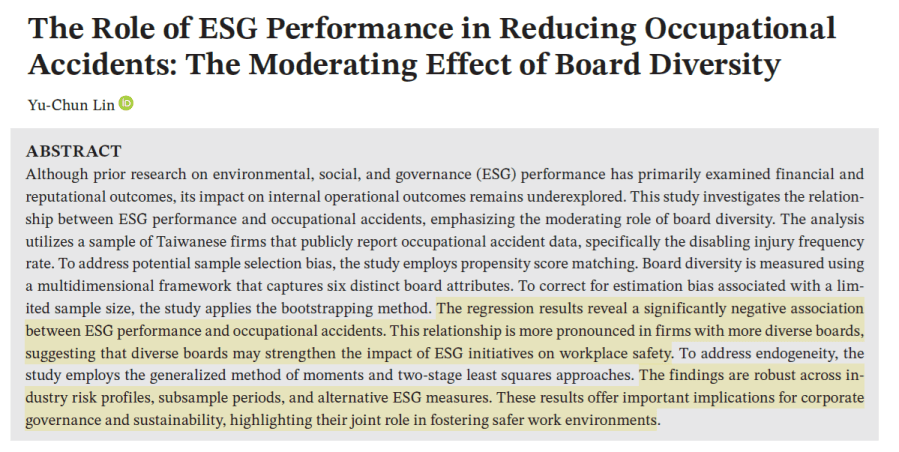
The Role of ESG Performance in Reducing Occupational Accidents: The Moderating Effect of Board Diversity
The Role of ESG Performance in Reducing Occupational Accidents: The Moderating Effect of Board Diversity This explored the links between ESG performance and occupational accidents, and the effect of board diversity. 211 matched pairs of Taiwanese companies were included (those reporting vs those not reporting accident data), with a total sample of 422 firms. Extracts:… Continue reading The Role of ESG Performance in Reducing Occupational Accidents: The Moderating Effect of Board Diversity
E59: Predictors of the use of higher-order risk controls
What factors predict the use of higher-order risk controls? This study unpacks the predictors via use of HECA (High-Energy Control Assessment). Source: Oguz Erkal, E. D., Hallowell, M. R., Ghriss, A., & Bhandari, S. (2024). Predicting serious injury and fatality exposure using machine learning in construction projects. Journal of construction engineering and management, 150(3), 04023169. Spotify: https://open.spotify.com/episode/4Igc8IOGHSkKYShEaseDi4?si=6LcuSnjjSWiJEpS2Xzg19A… Continue reading E59: Predictors of the use of higher-order risk controls

