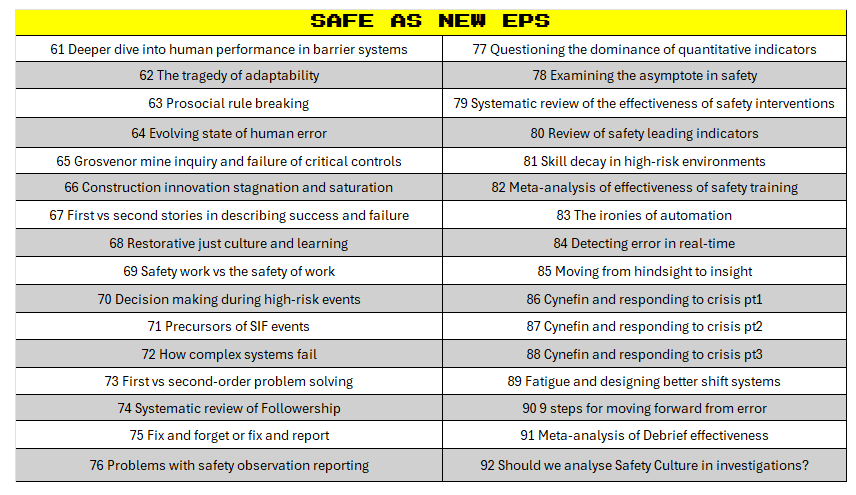
Next Safe As ep line-up all recorded and ready to rock. Also, the video is a janky practice run, and not-so-subtle clue, to the new ‘neighbourhood’ that Safe As is moving into. (…Been a while since I had to edit videos. For those interested – C64 recorded on an emulator because I couldn’t be bothered… Continue reading Safe As – upcoming ep schedule and new format teaser

Knowledge in the head vs the world: And how to design for cognition. Norman – Design of Everyday Things
Here Don Norman discusses knowledge in the head vs knowledge in the world – from The Design of Everyday Things. Extracts:· “Every day we are confronted by numerous objects, devices, and services, each of which requires us to behave or act in some particular manner. Overall, we manage quite well” · “Our knowledge is often quite incomplete,… Continue reading Knowledge in the head vs the world: And how to design for cognition. Norman – Design of Everyday Things

Human-centred design and the arbitrariness and fussiness of machine design
More wisdom from Don Norman on human-centred design and his error credo (which in later work he extends to humanity-centred design): · “Pinning the blame on the person may be a comfortable way to proceed, but why was the system ever designed so that a single act by a single person could cause calamity?” · “Eliminate the… Continue reading Human-centred design and the arbitrariness and fussiness of machine design
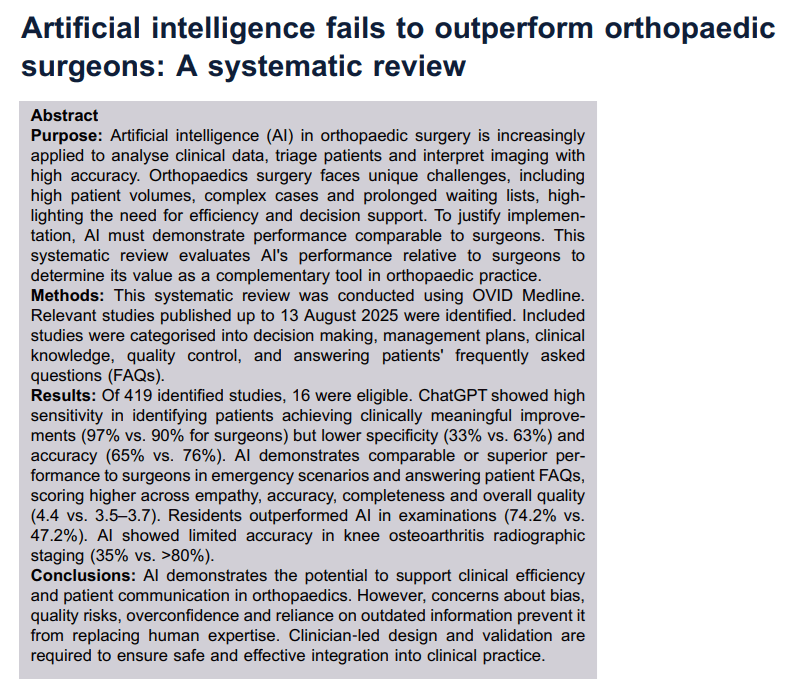
Artificial intelligence fails to outperform orthopaedic surgeons: A systematic review
This compared AI performance to orthopaedic surgeons within clinical practice and training. It’s a systematic review with 16 studies being included. As far as I can, most (all?) studies used ChatGPT 3.5 and 4 (so note the older models). And, yes, pitting surgeons against AI isn’t the ideal use-case (e.g. compared to co-agents/HAIT) Extracts: · “ChatGPT… Continue reading Artificial intelligence fails to outperform orthopaedic surgeons: A systematic review
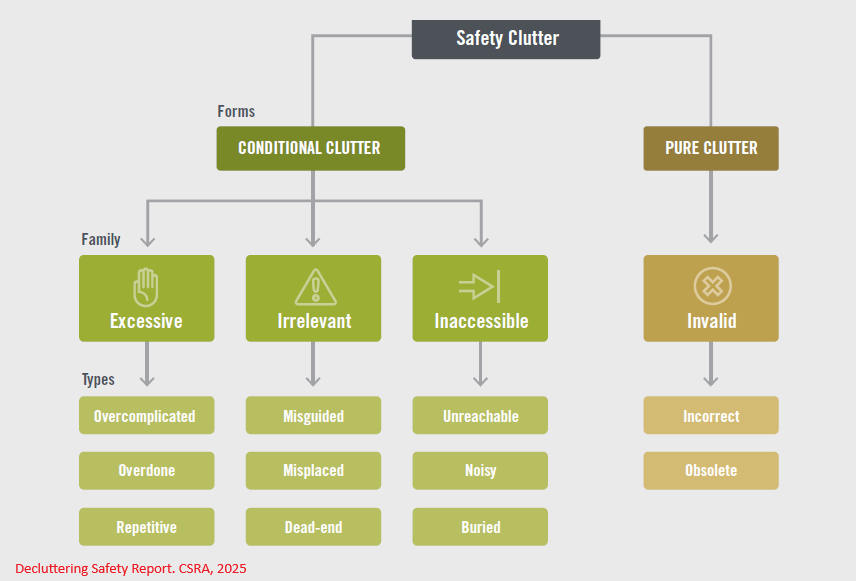
Safe As 58: Diving into a process of Safety Decluttering
Today we’re diving into the CSRA’s Safety Clutter Classification model and process of decluttering. Source is: Decluttering Safety report, from the Construction Safety Research Alliance, 2025. Spotify: https://open.spotify.com/episode/3bFaTRQOW95ziOnEpDSr3d?si=SBuNtVYdQ_mR975aikzkDg Shout me a coffee (one-off or monthly recurring)
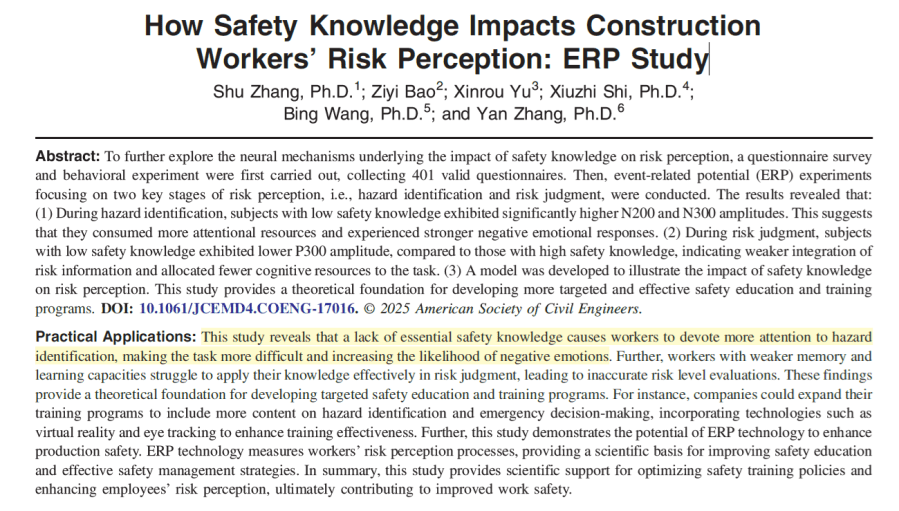
How Safety Knowledge Impacts Construction Workers’ Risk Perception: ERP Study
This used a multimethod approach via surveys, behavioural experiments and Event-Related Potential (ERP) experiments, exploring hazard ID and risk perception with subjects with high or low safety knowledge. They also employed EEG. Note. Their use of overestimate or “inaccurate risk level evaluations” is likely to trigger some Extracts: · “During hazard identification, subjects with low safety… Continue reading How Safety Knowledge Impacts Construction Workers’ Risk Perception: ERP Study
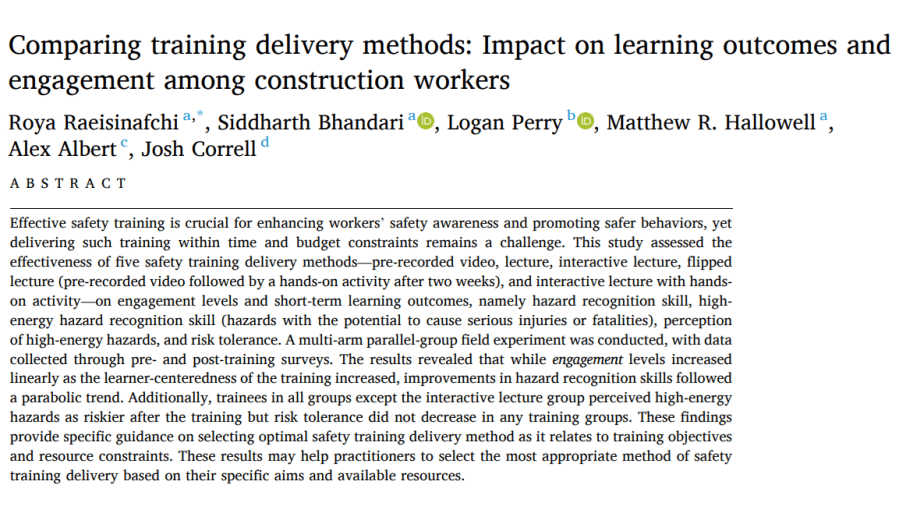
Comparing training delivery methods: Impact on learning outcomes and engagement among construction workers
This study compared the effectiveness of different construction safety training protocols: pre-recorded video, lecture, interactive lecture, flipped lecture (pre-recorded video followed by a hands-on activity after two weeks), and interactive lecture with hands-on activity. Engagement levels and short-term learning outcomes, namely hazard recognition skill, high-energy hazard recognition skill (with a focus on SIFs), perception of… Continue reading Comparing training delivery methods: Impact on learning outcomes and engagement among construction workers
Safe As 57: Safety clutter – paper tigers and non-value adding work
How does safety clutter–the accumulation of safety artefacts that don’t contribute to operational safety–distract attention and resources from more pressing matters? Can clutter, with best intentions, even contribute to elevated risk? Today’s paper is: Rae, A. J., Provan, D. J., Weber, D. E., & Dekker, S. W. (2018). Safety clutter: the accumulation and persistence of… Continue reading Safe As 57: Safety clutter – paper tigers and non-value adding work

The literacy paradox: How AI literacy amplifies biases in evaluating AI-generated news articles
This study explored how AI literacy can amplify biases when evaluating AI-generated news based on their content type (data-driven vs emotional). Extracts: · “Higher AI literacy can intensify opposing biases. When individuals better understand the use of AI in creating data-driven articles, they exhibit automation bias… Conversely, when AI generates opinion- or emotion-based articles, high literacy… Continue reading The literacy paradox: How AI literacy amplifies biases in evaluating AI-generated news articles

E56: Walk-Through Talk-Through – a technique for learning about daily work and error traps (quickisode)
This quickisode jumps into the Walk-Through Talk-Through technique, used to collaborate with workers and learn about the challenges and error traps with tasks, and how to improve. Source: Human Performance Oil & Gas. HPOG.org Spotify: https://open.spotify.com/episode/50Iq5OMz1CSgJKAuyAGdCu?si=9Rmdo9ObQSOCfdi2szyFBQ Shout me a coffee (one-off or monthly recurring)

