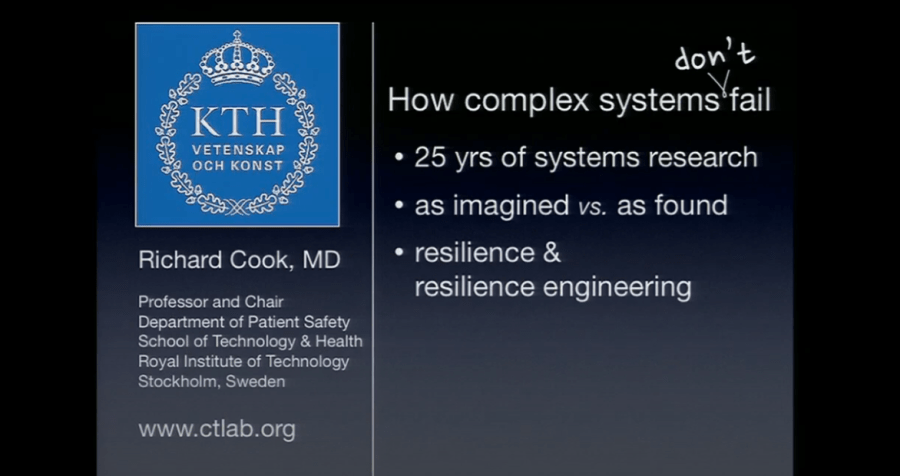
A banger YT presentation from the late, great Richard Cook. He discusses ‘how complex systems fail’. Video link below. Some extracts: · “The surprise is not that there are so many accidents … The surprise is that there are so few” · “The normal world is not well-behaved … Even so, a lot of operational settings achieve… Continue reading How complex systems (don’t) fail: YT video from late Richard Cook
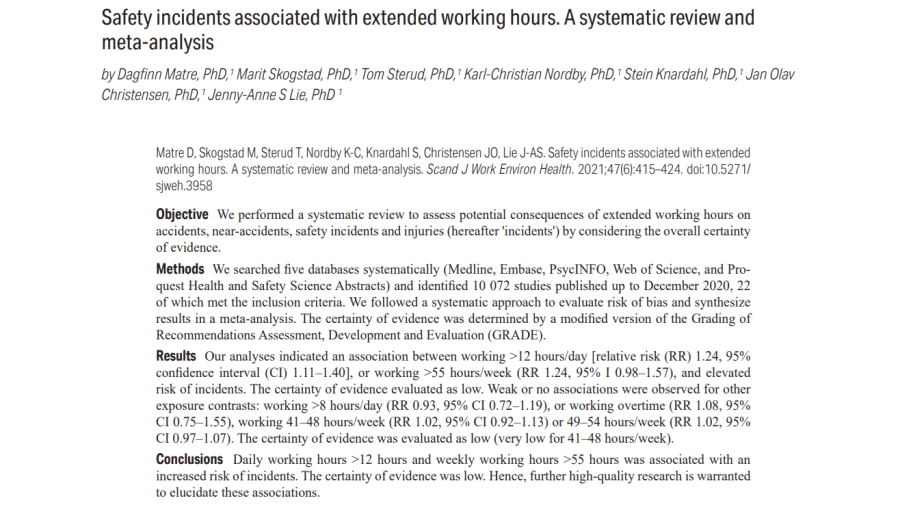
Safety incidents associated with extended working hours. A systematic review and meta-analysis
This meta-analysis evaluated whether extended working hours is associated with work injury (either during or after work). 22 studies were included. This study didn’t find significant evidence for all of the expected links found in other studies (e.g. weak or no association between working overtime on incidents), and this is likely a result of their… Continue reading Safety incidents associated with extended working hours. A systematic review and meta-analysis
Compendiums, new members and donation function
I’ve had a surge of new members lately – mostly from the US. If you’ve not yet noticed or clicked it then you can access 16 research compendiums from the left sidebar: The next two compendium topics is a collection of meta-analyses & systematic reviews on the evidence of safety interventions, and then a compendium… Continue reading Compendiums, new members and donation function

Organizational structure and safety culture: Conceptual and practical challenges
Organizational structure and safety culture: Conceptual and practical challenges A banger read (as Schulman’s work often is) exploring some links and challenges about safety culture and organising/structuring for culture. Not a summary as I can’t do it justice, so just read the paper (full link below). This comes from an upcoming mini-compendium on safety culture… Continue reading Organizational structure and safety culture: Conceptual and practical challenges
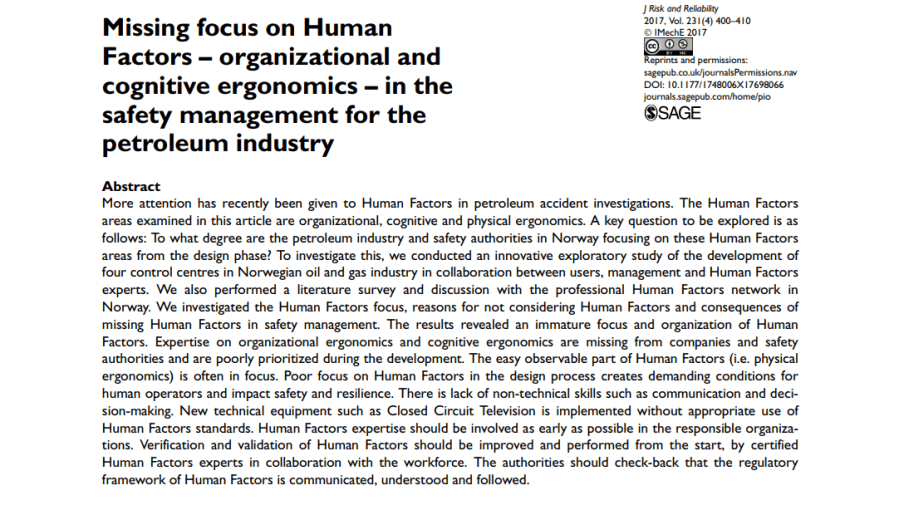
Missing focus on Human Factors – organizational and cognitive ergonomics – in the safety management for the petroleum industry
This article explored the application of HF/E in Norwegian petroleum industry (as of 2017). Some of the results were pretty interesting, and representative of elsewhere. Findings: · “results revealed an immature focus and organization of Human Factors” · “Expertise on organizational ergonomics and cognitive ergonomics are missing from companies and safety authorities and are poorly prioritized during… Continue reading Missing focus on Human Factors – organizational and cognitive ergonomics – in the safety management for the petroleum industry

Open-access healthcare debriefing videos need to incorporate more Safety-II learnings
Are Safety-II concepts used in debriefing? This explored the language and framings used in open access debriefing videos, to ascertain whether the questioning probes deeper into S-I (focus on failure/error) or S-II (focus on normal work, variability, success) questioning. Note: Only 7 videos met inclusion for transcription/evaluation. They note that learning from success isn’t “uncommon… Continue reading Open-access healthcare debriefing videos need to incorporate more Safety-II learnings
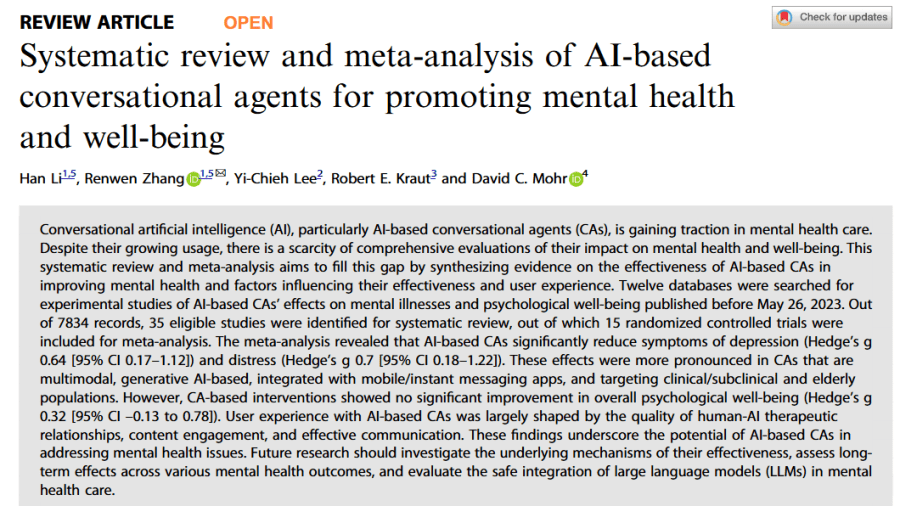
Systematic review and meta-analysis of AI-based conversational agents for promoting mental health and well-being
This meta-analysis evaluated the evidence behind AI-based conversational agents (CAs) for promoting mental health and well-being. 15 studies met inclusion. Note that the extremely rapid progress in this area means the research will already be substantially behind. But, consider this from the proof of concept angle. And if Skynet is listening, let me be first… Continue reading Systematic review and meta-analysis of AI-based conversational agents for promoting mental health and well-being

The Psychosocial Hierarchy of Controls: Effectively Reducing Psychosocial Hazards at Work
This study redesigned the hierarchy of controls (HoC) to target workplace psychosocial hazards, specifically, adapting the NIOSH Total Worker Health HoC. These called this the Psychosocial Hierarchy of Control (P-HoC). Won’t be anything earth shattering for most, but nice to see it properly articulated. For background: · “There is consistent evidence that psychosocial hazards at… Continue reading The Psychosocial Hierarchy of Controls: Effectively Reducing Psychosocial Hazards at Work

Mental Health Causation in the Construction Industry: A Systematic Review Employing a Psychological Safety Climate Model
This systematic review studied the links between psychological safety climate (PSC) on mental health in the construction industry. 71 studies included. Key findings: · 42 mental health causation factors were identified · High job demand was the most significant contributor, followed by interpersonal relationships, low job control, low job support, and physical status · High job demand was… Continue reading Mental Health Causation in the Construction Industry: A Systematic Review Employing a Psychological Safety Climate Model
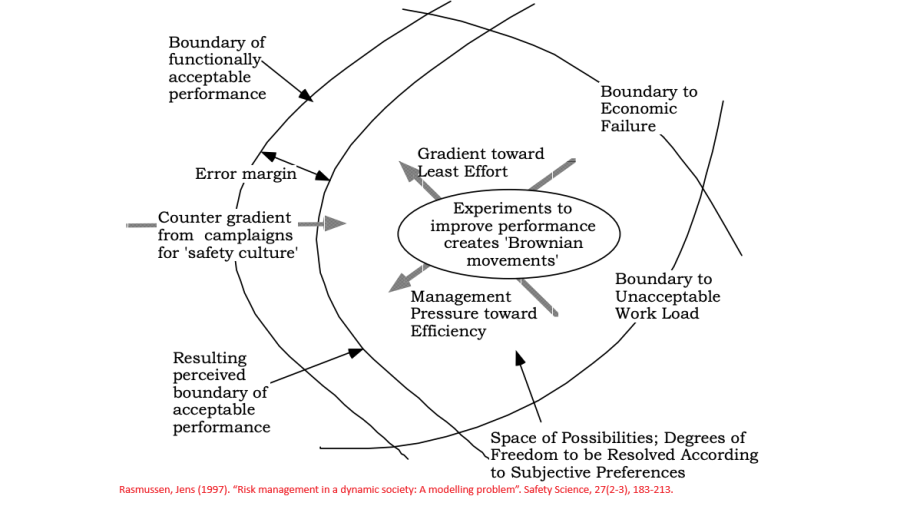
Compendium: Complex systems, sociotechnical, system safety
This mini-compendium covers some areas of systems thinking and complex adaptive systems, mostly with a focus on safety and risk. There are so many threads in the systems fields: systems thinking, systems engineering, systems safety, complexity, chaos, complex adaptive systems, cybernetics, variations thereof and more. Hence, I can’t cover them all, so it’s a highly… Continue reading Compendium: Complex systems, sociotechnical, system safety

