
This study investigated how humble leadership fosters team outcomes, like team adaptation. Psychological safety climate and reflexivity were explored as mediating pathways. Surveys at two time points across 56 work teams (233 members) were collected. Background: · The word humility derives from the Latin humilitas, meaning from the earth/grounded · Humility has a long history and is… Continue reading The relationship between humble leadership and team adaptation: two paths model perspective
Tag: leadership
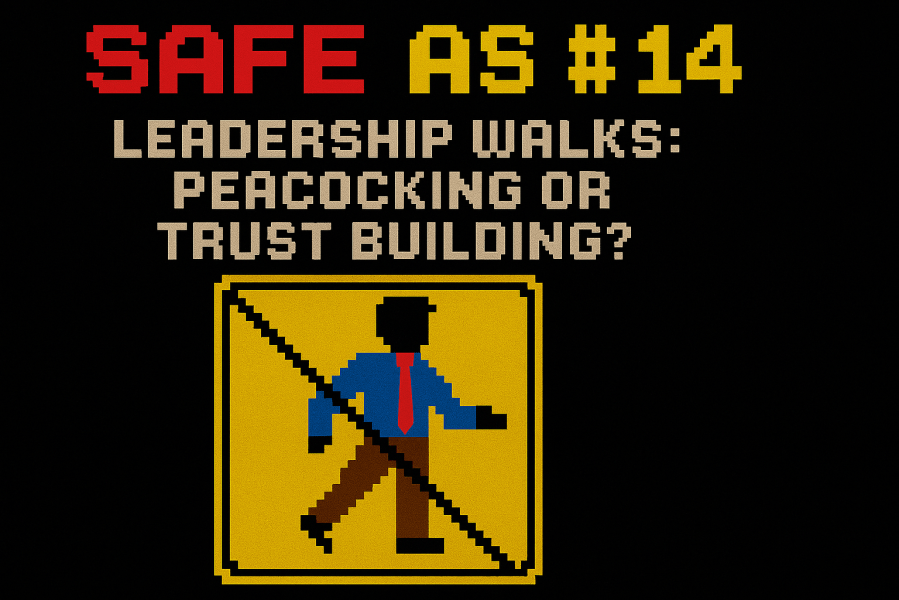
Safe As podcast ep 14: Leadership walkarounds – ritualistic peacocking or solid trust building?
We’ve all heard about or been part of them – leader walkarounds. Are walkarounds backed by solid evidence – do they break down silos, enhance trust, and foster psychological safety, or more symbolic peacocking activities to be *seen* to care, rather than *actually* caring? Today’s article is Foster, M., & Mazur, L. (2023). Impact of… Continue reading Safe As podcast ep 14: Leadership walkarounds – ritualistic peacocking or solid trust building?
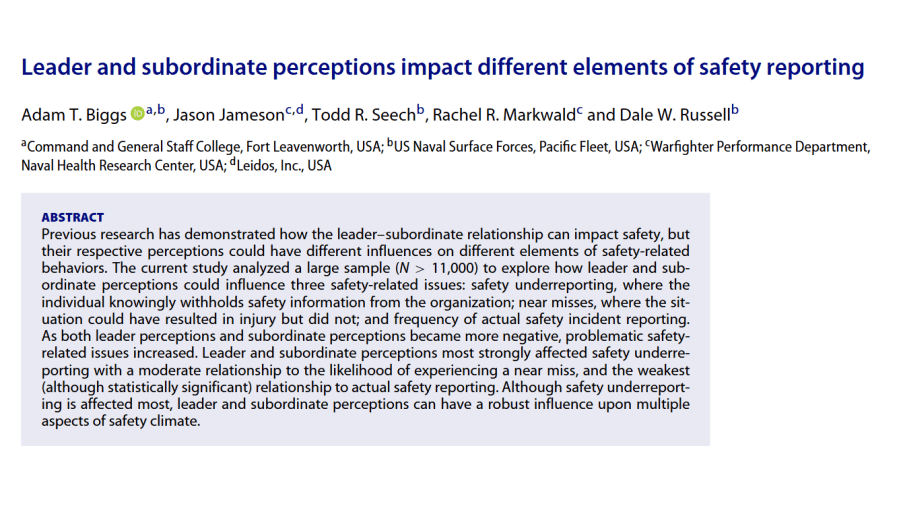
Leader and subordinate perceptions impact different elements of safety reporting
This study investigated the leader-subordinate relationships and how it impacts safety underreporting, near misses, and actual safety incident reporting. >11k US Navy personnel were surveyed. Background: · “maintaining a positive safety climate can be complicated by the sheer number of influences involved, such as the wider organizational climate [6] or individual factors such as sleep… Continue reading Leader and subordinate perceptions impact different elements of safety reporting
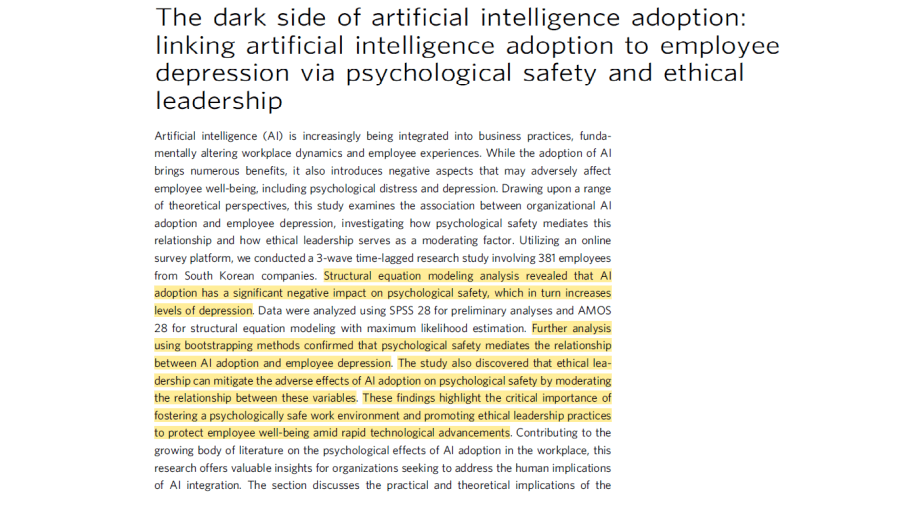
The dark side of artificial intelligence adoption: linking artificial intelligence adoption to employee depression via psychological safety and ethical leadership
Can adopting workplace AI technologies adversely affect employee psychological distress and depression? Yes according to this study. Online surveys of 381 employees in S.Korean companies was used. Background: · “In AI-centric environments .. AI reshapes jobs and workflows, affecting workers’ psychological health, satisfaction, commitment, and performance, as well as broader organizational outcomes” · “While AI adoption affects… Continue reading The dark side of artificial intelligence adoption: linking artificial intelligence adoption to employee depression via psychological safety and ethical leadership

CEO & board not receiving clear information on effectiveness of critical controls – Maritime NZ case
Fourth post from the Maritime NZ case where the CEO (Gibson) was charged under a failure to exercise due diligence for a work fatality (Ports of Auckland Limited (POAL). Some extracts on critical risks and controls: (** Post 2 in comments) · “As Mr Kahler succinctly put it, “gravity is generally [the] most common killer of… Continue reading CEO & board not receiving clear information on effectiveness of critical controls – Maritime NZ case

From the Boardroom to the Jobsite: Female Board Representation and Workplace Safety
This study explored the effects that female board representation (FBR) on workplace safety. Note: ‘safety’ in this study is based on reported incidents. So consider that caveat. Data included 266 firms and 1,442 firm-year observations. Background: · “having female directors on corporate boards can influence a firm’s financial performance (Post and Byron 2015), social responsibility… Continue reading From the Boardroom to the Jobsite: Female Board Representation and Workplace Safety

Leadership, followers’ mental health and job performance in organizations: A comprehensive meta-analysis from an occupational health perspective
This meta-analysis studied the links between leadership and mental health and job performance indices of followers. [NB. Look out for next week’s compendium on leadership research] No real surprises with the findings. They note that leadership, of course, “is not a neutral element”, and may influence both positive and negative effects. Extracts: · “results reveal that… Continue reading Leadership, followers’ mental health and job performance in organizations: A comprehensive meta-analysis from an occupational health perspective
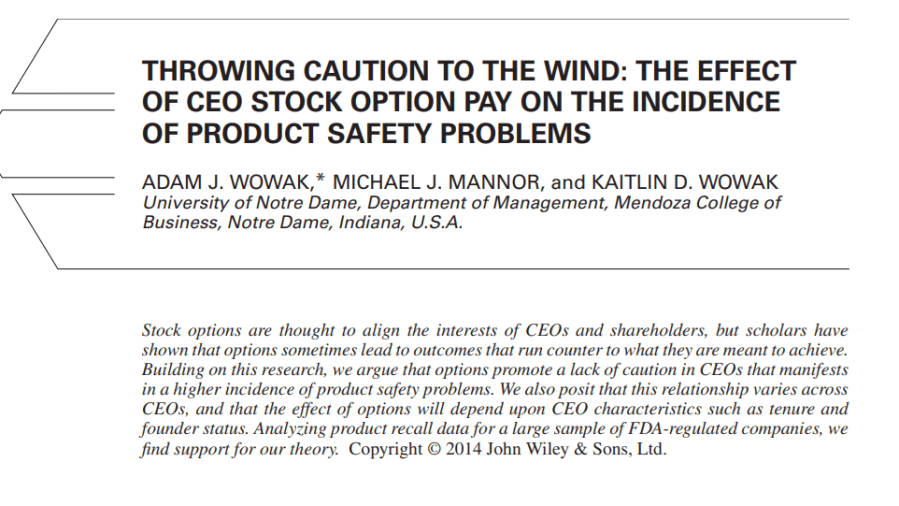
Throwing caution to the wind: the effect of CEO stock option pay on the incidence of product safety problems
Do CEO stock options negatively affect product safety? Possibly, according to this study. They compared CEO stock options and product safety recalls on FDA regulated companies between 2004 – 11. PS. Keep an eye out for next week’s compendium on leadership research 👍 Background: · “A central premise of agency theory is that organizations can align… Continue reading Throwing caution to the wind: the effect of CEO stock option pay on the incidence of product safety problems

Nothing to fear: strong corporate culture and workplace safety
Are ‘strong’ corporate cultures a blessing or curse for workplace safety? This study explored the question. Interestingly, they used machine learning to extract ‘cultural’ cues from CEO earnings calls. Cultural cues were scored based on the frequency of words relating to innovation, integrity, quality, respect and teamwork. They then compare company performance to the number… Continue reading Nothing to fear: strong corporate culture and workplace safety

Leading safely: The impact of generalist CEOs on workplace safety
Does the skillset of the CEO influence workplace safety? Yes according to this study. In the lead-up to next week’s leadership research compendium, this study evaluated whether generalist or specialist CEOs have a greater impact on OSHA reported safety incidents (note the limitation). Generalists are CEOs with wider industry experience (worked in more industries) whereas… Continue reading Leading safely: The impact of generalist CEOs on workplace safety
 SafetyInsights.org