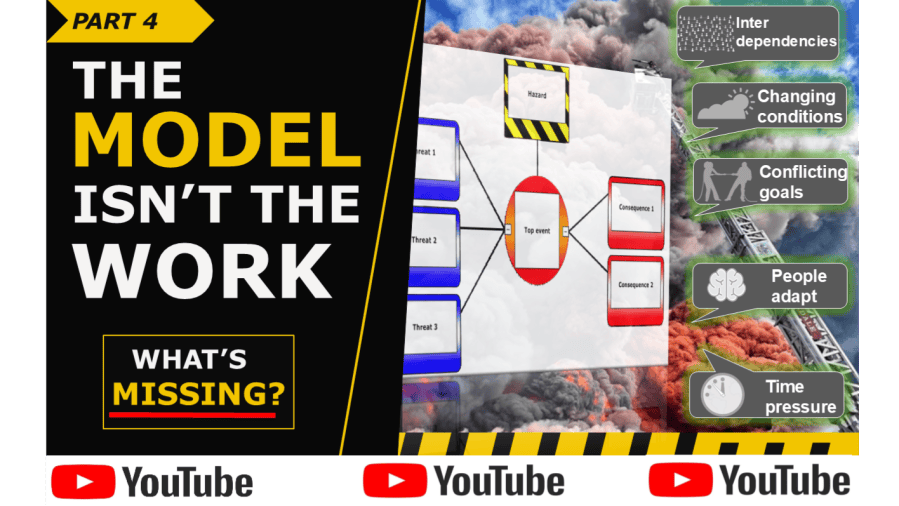
Can adding more controls / barriers create new failure modes? …maybe. Adding new controls doesn’t leave the surrounding work unchanged. A control may prevent one event while obstructing another function, shifting risk elsewhere, or introducing byproducts that weren’t initially anticipated. E.g. a barricade protecting plant / pedestrian collisions may also obstruct visibility, or an alarm… Continue reading Can adding more controls / barriers create new failure modes?
Tag: critical control
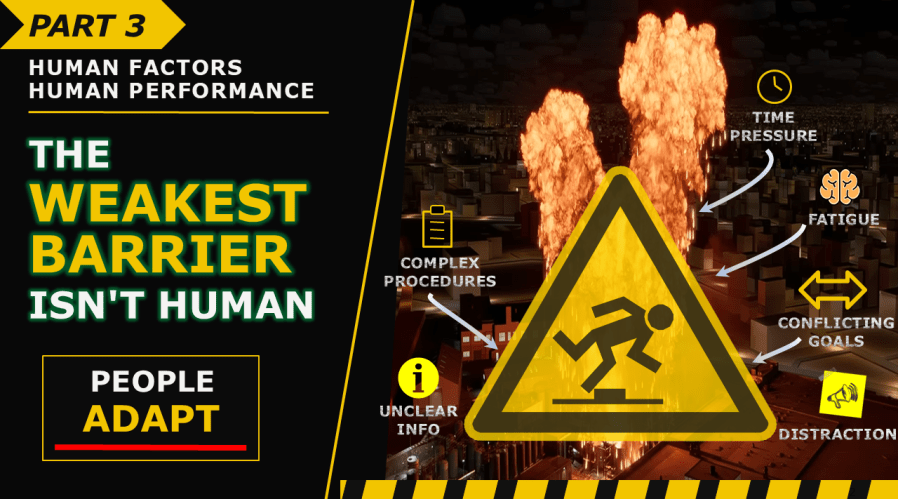
Part 3 – Critical Control / Barriers: Human Factors & realistic human performance expectations
Ogres have layers, and so do barriers. Human performance isn’t separate from the barrier system, rather in socio-technical environments, human action is often a key mechanism through which a barrier functions. In part 3 of the Critical Control / Barrier series, we unpack how to properly specify human performance as a credible control without straying… Continue reading Part 3 – Critical Control / Barriers: Human Factors & realistic human performance expectations
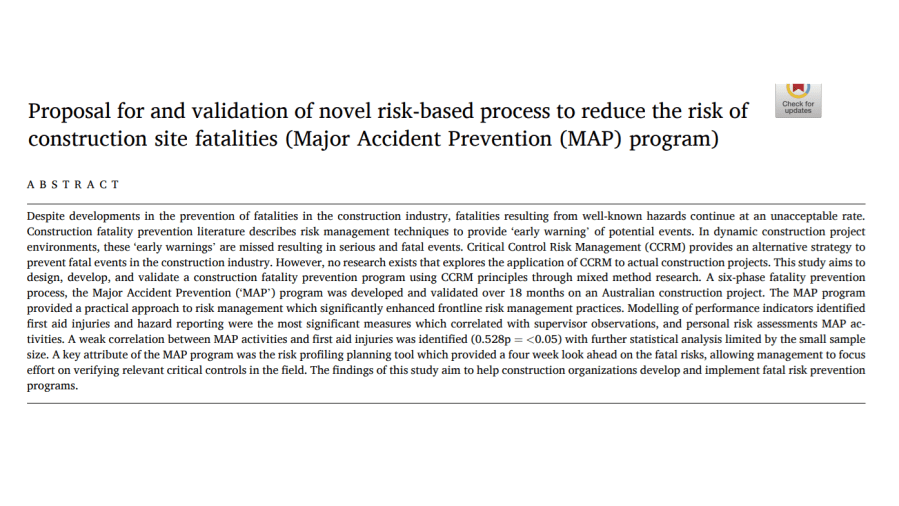
Proposal for and validation of novel risk-based process to reduce the risk of construction site fatalities (Major Accident Prevention (MAP) program)
This study from Selleck and colleagues developed a novel Major Accident Prevention program for construction, leveraging the ICMM’s critical control management (CCM) framework. Way too much to cover – so a few points I found interesting. Background / methods: · Their prior review argued that “the construction industry “would benefit by adopting a shift in… Continue reading Proposal for and validation of novel risk-based process to reduce the risk of construction site fatalities (Major Accident Prevention (MAP) program)

Safe AF ep #4: Relationship between fatal and non-fatal accidents based on 23k accidents
Is there a connection between fatal and non-fatal accidents, or is it a fallacy to focus on the minor potential events with the hope of managing the major events? Today’s study explores these relationships based on 23k reported serious accidents in the Netherlands. Ref: Bellamy, L. J. (2015). Exploring the relationship between major hazard, fatal… Continue reading Safe AF ep #4: Relationship between fatal and non-fatal accidents based on 23k accidents

CEO & board not receiving clear information on effectiveness of critical controls – Maritime NZ case
Fourth post from the Maritime NZ case where the CEO (Gibson) was charged under a failure to exercise due diligence for a work fatality (Ports of Auckland Limited (POAL). Some extracts on critical risks and controls: (** Post 2 in comments) · “As Mr Kahler succinctly put it, “gravity is generally [the] most common killer of… Continue reading CEO & board not receiving clear information on effectiveness of critical controls – Maritime NZ case

Methane events not HPIs and ventilation systems not seen as critical controls – Grosvenor Board of Inquiry
Started reading the Anglo American Grosvenor board of inquiry on the weekend. Will post some extracts over time: · Within Glencore at the time, the seriousness of the potential outcome drove which investigation and reporting level was used · A 5 point potential consequence rating, ranging from 1 (negligible) to 5 (catastrophic) was used · The inquiry notes,… Continue reading Methane events not HPIs and ventilation systems not seen as critical controls – Grosvenor Board of Inquiry
 SafetyInsights.org