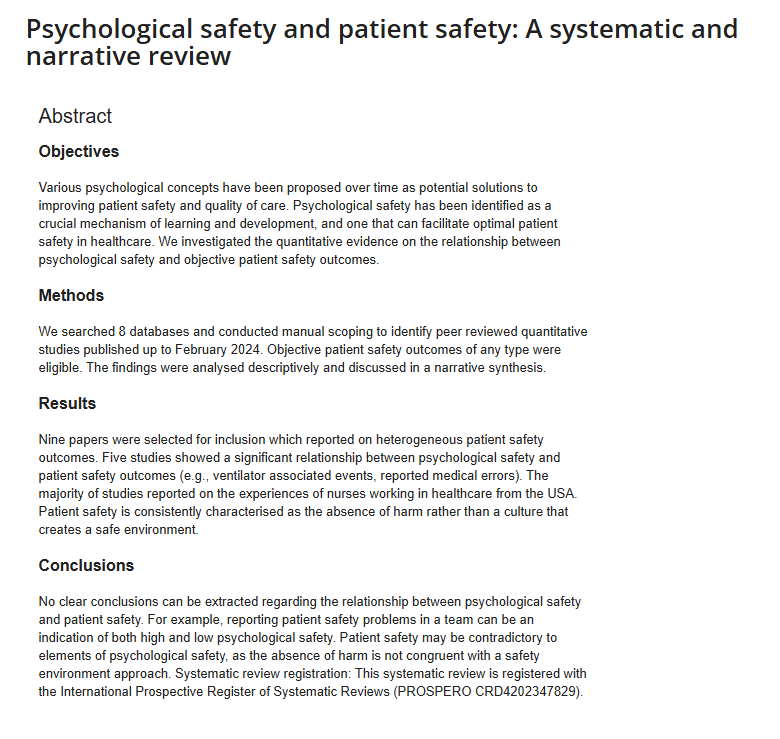
This explored the links between psychological safety and objective patient safety outcomes: · “No clear conclusions can be extracted regarding the relationship between psychological safety and patient safety” · “The evidence linking psychological and patient safety is equivocal” · “Overall, there is relatively little hard data to link PS and patient safety outcomes” · “Only nine studies fit the… Continue reading Psychological safety and patient safety: A systematic and narrative review
Tag: psychological safety

Working Too Hard to Advise You Not to Work Too Hard: Psychosocial Risk Factors and Quality of Life Among Occupational Health and Safety Experts
OHS professionals exposed to several psychosocial risks in the course of their work, according to this study, amplified by the social interactivity of their role. This Turkish study surveyed 101 OHS experts (65 male, 36 female) on psychosocial factors, quality of life and more. Key findings: · While OHS professionals may help others with eliminating or… Continue reading Working Too Hard to Advise You Not to Work Too Hard: Psychosocial Risk Factors and Quality of Life Among Occupational Health and Safety Experts

The relationship between humble leadership and team adaptation: two paths model perspective
This study investigated how humble leadership fosters team outcomes, like team adaptation. Psychological safety climate and reflexivity were explored as mediating pathways. Surveys at two time points across 56 work teams (233 members) were collected. Background: · The word humility derives from the Latin humilitas, meaning from the earth/grounded · Humility has a long history and is… Continue reading The relationship between humble leadership and team adaptation: two paths model perspective
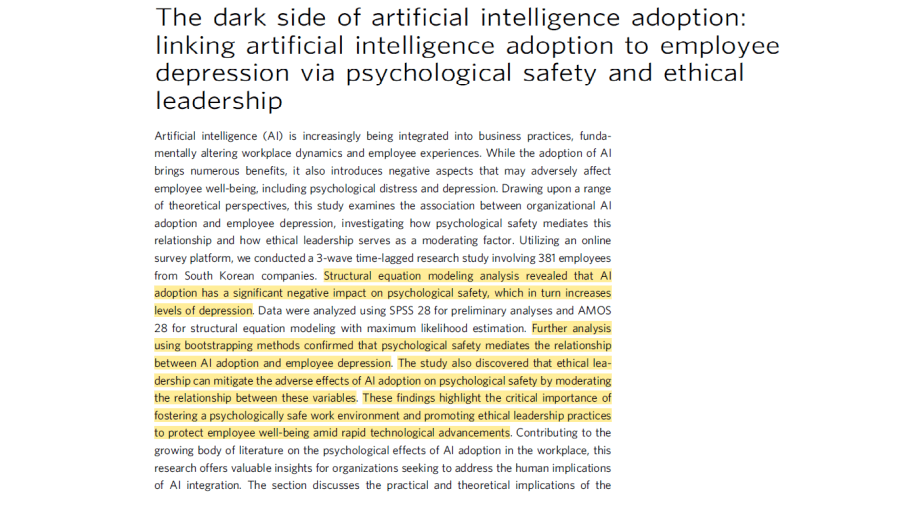
The dark side of artificial intelligence adoption: linking artificial intelligence adoption to employee depression via psychological safety and ethical leadership
Can adopting workplace AI technologies adversely affect employee psychological distress and depression? Yes according to this study. Online surveys of 381 employees in S.Korean companies was used. Background: · “In AI-centric environments .. AI reshapes jobs and workflows, affecting workers’ psychological health, satisfaction, commitment, and performance, as well as broader organizational outcomes” · “While AI adoption affects… Continue reading The dark side of artificial intelligence adoption: linking artificial intelligence adoption to employee depression via psychological safety and ethical leadership

Failing to learn and learning to fail (intelligently): How great organizations put failure to work to innovate and improve
An interesting paper from Mark Cannon & Amy Edmondson about failing intelligently. Opening the paper they argue that while the idea of organisations learning from their failures is obvious – “yet organizations that systematically learn from failure are rare”. They’ve also found that few organisations effectively experiment to learn, which requires by necessity generating failures… Continue reading Failing to learn and learning to fail (intelligently): How great organizations put failure to work to innovate and improve
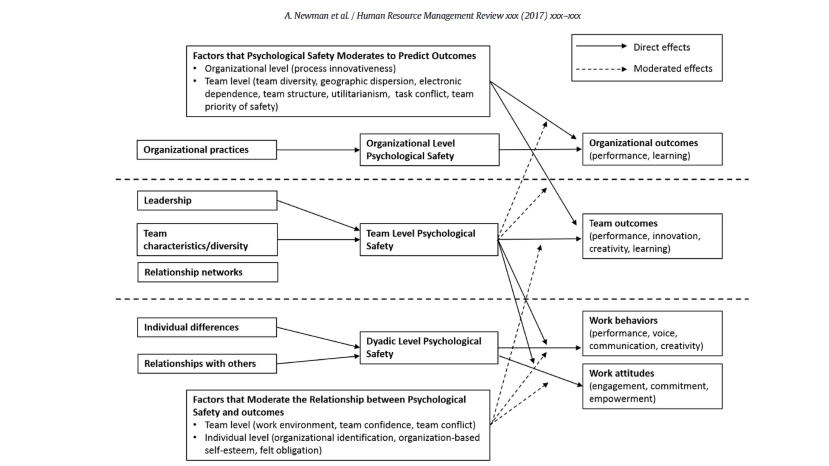
Mini-Compendium: Psychological Safety
Given the prominence of Psychological Safety (PS), it’s worth sharing some research. It’s likely among the most studied modern concepts in organisational theory – so I can barely scratch the surface. Focus first is articles I’ve summarised, and then on any other full-text items I can find. In my haste, I’ve probably included some psychological… Continue reading Mini-Compendium: Psychological Safety

Mini-Compendium: Power, Safety, Authority Gradients, and the Power of Elites
Here’s some articles, mostly full-text links, exploring power within organisations. Includes broader social power, power gradients, voice, and more. Feel free to shout me a coffee if you’d like to support the growth of my site: Full-Text Articles [Below link will say ‘Discursive effects of safety science’. Download it and its a whole book with… Continue reading Mini-Compendium: Power, Safety, Authority Gradients, and the Power of Elites

Safety Management Systems may struggle with psychosocial factors and other complex phenomena
Certified safety management systems (OHSM) may struggle with complex, multi-factorial matters, like psychosocial safety. Extracts: · The OHSM “does not necessarily tackle the most urgent work environment issues and may exclude important aspects of the work environment such as psychosocial factors” · “some [OHSM] approaches may be ill-equipped to tackle complex sociotechnical issues and psychosocial matters, and… Continue reading Safety Management Systems may struggle with psychosocial factors and other complex phenomena

The Impact of Physical Hazards on Workers’ Job Satisfaction in the Construction Industry: A Case Study of Korea
This explored the effects of physical hazard exposures on worker job satisfaction. Survey from >2k Korean construction workers. Background: · “physical hazards such as noise, vibration, and exposure to hazardous substances also contribute to job stress” and behavioural changes · “Continuous exposure to such risks can result in cumulative mental and physical strain, increasing job-related stress, and… Continue reading The Impact of Physical Hazards on Workers’ Job Satisfaction in the Construction Industry: A Case Study of Korea
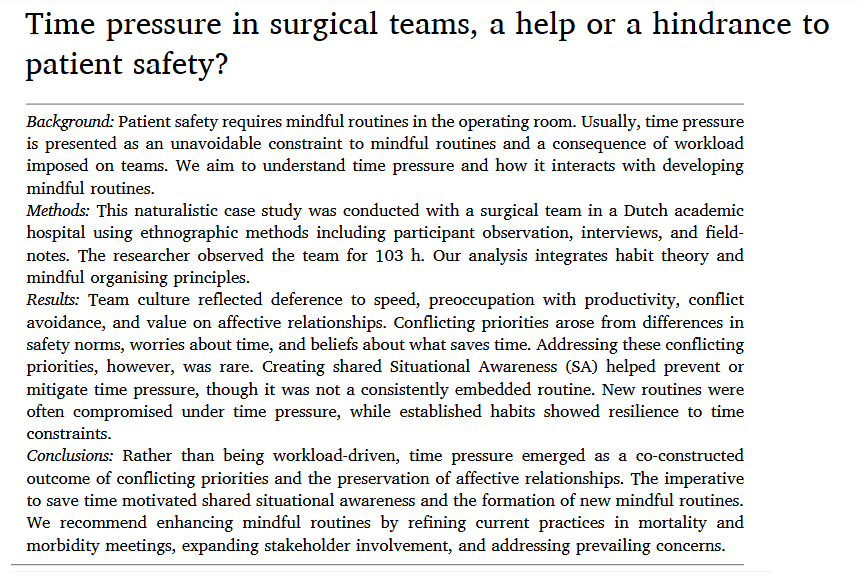
Time pressure in surgical teams, a help or a hindrance to patient safety?
I found this an interesting and brief read about the mindful routines of operating room staff, using a naturalistic decision making approach. Extracts: Ref: van Harten, A., Niessen, T. J., Koksma, J. J., Gooszen, H. G., & Abma, T. A. (2025). Heliyon. Shout me a coffee Study link: https://doi.org/10.1016/j.heliyon.2025.e41967 Shout me a coffee: https://buymeacoffee.com/benhutchinson LinkedIn post:… Continue reading Time pressure in surgical teams, a help or a hindrance to patient safety?
 SafetyInsights.org