Can #AI make your doctor worse at their job? This multicentre study compared physician ADR (Adenoma Detection Rate) before and after AI-assisted detection – and then after removing the AI-assistance. What do you think – will the overall benefits of AI overweigh the negative and unintended skill drops of people? (*** Please subscribe, like and… Continue reading Safe As: Can AI make your doctors worse at their job?
Tag: science
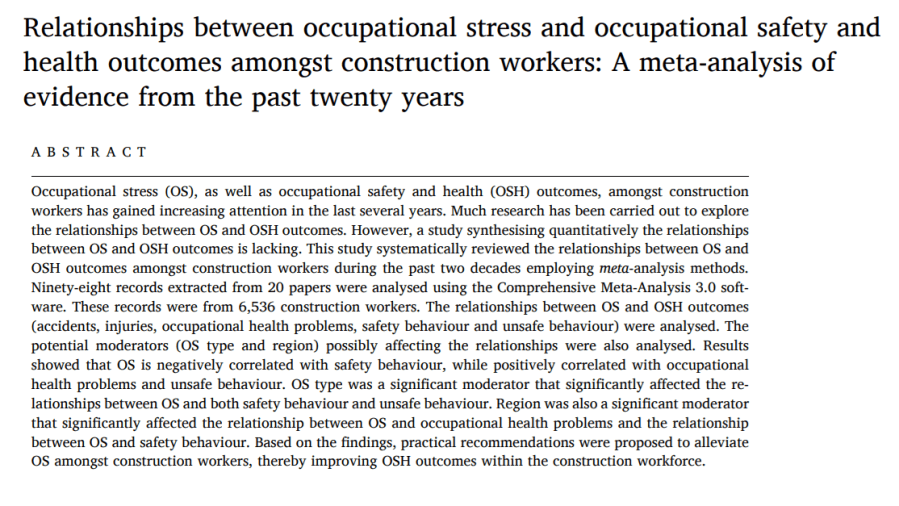
Relationships between occupational stress and occupational safety and health outcomes amongst construction workers: A meta-analysis of evidence from the past twenty years
This meta-analysis investigated the effects of occupational stress (OS) on safety and health outcomes in construction. 20 studies over 20 years, including >6k construction workers was included (not such a big sample given all of the research in construction safety, indicative of the relatively poorer quality of research that didn’t meet their inclusion criteria). [Trigger… Continue reading Relationships between occupational stress and occupational safety and health outcomes amongst construction workers: A meta-analysis of evidence from the past twenty years
“Indicators are partial reflections of reality, based on uncertain and imperfect models” – Part 2 Donella Meadows sustainable indicators
Part 2 of Meadow’s banger ‘Indicators and Information Systems for Sustainable Development’. Extracts: · “Indicators are partial reflections of reality, based on uncertain and imperfect models” · “The stock market price is not the value of the company. No indicator is the real system. Indicators are abstractions from systems” · And are “are abstractions from abstractions, from models,… Continue reading “Indicators are partial reflections of reality, based on uncertain and imperfect models” – Part 2 Donella Meadows sustainable indicators
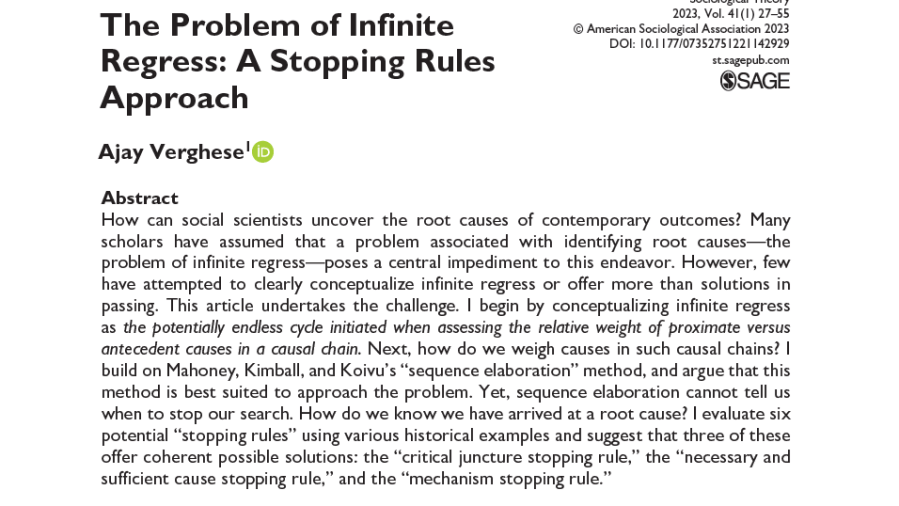
The issues of ‘root causes’ and infinite regression (the endless search for the causes of causes)
A really interesting, but challenging, read about the ontological status of ‘root causes’ and more pointedly, the problem of infinite regression. The author also proposes some stop rules to help navigate infinite regression. I’ve previously posted articles critical of the status of ‘root causes’, who argue it is more a process of implicit or explicit… Continue reading The issues of ‘root causes’ and infinite regression (the endless search for the causes of causes)

Why do doctors make poor decisions? Spotlighting ‘noise’ as an under-recognised source of error in clinical practice
A brief read covering the concept of noise, pertaining to judgements. This is based on the work from Kahneman, Sibony and Sunstein. From the article: · While biases in judgements have captured a lot of attention, “it has been suggested that ‘noise’ (defined as an undesirable variability in human judgements) is a highly important, yet under-recognised… Continue reading Why do doctors make poor decisions? Spotlighting ‘noise’ as an under-recognised source of error in clinical practice

“The fetishism of scientific management” – a 1912 criticism
An interesting critique of Scientific Management approach from 1912. Great title – ‘fetishism of scientific management’. The author argues that: · Scientific Management isn’t even that ‘new’, and is kind of what they’ve always done (…where have we heard that argument before?) · Says it takes away from the craftsmanship of people and that people are the… Continue reading “The fetishism of scientific management” – a 1912 criticism
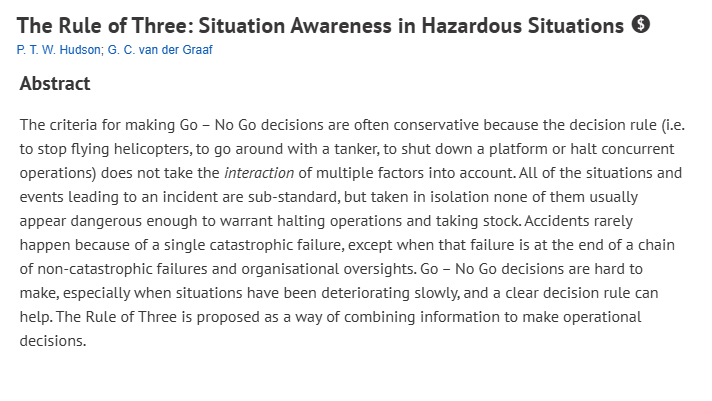
The rule of three: Situation awareness in hazardous situations
“The rule of three provides a mechanism that converts the risk continuum into a dichotomy for the purposes of decision-making. It does not, however, ignore the expertise of operators … Put another way, the rule of three structures expert decision-making; it does not replace it”
 SafetyInsights.org