
Another rebuttal article as a follow-up from the prior post on systems thinking in medicine, again from Dekker & Leveson. I’ve skipped Levitt’s letters which prompted these letters to the editor. Extracts: · “One can understand the seduction of sanctioning non-compliant doctors2 or getting rid of the deficient practitioners—the system’s bad apple” · They refer to research… Continue reading The bad apple theory won’t work: response to ‘Challenging the systems approach: why adverse event rates are not improving’ by Dr Levitt
Year: 2025
Cultural elements of major accidents according to Andrew Hopkins
Not much to say, just an extract from Andrew Hopkins’ 2006 paper ‘Studying organisational cultures and their effects on safety’. I’ll be posting the summary in the coming weeks. Here he describes his analysis of the 1999 Glenbrook rail crash: · He identified four main cultural themes preceding the disaster · First “the railways were obsessively rule… Continue reading Cultural elements of major accidents according to Andrew Hopkins

Unveiling Untapped Potential: Leveraging Accident Narratives for Enhanced Construction Safety Management
This study explored the value and insights derived from investigation reports, comparing tabulated data vs extracted narratives. It was interested in what sorts of trends and insights about risk factors could be derived from either data stream. Their method to extract the info was tested against 400 OSHA reports. For context: · Tabular data is… Continue reading Unveiling Untapped Potential: Leveraging Accident Narratives for Enhanced Construction Safety Management
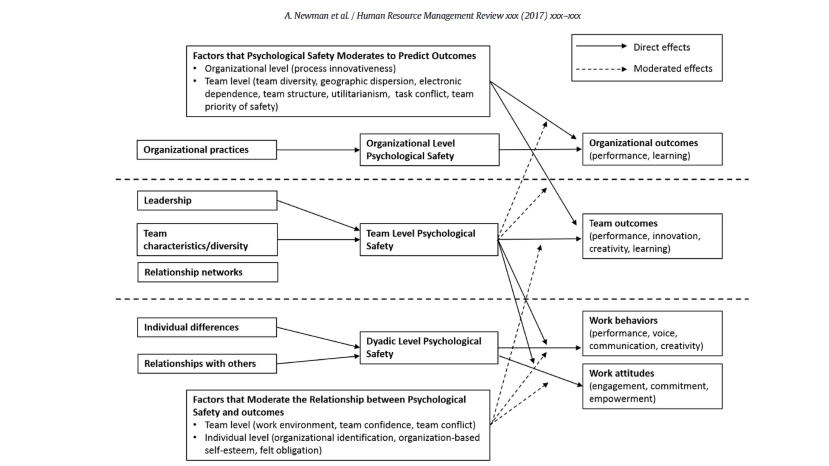
Mini-Compendium: Psychological Safety
Given the prominence of Psychological Safety (PS), it’s worth sharing some research. It’s likely among the most studied modern concepts in organisational theory – so I can barely scratch the surface. Focus first is articles I’ve summarised, and then on any other full-text items I can find. In my haste, I’ve probably included some psychological… Continue reading Mini-Compendium: Psychological Safety
A perspective on applying Just Culture and Safety-II principles to improve learning from sentinel events in healthcare
This discussion paper from de Vos, Dekker and others discusses applying Just Culture and Safety-II to improving from healthcare sentinel events. I think it’s based on de Vos’s PhD. They start showing some evidence that among hospitals convinced that they have a “blame-free” culture also “reported that culpability was of primary concern in their investigations… Continue reading A perspective on applying Just Culture and Safety-II principles to improve learning from sentinel events in healthcare

The systems approach to medicine: controversy and misconceptions — Dekker & Leveson
This was a really brief discussion paper from Dekker and Leveson, covering systems thinking in medicine. Three parts – see comments. Nothing new for most, but they cover: · “The ‘systems approach’ to patient safety has recently led to questions about its ethics and practical utility” · E.g. A recent paper from a retired neurosurgeon questioned systems… Continue reading The systems approach to medicine: controversy and misconceptions — Dekker & Leveson
List of research compendiums on my site
Did you check out my recent compendium on power in organisations and safety? >72 studies (mostly full-text) to read. Quoting Dekker & Nyce 2014: “this considers power as a process that pervades all aspects of organizational life. In other words, there is power in safety—everywhere in safety”. This adds to 11 other compendiums, covering research… Continue reading List of research compendiums on my site

Coffee drinking timing and mortality in US adults (** tl;dr: coffee is awesome)
This may interest people, exploring the role of coffee drinking on all-cause mortality and Cardiovascular disease (CVD). Large sample, but observational and via 7-day dietary record, with follow-up periods. Note: Normally we need to be cautious with study methods and limits, but since we’re dealing with coffee – I’ll accept no ill spoken. Coffee defies… Continue reading Coffee drinking timing and mortality in US adults (** tl;dr: coffee is awesome)
Identification of management traits related to human factors in new views of safety approaches
This paper from Leônidas Brasileiro and colleagues evaluated common attributes across approaches grouped under ‘New View’. i.e. HRO, S-II, SD, RE & HOP – they used both literature and Delphi method. Not a summary since you can read the full paper. It’s an accessible read if you’re keen to quickly understand some key differences and… Continue reading Identification of management traits related to human factors in new views of safety approaches
1910 Pittsburgh Survey challenging worker ‘carelessness’ as main ’cause’ of accidents
Really interesting findings from 1910 challenging the concept of carelessness and workers as the main ‘cause’ of traumatic accidents. From Eastman’s book 2 of the Pittsburgh’s Survey. Was meant to be a mini-post. But, too many interesting statements. Extracts: · Eastman starts with “So you’ve come to Pittsburgh to study accidents, have you?” says the… Continue reading 1910 Pittsburgh Survey challenging worker ‘carelessness’ as main ’cause’ of accidents
 SafetyInsights.org