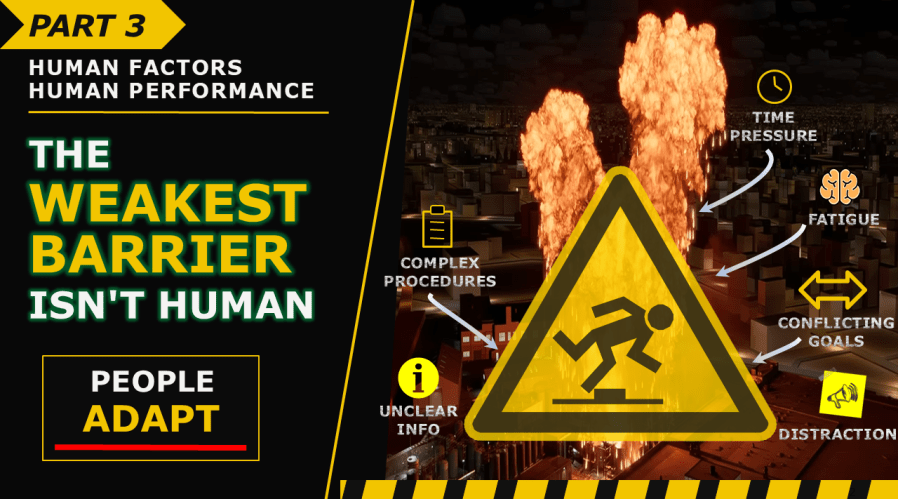
Ogres have layers, and so do barriers. Human performance isn’t separate from the barrier system, rather in socio-technical environments, human action is often a key mechanism through which a barrier functions.
In part 3 of the Critical Control / Barrier series, we unpack how to properly specify human performance as a credible control without straying too far into the work-as-imagined trap.
Some takeaways:
1. Procedures, training and supervision are vital, but rarely meet the criteria for independent barriers/ controls. They’re more safeguards designed to support the barrier.
2. Stop modelling ‘human error’ as a threat on a bow tie – it’s a misdirection. Instead focus on specific failure mechanisms across the Detect, Decide, Act cycle and error traps that drive them.
3. Workarounds persist because they work. They solve immediate operational challenges, but can silently mask system-level flaws.
4. Human-dependent barriers require similar discipline as technical controls: define the actor, timing, triggers, and critical operating assumptions. Design for the worst realistic day.
Check it out on my YouTube channel – and please help share with your network.


