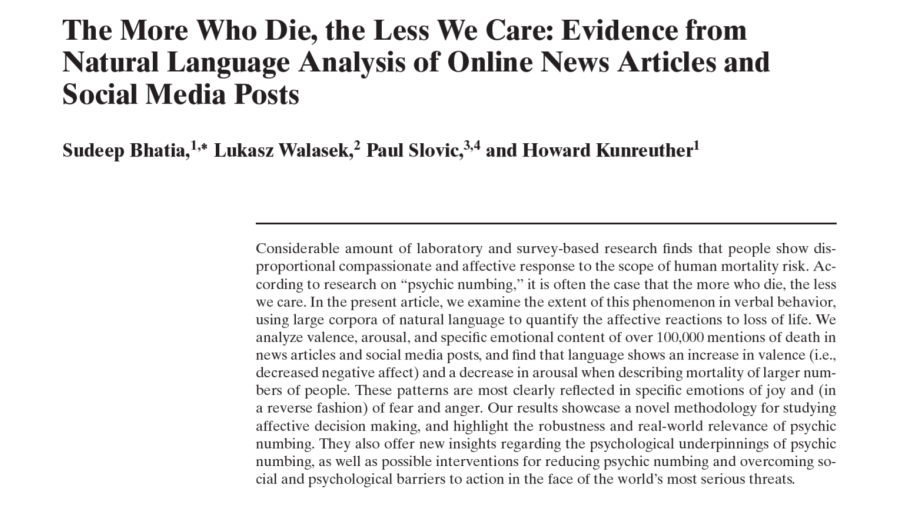
At what point does the loss of human life become mere statistics? This study analysed >100k mentions of death in news articles and social media posts based on valence (overall positive or negative qualities) and arousal (the degree of intensity people have about the text), grouped by number of deaths mentioned. Paul Slovic was a… Continue reading The More Who Die, the Less We Care: Evidence from Natural Language Analysis of Online News Articles and Social Media Posts
Tag: bias
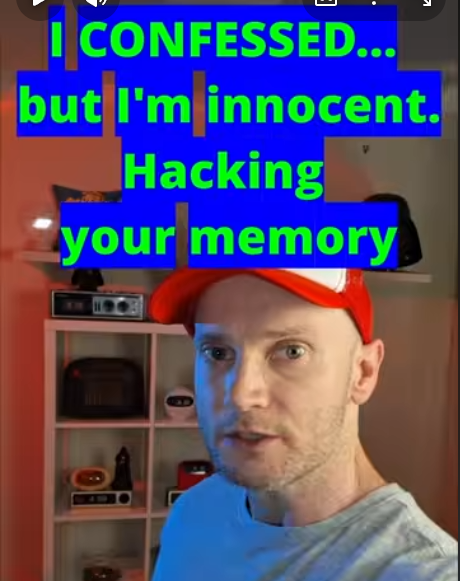
Memory hacking: Gaslighting you into a false crime confession
Did you know that it’s quite easy to trick people into falsely remembering a crime that they never committed? This ep unpacks research showing how malleable and shapeable human memory is: rather than being a video recording, it’s a constantly reconstructed experience, influenced by a range of emotions and other factors. Please sub, like and… Continue reading Memory hacking: Gaslighting you into a false crime confession
Making better decisions and injecting hold-points for debiasing
How can we improve big decisions in organisations, and inject hold-points for debiasing? This video frantically covers an article from Daniel Kahneman and colleagues on just this very topic. #decisionmaking #bias #judgements
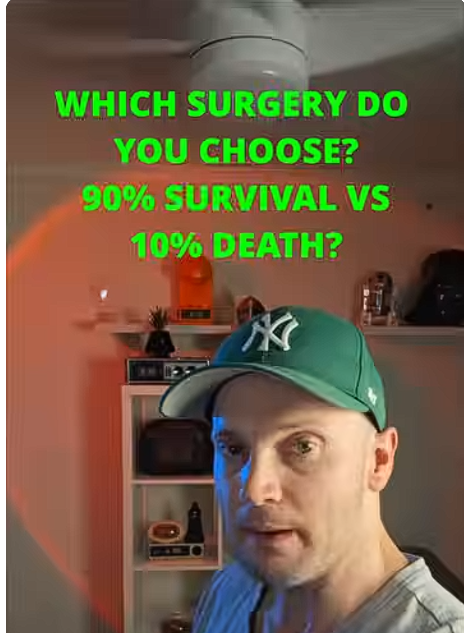
Framing and communicating risk – 90% survive vs 10% die
When choosing milk, do you prefer 5% fat or 95% fat free? What if a doctor presented the risk from surgery as 90 % survive, versus 10% die? Same risk, different framing. Whether people accept the surgery shouldn’t matter on how that identical risk is presented, right? It turns out, how information and risks are… Continue reading Framing and communicating risk – 90% survive vs 10% die
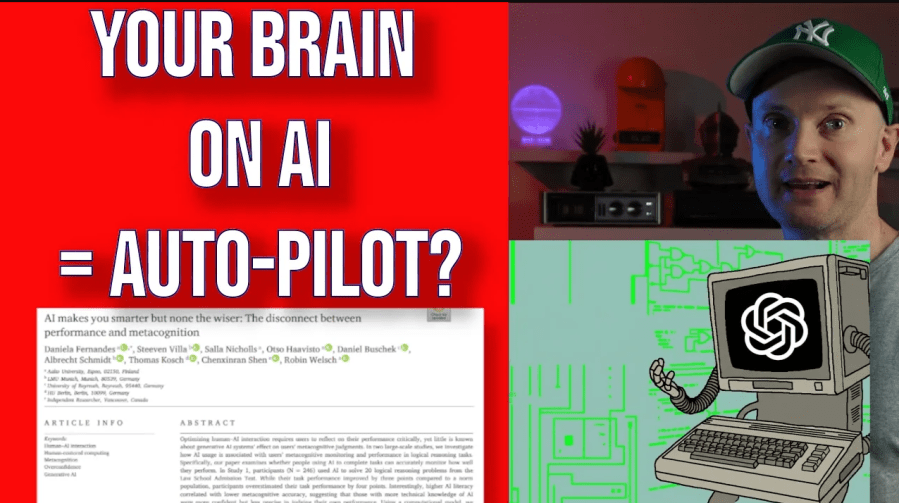
Does using AI make us smarter, or just more confident?
Does using AI make us smarter, or just more confident? This ep covers a recent study on how generative AI affects our “metacognition” – our ability to judge our own performance. Researchers tracked hundreds of people solving logical reasoning problems with and without AI.

Safe As 39: How biased are incident investigators?
Investigations are reputed to be ‘fact finding’ exercises: objective searches for facts and truth. How what role does investigator bias play in constructing the incident findings? Today’s article is: MacLean, C. L., & Dror, I. E. (2023). Measuring base-rate bias error in workplace safety investigators. Journal of safety research, 84, 108-116. Spotify: https://open.spotify.com/episode/2sd92JGDTL4vq4s9AGJ2ac?si=tWpXuga6RwqmF0r-AiWPnw Apple: https://podcasts.apple.com/us/podcast/e39-how-biased-are-incident-investigators/id1819811788?i=1000728238089 Make sure… Continue reading Safe As 39: How biased are incident investigators?
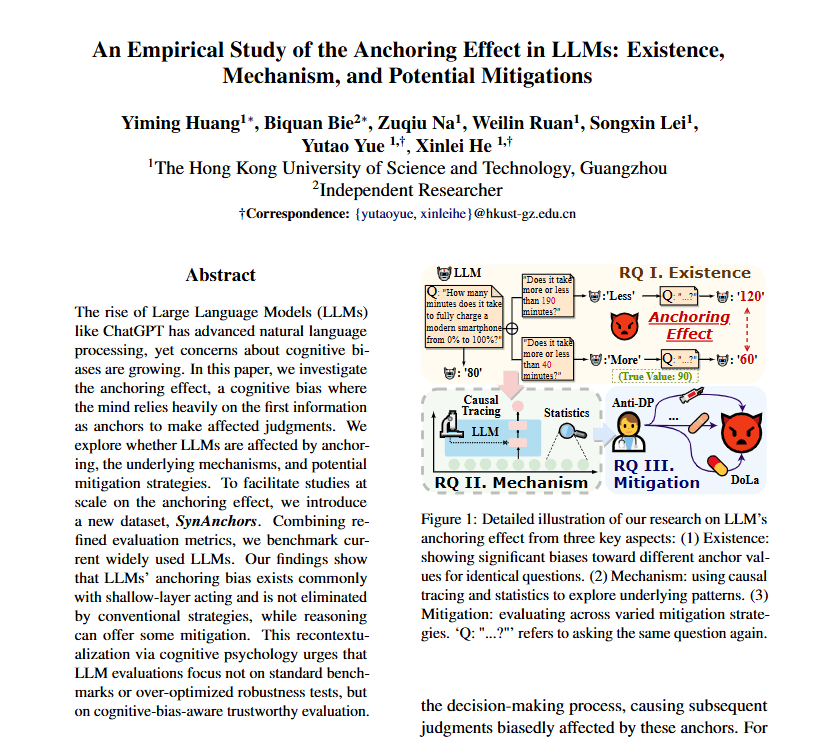
An Empirical Study of the Anchoring Effect in LLMs: Existence, Mechanism, and Potential Mitigations
This study found that several LLMs are fairly easily influenced by anchoring effects, consistent with human anchoring bias. Extracts: · “Although LLMs surpass humans in standard benchmarks, their psychological traits remain understudied despite their growing importance” · “The anchoring effect is a ubiquitous cognitive bias (Furnham and Boo, 2011) and influences decisions in many fields” · “Under uncertainty,… Continue reading An Empirical Study of the Anchoring Effect in LLMs: Existence, Mechanism, and Potential Mitigations

Confirmation bias and priming in investigations: ‘Human & Organizational Potential’
Here’s one of (prob) several upcoming posts about Ivan Pupulidy, PhD and Crista Vesel, MSc’s book ‘Human and Organizational Potential’. This part looks at confirmation bias within investigations and uses the US Forest Service’s then current Investigation Guide: · “Confirmation bias is a tendency to search for information that confirms one’s preconceptions. When discussing confirmation bias… Continue reading Confirmation bias and priming in investigations: ‘Human & Organizational Potential’

Why do doctors make poor decisions? Spotlighting ‘noise’ as an under-recognised source of error in clinical practice
A brief read covering the concept of noise, pertaining to judgements. This is based on the work from Kahneman, Sibony and Sunstein. From the article: · While biases in judgements have captured a lot of attention, “it has been suggested that ‘noise’ (defined as an undesirable variability in human judgements) is a highly important, yet under-recognised… Continue reading Why do doctors make poor decisions? Spotlighting ‘noise’ as an under-recognised source of error in clinical practice

“I think, therefore I err”: An article about ‘good errors’, heuristics and intelligent systems
“Every intelligent system makes errors”, so said Gerd Gigerenzer. Here’s a couple of page extracts from a 2005 paper. Not sure if I’ll summarise it or not (it’s really interesting, but tough to capture in a summary…) The paper: · Challenges the rationalistic and normative ideal as cognition as purely a logical and rational one, ignoring… Continue reading “I think, therefore I err”: An article about ‘good errors’, heuristics and intelligent systems
 SafetyInsights.org