
How does attributions of ‘human error’ create hidden hazards? Interesting article discussing a failure type in intraocular surgery using a cannula and how it’s effectively become hidden. PS. Check out my YouTube and recent Critical Control / barrier vid: https://youtu.be/Ly1mEn_KCLQ?si=yG3yRVOM0r2eyyKI Shout a coffee: https://buymeacoffee.com/benhutchinson Extracts: · “The way we look for harm shapes what we are… Continue reading When the interface fails: a patient-safety hazard hidden by the assumption of human error
Tag: hop

Dr Marcin Nazaruk Part 1: HOP, New View, Learning from Daily Work
Today I chat with Dr Marcin Nazaruk, who shares his practical experience and research on learning from daily work and application on Safety-II and HOP principles to improve learning and risk management. The discussion also explores themes around risk controls, work constraints, risk assessments, and error traps. Check out Part 1 and please help like… Continue reading Dr Marcin Nazaruk Part 1: HOP, New View, Learning from Daily Work
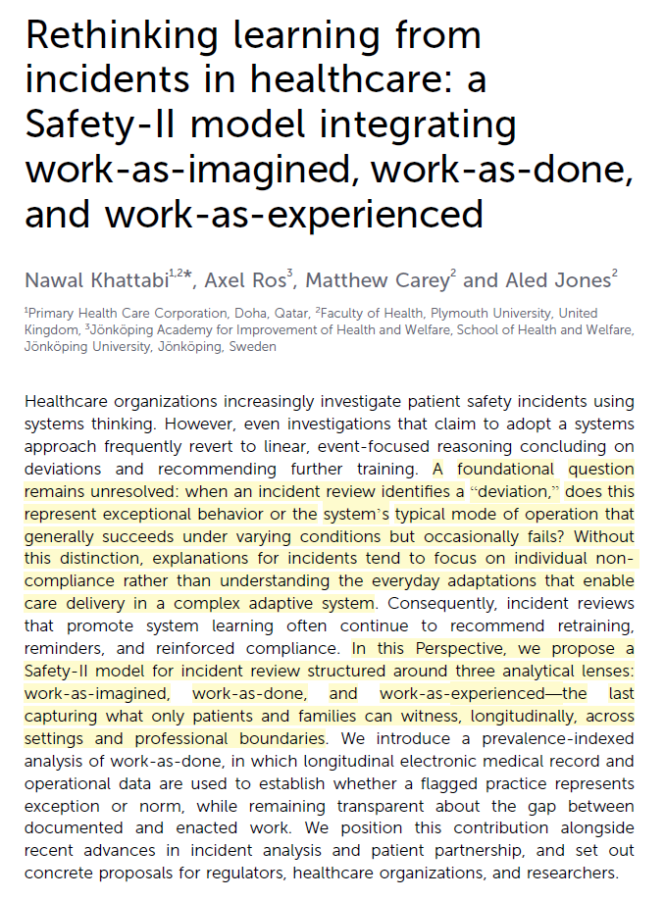
Rethinking learning from incidents in healthcare: a Safety-II model integrating work-as-imagined, work-as-done, and work-as-experienced
Can Safety-II principles expand learning within investigations? This article proposes a Safety-II framed incident review model for healthcare capturing WAI (work-as-imagined), WAD (work-as-done) and WAE (work-as-experienced). Shared under an open access licence. PS. Check out my YouTube and recent Critical Control / barrier vid: https://youtube.com/@safe_as_pod?si=iUaDPJynPemQRZhY Shout a coffee: https://buymeacoffee.com/benhutchinson Extracts: · “A foundational question remains unresolved:… Continue reading Rethinking learning from incidents in healthcare: a Safety-II model integrating work-as-imagined, work-as-done, and work-as-experienced
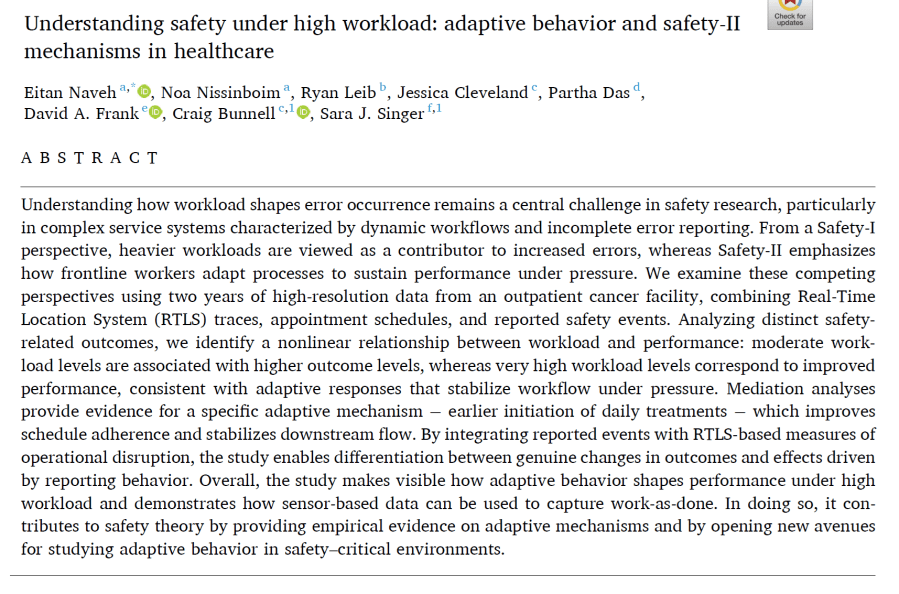
Understanding safety under high workload: adaptive behavior and safety-II mechanisms in healthcare
What does Safety-II tell us about workload, adaptations, and error? This study analysed the effects of workload on error and adaptations across >580 days in 6 hospital departments and 924 reported safety events. PS. Check out my YouTube and recent Critical Control / barrier vid: https://youtube.com/@safe_as_pod?si=iUaDPJynPemQRZhY Shout a coffee: https://buymeacoffee.com/benhutchinson Extracts: · “From a Safety-I perspective,… Continue reading Understanding safety under high workload: adaptive behavior and safety-II mechanisms in healthcare

Part 2 interview Dr Guido Carim Jr on Safety-II, adaptive capacities, procedures & more
Part 2 interview with Dr. Guido Carim Junior, PhD, Associate Professor of Aviation, pilot, researcher, and safety scientist. PS. Check out my YouTube and recent Critical Control / barrier vid: https://youtube.com/@safe_as_pod?si=iUaDPJynPemQRZhY Shout a coffee: https://buymeacoffee.com/benhutchinson We continue our convo about digital checklists, unpacking the potential role of AI and how so-called ‘smart’ features risk narrowing… Continue reading Part 2 interview Dr Guido Carim Jr on Safety-II, adaptive capacities, procedures & more
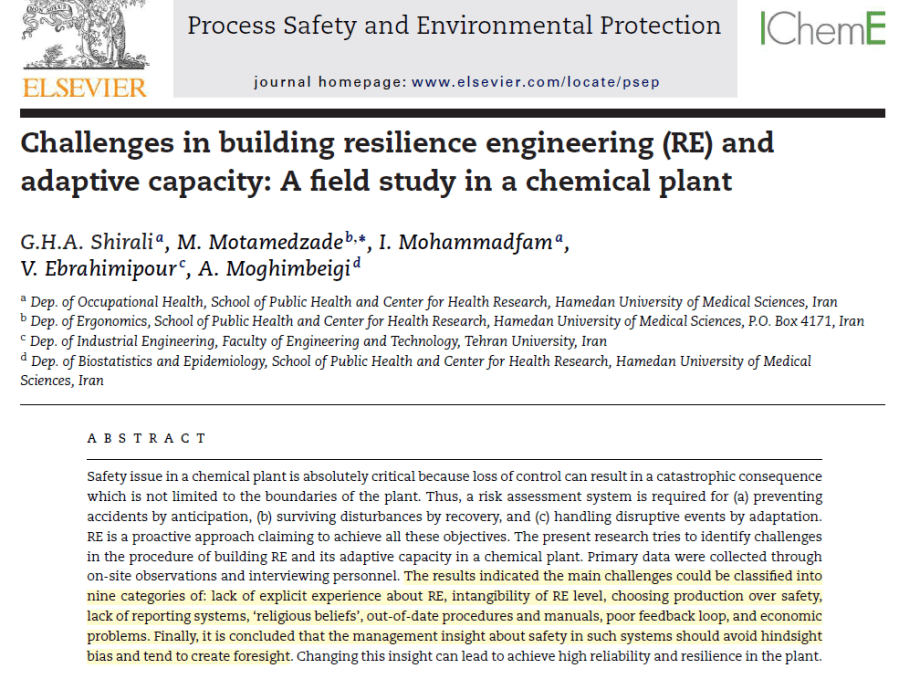
Challenges in building resilience engineering (RE) and adaptive capacity: A field study in a chemical plant
Can a complex system effectively navigate risk if it only understands failure in hindsight? This study explores the challenges of building adaptive capacity from a resilience engineering perspective in a chemical plant. On-site observations & interviews were used. PS. Check out my YouTube and recent Critical Control / barrier vid: https://youtube.com/@safe_as_pod?si=iUaDPJynPemQRZhY Shout a coffee: https://buymeacoffee.com/benhutchinson… Continue reading Challenges in building resilience engineering (RE) and adaptive capacity: A field study in a chemical plant

HOP improves learning and reduces quality deviations – new research
Does HOP improve organisational learning behaviours and reduce quality deviations? It turns out, probably. This Master’s thesis from Chris Mastrangelo studied the effects of HOP principles on learning-behaviours, multi‑year trends in deviations, root‑cause classifications, corrective and preventive actions (CAPAs), and Human Performance Assessment (HPA) maturity assessments. Thesis link in comments. The HOP adoption was also… Continue reading HOP improves learning and reduces quality deviations – new research

Part 1 Dr Guido Carim Jr: Safety-II, rules, workarounds, adaptive capacity, learning & more
Part 1 interview with Dr Guido Carim Junior, an Associate Professor of Aviation, pilot, researcher, and safety scientist. We explore what safety ‘is’ beyond absence of incidents, limitations of procedures in complex environments, and why real-world situations rarely unfold how manuals anticipate. Guido shares insights from aviation research on adaptive capacity, informal learning, crew expertise,… Continue reading Part 1 Dr Guido Carim Jr: Safety-II, rules, workarounds, adaptive capacity, learning & more
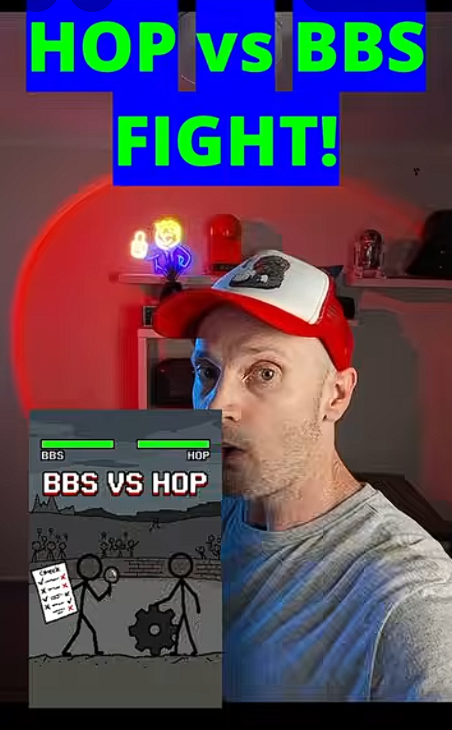
Can BBS & HOP be integrated?
Are BBS & HOP destined for conflict and silos, or can–should–they be integrated? This article from Williams & Roberts argues that they’re complimentary and proposes how we can go about this integration. Shout a coffee: https://buymeacoffee.com/benhutchinson
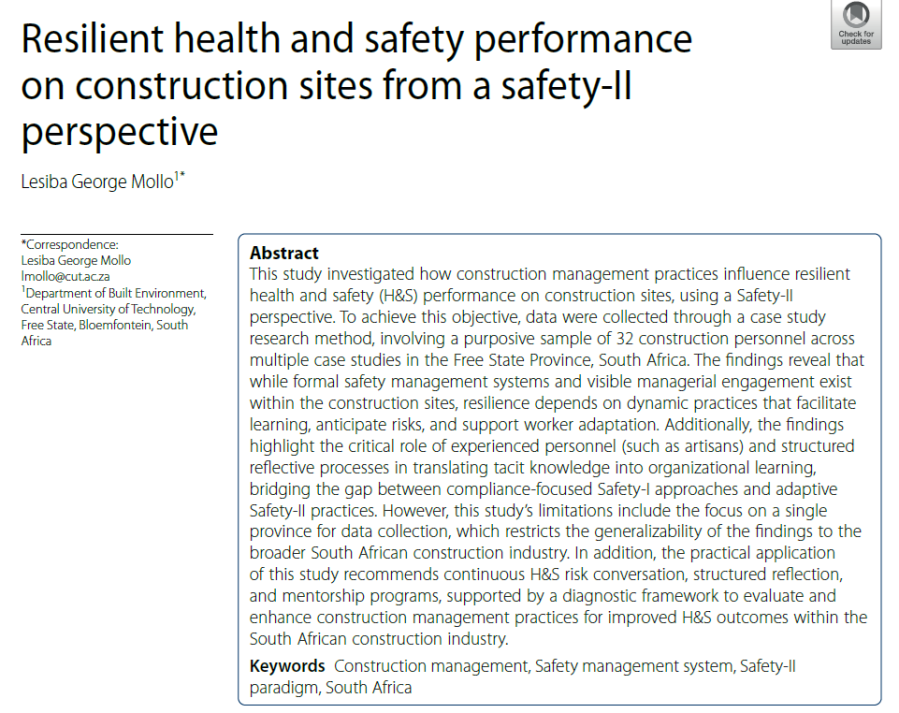
Resilient health and safety performance on construction sites from a safety-II perspective
“These findings .. emphasizes that resilience stems from dynamic, iterative practices that foster adaptive capacity” How do construction management practices influence resilient health and safety performance? Shared under an open access licence. PS. Check out my YouTube: https://youtube.com/@safe_as_pod?si=iUaDPJynPemQRZhY Extracts: · “Instead of implementing proactive interventions that address planning deficiencies, poor coordination, and organizational decision-making under dynamic… Continue reading Resilient health and safety performance on construction sites from a safety-II perspective
 SafetyInsights.org