Was your last incident a one-off occurrence or systemic failure? Two extracts discussing this theme – first from Greg Smith (Proving Safety), and then Desai Link (‘Beyond the Incident’), who expanded the discussion on Greg’s question. Images from Desai’s book. Greg Argues: · An important aspect of assurance is “to continually question whether issues that we… Continue reading Was your last incident a one off issue or systemic system flaws?
Author: Ben Hutchinson
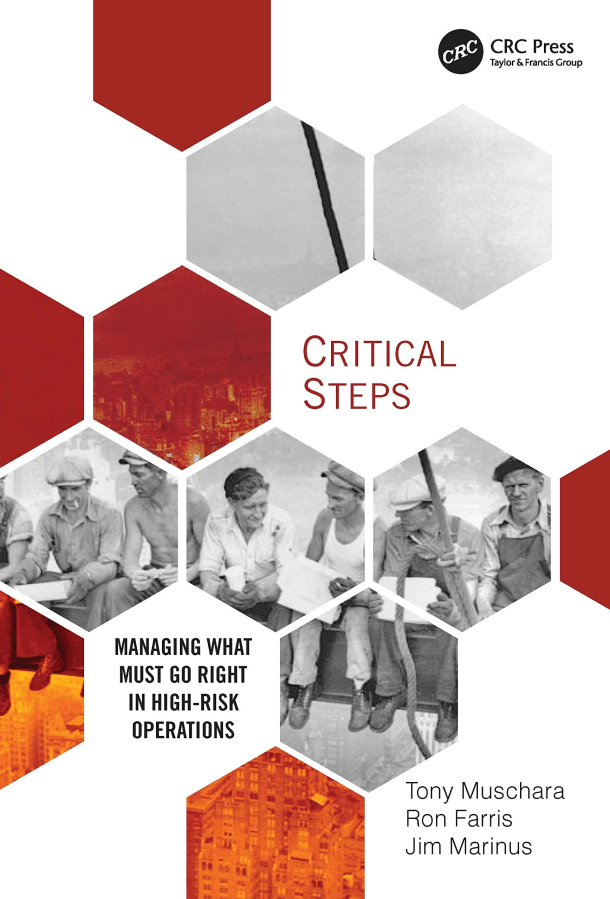
Safe As 35 (quickisode): Critical Steps for managing hazardous work
Some task steps are so important, that marshal or exchange so much energy, that they must go right first time, every time. These are called Critical Steps. Let’s explore critical steps and risk important decisions. Today’s source is: Muschara, T., Farris, R., & Marinus, J. (2021). Critical steps: managing what must go right in high-risk operations.… Continue reading Safe As 35 (quickisode): Critical Steps for managing hazardous work
Kletz: Accidents due to human error is about as useful as saying falls are due to gravity
“Saying an accident is due to human failing is about as helpful as saying that a fall is due to gravity. It is true but it does not lead to constructive action”. Some of the classic, and well-known, wisdom from Kletz (source: An Engineer’s View of Human Error). Extracts: · The whole ‘most accidents are due… Continue reading Kletz: Accidents due to human error is about as useful as saying falls are due to gravity

Safe as 34: The failure of critical controls in construction
How reliable are the critical controls within construction? Which critical controls fail, and how? Today’s article is Selleck, R., Hassall, M., & Cattani, M. (2022). Determining the reliability of critical controls in construction projects. Safety, 8(3), 64. Spotify: https://open.spotify.com/episode/2hkc0OmL5QTlcseIHJgN8P?si=eylRnvw3QrKPNSsy0YjkZA Apple: https://podcasts.apple.com/us/podcast/e34-the-failure-of-critical-controls-in-construction/id1819811788?i=1000726762389 Make sure to subscribe to Safe As on Spotify/Apple, and if you find it useful then… Continue reading Safe as 34: The failure of critical controls in construction
Safe As week in review: Ineffectiveness of individual mental health interventions / Fatigue risk via defences in depth / AI LLMs are BS’ing you
Safe As covered this week: 31: Do individual mental health interventions work? Maybe not. Do individual level mental health interventions, like personal resilience training, yoga, fruit bowls and training actually improve measures of mental health? This study suggests not. Using survey data from >46k UK workers, it was found that workers who participated in individual-level… Continue reading Safe As week in review: Ineffectiveness of individual mental health interventions / Fatigue risk via defences in depth / AI LLMs are BS’ing you

Trevor Kletz and how the past isn’t a good proxy for future safety, or “We’ve done it this way for 20 years so it must be safe”
The maths of bad luck: A banger myth from Trevor Kletz in ‘Dispelling Chemical Engineering Myths’, showing the statistical basis that the past isn’t a good measure of future ‘safety’. I’ll cover more myths in later posts. Here Kletz challenges the statement “We’ve done it this way for 20 years without an accident, so it… Continue reading Trevor Kletz and how the past isn’t a good proxy for future safety, or “We’ve done it this way for 20 years so it must be safe”
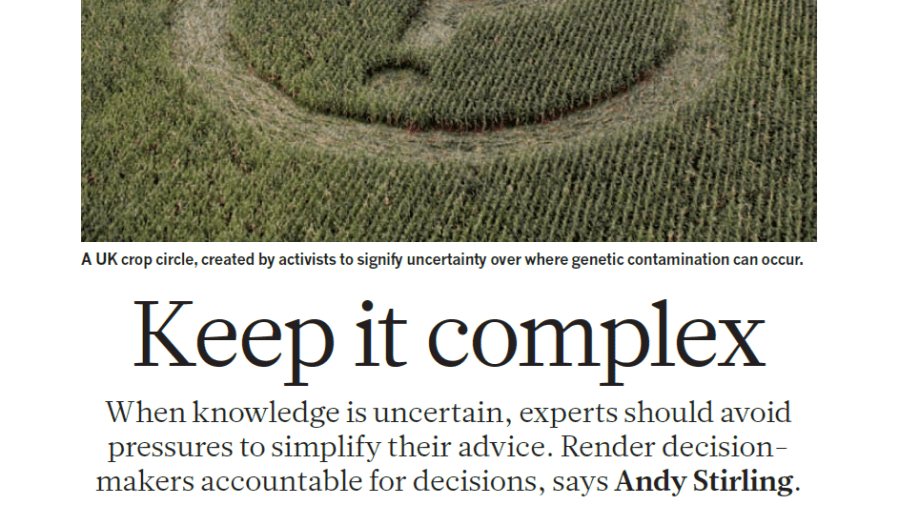
‘Keep It Complex’: perspectives on risk, uncertainty and ambiguity
When uncertainty and ignorance is abound on risk, should we ‘keep it simple’? Or keep it complex by debating multiple perspectives and embracing uncertainty and ambiguity? Extracts: · “When knowledge is uncertain, experts should avoid pressures to simplify their advice. Render decision-makers accountable for decisions” · “Expert advice is often thought most useful to policy when it… Continue reading ‘Keep It Complex’: perspectives on risk, uncertainty and ambiguity
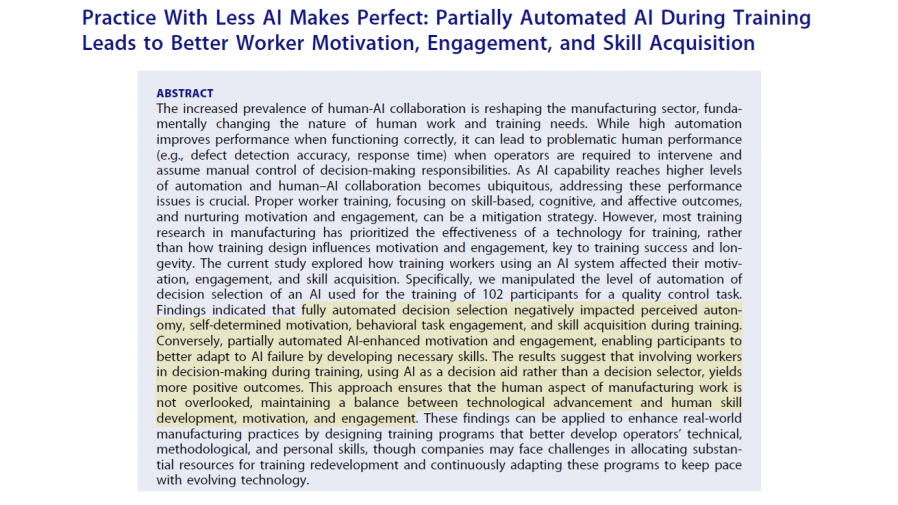
Practice With Less AI Makes Perfect: Partially Automated AI During Training Leads to Better Worker Motivation, Engagement, and Skill Acquisition
How does AI use in training improve, or impact, skill acquisition? This study manipulated training protocols with varying levels of AI decision-making automation, among 102 participants during a quality control task. Extracts: · “Partial automation led to the most positive outcomes” · “Participants who were trained with the fully automated version of the AIEDS had a significantly… Continue reading Practice With Less AI Makes Perfect: Partially Automated AI During Training Leads to Better Worker Motivation, Engagement, and Skill Acquisition
Learning from normal work in complex sociotechnical system—Case in midstream operation
This article discussed learning from normal work, via semi-structured episodic interviews. It’s open access, so not a summary. Extracts: · Briefly discussing historical safety progression, “safety progress was achieved by expanding existing rules to cover more potential failures, and safety failures resulted from gaps in rules or their lack of application” · “However, no procedure, no matter… Continue reading Learning from normal work in complex sociotechnical system—Case in midstream operation
Safe As 33: Is ChatGPT bullsh** you? How Large Language models aim to be convincing rather than truthful
Large Language Models, like ChatGPT have amazing capabilities. But are their responses, aiming to be convincing human text, more indicative of BS? That is, responses that are indifferent to the truth? If they are, what are the practical implications? Today’s paper is: Hicks, M. T., Humphries, J., & Slater, J. (2024). ChatGPT is bullshit. Ethics and… Continue reading Safe As 33: Is ChatGPT bullsh** you? How Large Language models aim to be convincing rather than truthful
 SafetyInsights.org