Shameless plug – but a teaser for next week’s research compendium exploring leadership, safety leadership, followership, and leaders behaving badly. Also includes some works which are critical of the ‘leadership style’ concepts, and more. This stretched my artistic skills in Microsoft Paint (had to go for the 90s workplace training video décor). In the meantime,… Continue reading Shameless plug: Next week’s compendium on leadership and leaders behaving badly

Strategies and tools to learn from work that goes well within healthcare patient safety practices: a mixed methods systematic review
This systematic review covers strategies and tools used in healthcare patient safety for learning from normal work and Safety-II. 22 articles met inclusion. For background: · In healthcare “underreporting is highly prevalent, and is linked to, among other things, shaming and blaming mentality, insufficient visible measures and inadequate communication about errors” · “most reporting systems… Continue reading Strategies and tools to learn from work that goes well within healthcare patient safety practices: a mixed methods systematic review
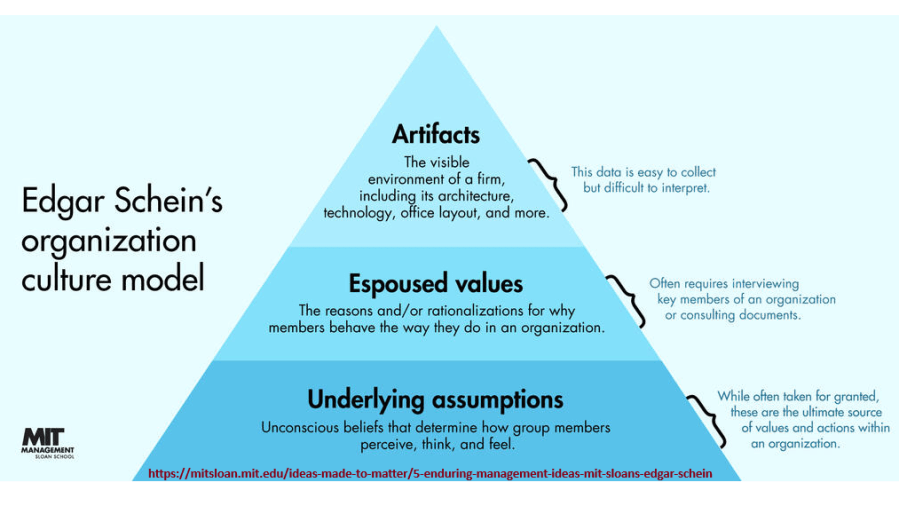
Compendium: Cultural approaches to safety / Safety Culture / Safety Climate / Org Culture
It’s no secret that I’m relatively cautious of ‘Safety Culture’. (** At least, I fall more into the interpretative, than functionalist, camp). Nevertheless, I get the question of evidence often, so here it is. A compendium of studies focused on organisational culture, culture of safety, safety culture and safety climate. Because there’s so many studies… Continue reading Compendium: Cultural approaches to safety / Safety Culture / Safety Climate / Org Culture
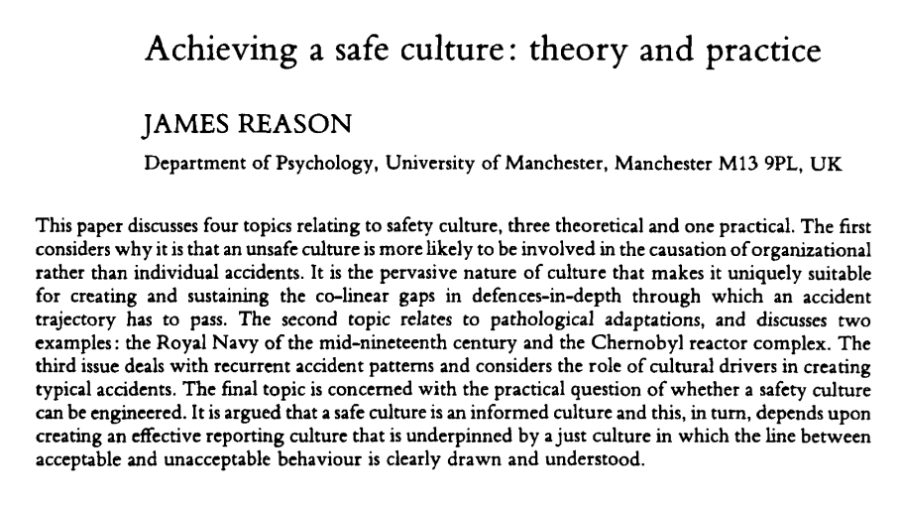
Achieving a safe culture: theory and practice
A 1998 paper from James Reason discussing complex system failures and cultures of safety (which he calls safety cultures, SC—note he often, but not always, says cultures as plural). Way too much to cover, so worth checking out the original paper. First Reason points out the lack of a single definition of SC, but one… Continue reading Achieving a safe culture: theory and practice
‘Safety’ is not a war to be won but an endless guerilla struggle – James Reason
“Cognisant organizations understand the true nature of the ‘safety war’. They see it for what it really is – a long guerilla struggle with no final conclusive victory” I’ve always loved this quote from James Reason (Managing Org Accidents). I know some people dislike war metaphors regarding safety (which I can understand and respect). But… Continue reading ‘Safety’ is not a war to be won but an endless guerilla struggle – James Reason
The Pursuit of Success & Averting Drift into Failure – YT vid from Sidney Dekker
Here’s a 30 min YT presso from Sid Dekker on complex system failures and drift. Some extracts: · “this fascination with counting and tabulating little negative events, as if they are predictive of a big bad event over the horizon, is an illusion” · “We should be doing something quite different if we want to understand how your complex system… Continue reading The Pursuit of Success & Averting Drift into Failure – YT vid from Sidney Dekker
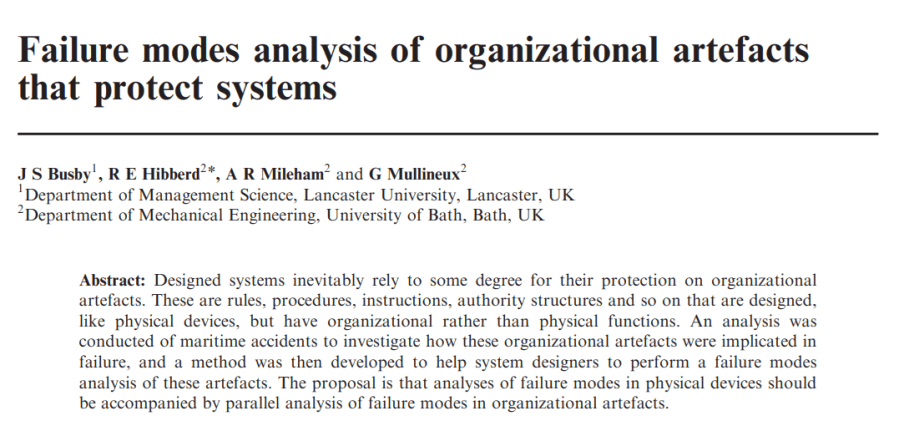
Failure modes analysis of organizational artefacts that protect systems
Really interesting 2004 paper discussing how to study the failures associated with organisational artefacts. Artefacts are “rules, procedures, instructions, authority structures and so on that are designed, like physical devices, but have organizational rather than physical functions”. It’s argued that studying failures of artefacts, like in FMEA, isn’t the same as physical failure modes, and… Continue reading Failure modes analysis of organizational artefacts that protect systems
Complex systems and drifting into failure – further extracts from Dekker 2013
More extracts from Dekker’s 2013 paper ‘Drifting into failure’. These parts focus on some properties of complex systems (image 1), and how systems drift to failure (image 2). Extracts:· “Open systems mean that it can be quite difficult to define the border of a system. What belongs to the system, and what doesn’t? This is known… Continue reading Complex systems and drifting into failure – further extracts from Dekker 2013

Drifting into failure: Complexity theory and the management of risk
2013 paper from Dekker discussing drift into failure. Nothing new if you’ve read his 2011 book. Extracts: · “organizations do not just fail because of component breakage or linear propagations of breakdowns. Instead, failure breeds opportunistically, non-randomly, among the very structures designed to protect an organization from disaster” · “A common pattern seems to be a drift… Continue reading Drifting into failure: Complexity theory and the management of risk
Culture and the role of major disasters – James Reason, 1998
Interesting comment from James Reason from a 1998 paper (summary in the next week or two) on the role of culture/s in major system failures. “Because of their diversity and redundancy, the elements of a multilayered defensive system will be widely distributed throughout the organization. As such, they are only collectively vulnerable to something that… Continue reading Culture and the role of major disasters – James Reason, 1998

