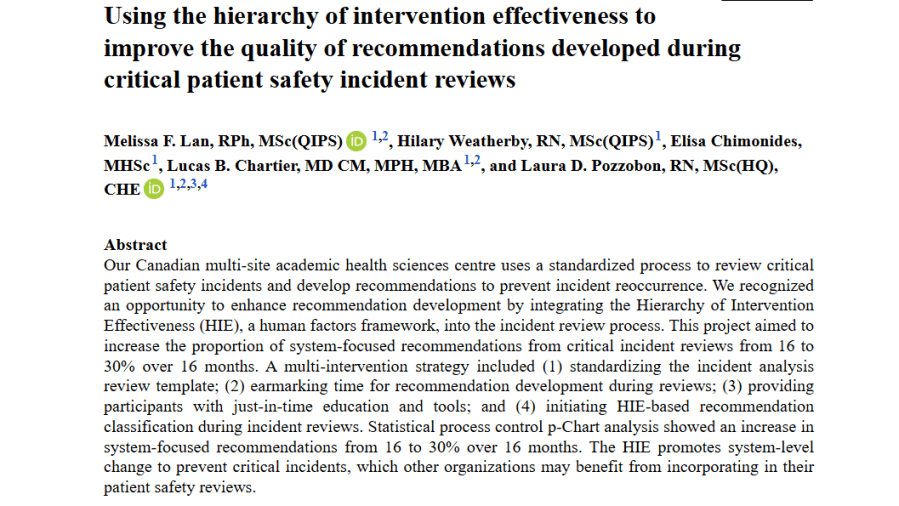
This study evaluated the Hierarch of Intervention Effective (HIE) for improving patient safety incident recommendations. They were namely interested in increasing the proportion of system-focused recommendations. Data came from over 16 months. Extracts: Ref: Lan, M. F., Weatherby, H., Chimonides, E., Chartier, L. B., & Pozzobon, L. D. (2025, June). Using the hierarchy of intervention… Continue reading Using the hierarchy of intervention effectiveness to improve the quality of recommendations developed during critical patient safety incident reviews
Tag: health

The Impact of Physical Hazards on Workers’ Job Satisfaction in the Construction Industry: A Case Study of Korea
This study explored how physical workplace hazards influence job satisfaction in construction, and how mental threats mediate the relationship, and how perceived job quality and security moderate the effects. 2,202 construction workers in Korea were surveyed. Key findings: · “exposure to physical hazards significantly contributes to mental stress, leading to reduced job satisfaction” · And “a heightened… Continue reading The Impact of Physical Hazards on Workers’ Job Satisfaction in the Construction Industry: A Case Study of Korea
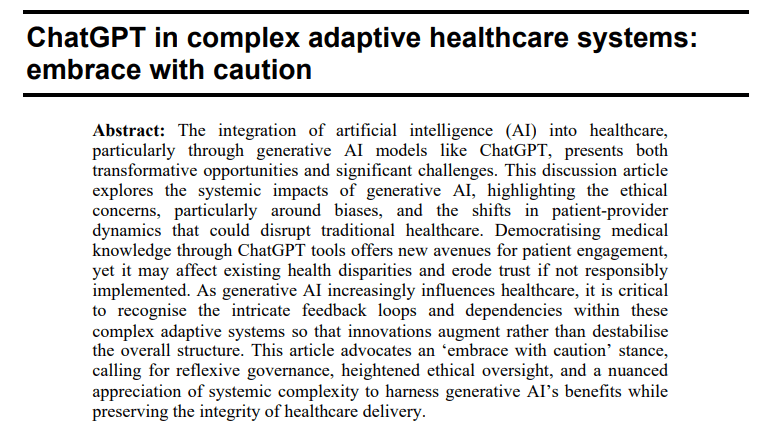
ChatGPT in complex adaptive healthcare systems: embrace with caution
This discussion paper explored the introduction of AI systems into healthcare. It covers A LOT of ground, so just a few extracts. Extracts: · “This article advocates an ‘embrace with caution’ stance, calling for reflexive governance, heightened ethical oversight, and a nuanced appreciation of systemic complexity to harness generative AI’s benefits while preserving the integrity of… Continue reading ChatGPT in complex adaptive healthcare systems: embrace with caution

Mini-Comp: Psychosocial Risks / Mental-Ill Health / Psychological Injury
“wHeRe iS tHe eViDeNcE fOr pSyChOsOcIaL risks?!1?!11” I can’t be bothered repeatedly linking to the dozens of systematic reviews and meta-analyses on the connections between psychosocial factors and various indices of health, safety, and organizational performance on LinkedIn. So, I’m just compiling a few into a mini-collection. WAY WAY WAY too much to systematically cover… Continue reading Mini-Comp: Psychosocial Risks / Mental-Ill Health / Psychological Injury
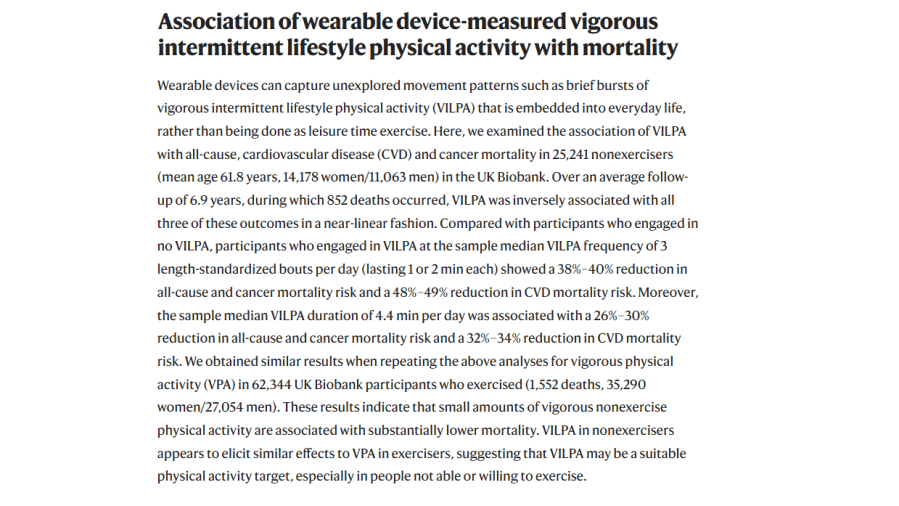
Association of wearable device-measured vigorous intermittent lifestyle physical activity with mortality
Can brief bursts of vigorous activity, like running up stairs, or walking quickly through the shops, reduce all-cause mortality? Yes according to this study. This paper was discussed on a YT channel I follow called Physionic (link to YT and paper in comments). Physical activity was measured via wearables from 25k non-exercisers (UK Biobank data)… Continue reading Association of wearable device-measured vigorous intermittent lifestyle physical activity with mortality
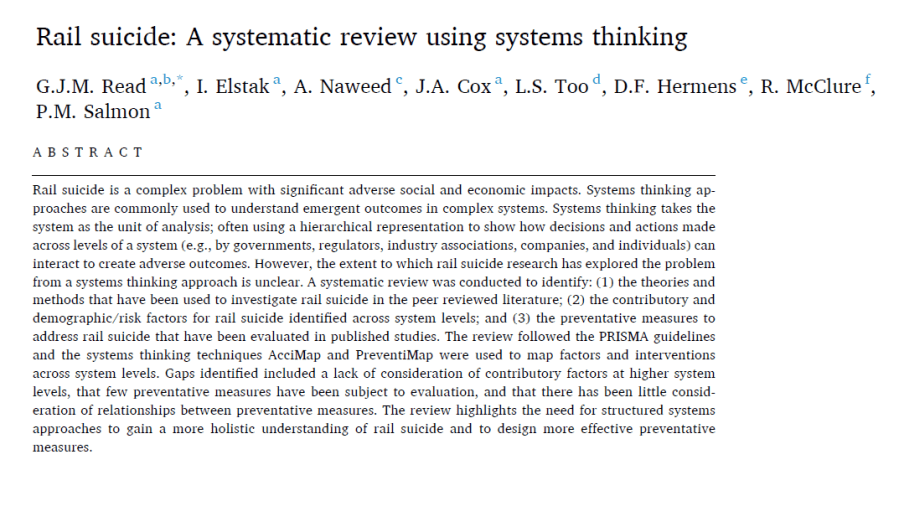
Rail suicide: A systematic review using systems thinking
This systematic review evaluated rail suicide research against the systems thinking techniques AcciMap & PreventiMap. Some extracts: · “In Australia, 67 suicides by train occurred across 2019–20, representing 80 % of all fatalities occurring on the railways” · “Rail suicide is distinct in that in addition to the person who dies by suicide [and the familiy/friends affected],… Continue reading Rail suicide: A systematic review using systems thinking

Leadership, followers’ mental health and job performance in organizations: A comprehensive meta-analysis from an occupational health perspective
This meta-analysis studied the links between leadership and mental health and job performance indices of followers. [NB. Look out for next week’s compendium on leadership research] No real surprises with the findings. They note that leadership, of course, “is not a neutral element”, and may influence both positive and negative effects. Extracts: · “results reveal that… Continue reading Leadership, followers’ mental health and job performance in organizations: A comprehensive meta-analysis from an occupational health perspective
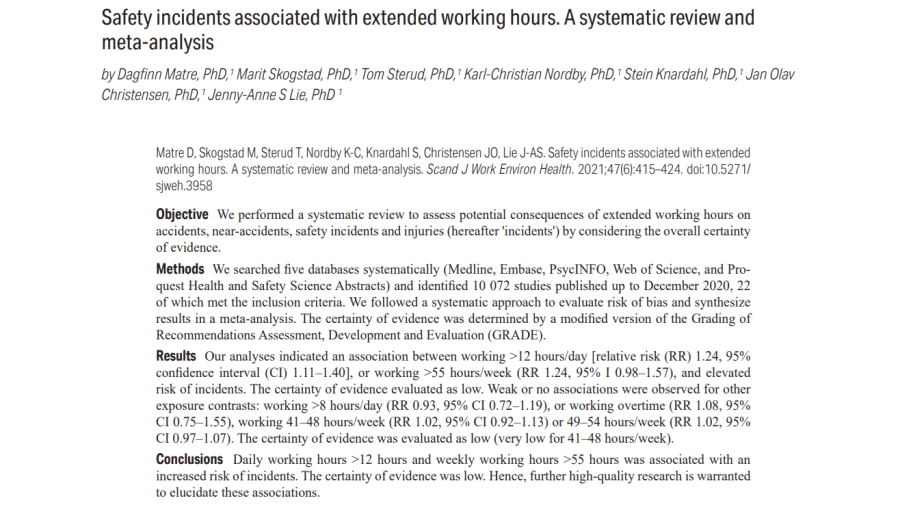
Safety incidents associated with extended working hours. A systematic review and meta-analysis
This meta-analysis evaluated whether extended working hours is associated with work injury (either during or after work). 22 studies were included. This study didn’t find significant evidence for all of the expected links found in other studies (e.g. weak or no association between working overtime on incidents), and this is likely a result of their… Continue reading Safety incidents associated with extended working hours. A systematic review and meta-analysis

The Psychosocial Hierarchy of Controls: Effectively Reducing Psychosocial Hazards at Work
This study redesigned the hierarchy of controls (HoC) to target workplace psychosocial hazards, specifically, adapting the NIOSH Total Worker Health HoC. These called this the Psychosocial Hierarchy of Control (P-HoC). Won’t be anything earth shattering for most, but nice to see it properly articulated. For background: · “There is consistent evidence that psychosocial hazards at… Continue reading The Psychosocial Hierarchy of Controls: Effectively Reducing Psychosocial Hazards at Work

Mental Health Causation in the Construction Industry: A Systematic Review Employing a Psychological Safety Climate Model
This systematic review studied the links between psychological safety climate (PSC) on mental health in the construction industry. 71 studies included. Key findings: · 42 mental health causation factors were identified · High job demand was the most significant contributor, followed by interpersonal relationships, low job control, low job support, and physical status · High job demand was… Continue reading Mental Health Causation in the Construction Industry: A Systematic Review Employing a Psychological Safety Climate Model
 SafetyInsights.org