A few extracts from chapter 11 in Foundations of Safety Science by Bergström and Dekker I found interesting. Here they discuss research in healthcare how: · Nursing was found to have some 600 rules specifying a ward nurses daily work · But, nurses could recite just 2-3 of the 600 rules that “supposedly specify their job” · Despite… Continue reading The fallacy of relying on rules for robust risk management in complex high-risk environments
Tag: resilience

Building Organizational Resilience Through Organizational Learning: A Systematic Review
This explored organisational resilience (OR) through the lens of organisational learning (OL). I found it a pretty tough paper to summarise. In short, OL relies on experiential learning, a systematic approach to learning, an organisational ability to unlearn, and a context that facilitates OL. OR is defined as an organisation’s “ability to anticipate potential threats,… Continue reading Building Organizational Resilience Through Organizational Learning: A Systematic Review
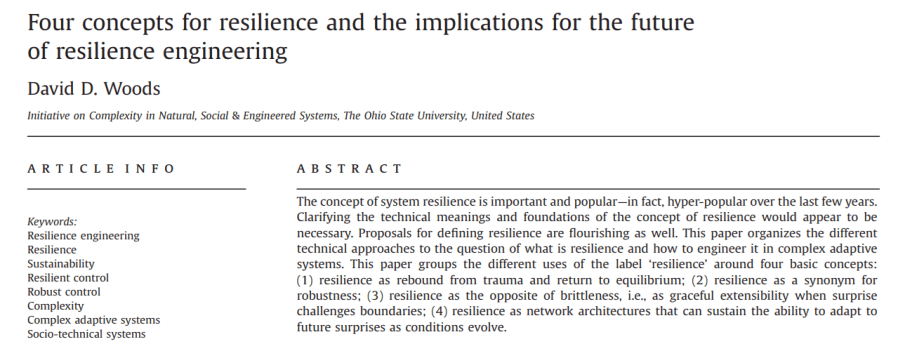
Four concepts for resilience and the implications for the future of resilience engineering
An interesting read from David Woods discussing four resilience concepts. Extracts:· While networks of interdependencies have created new value for stakeholders, it has “also created unanticipated side effects and sudden dramatic failures” · The first concept used to describe resilience is rebounding · Rebounding “begins with the question: why do some communities, groups, or individuals recover from traumatic… Continue reading Four concepts for resilience and the implications for the future of resilience engineering

Designing work systems for resilient performance: insights from resilience engineering
This explored Design for Resilient Performance (DfRP) via their framework. Not a summary – just a few extracts, but maybe I’ll summarise it in the future. Some extracts: · “Resilient performance (RP) is a socio-technical system’s ability to adjust its functioning prior to, during, or following changes and disturbances, thereby sustaining operations under both expected and… Continue reading Designing work systems for resilient performance: insights from resilience engineering
Resilience terminology and a visualisation of resilience/robustness in practice
This may interest people. It covers concepts of resilient performance within seaports. It’s a bit random (seaports), but otherwise gives a handy overview of resilience terms and applications. The first two images are just basic definitions. Extracts: · Image 3 represents resilience elements during disruptions – from pre-disruption, to the disruption, then post-disruption. · During pre-disruption, the… Continue reading Resilience terminology and a visualisation of resilience/robustness in practice
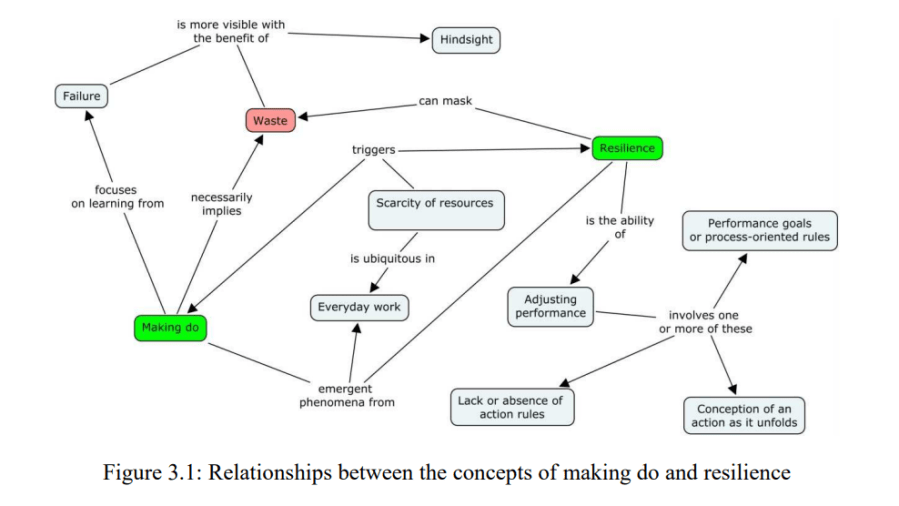
The difference between ‘making do’ and resilience in complex systems
This paper explores the difference between ‘making do’ and resilience. Not a summary, but a few extracts: · Making do has been defined, from a waste perspective as “a situation where a task is started without all its standard inputs, or the execution of a task is continued although the availability of at least one standard… Continue reading The difference between ‘making do’ and resilience in complex systems
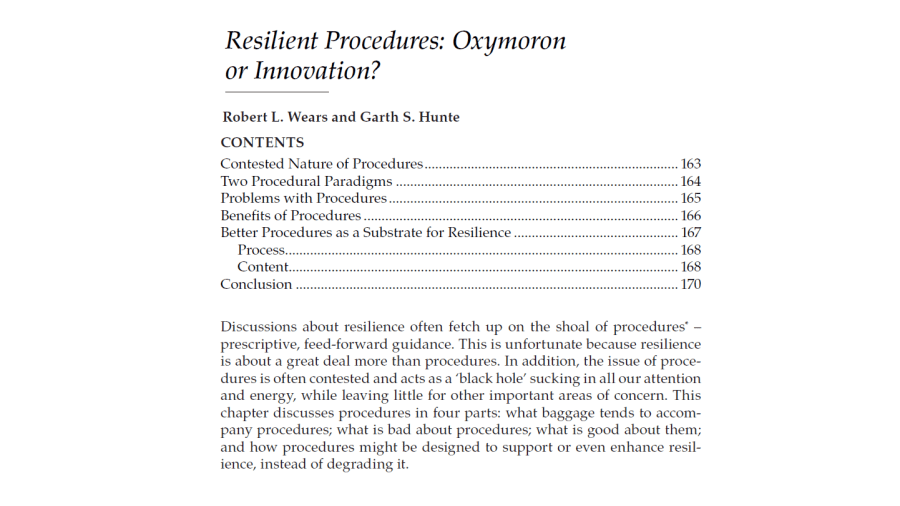
Resilient Procedures: Oxymoron or Innovation?
An interesting chapter from the late Bob Wears around ‘resilient procedures’. I’ve skipped heaps. They specifically explore: · what baggage tends to accompany procedures · what is bad about procedures · what is good about them · how procedures might be designed to support or even enhance resilience, instead of degrading it. Procedures are said… Continue reading Resilient Procedures: Oxymoron or Innovation?

Human Performance Tools: Engaging Workers as the Best Defense Against Errors & Error Precursors
This article covered a more progressive view on human performance, with suggestions on some tools. Too much to cover, so just a few points. They start by saying to consider three truisms: “To err is human. Workers are fallible. Errors are inevitable (as well as predictable)”. These are fundamentals to understanding the human performance approach… Continue reading Human Performance Tools: Engaging Workers as the Best Defense Against Errors & Error Precursors
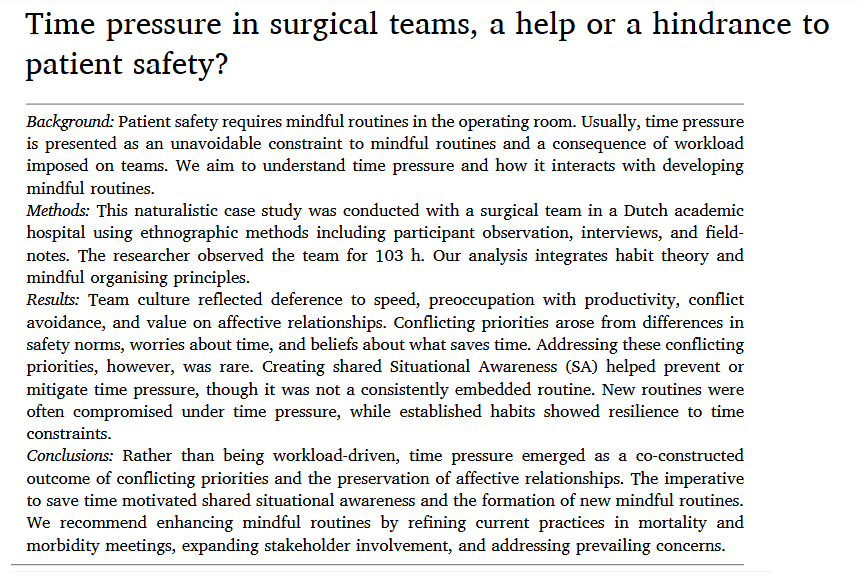
Time pressure in surgical teams, a help or a hindrance to patient safety?
I found this an interesting and brief read about the mindful routines of operating room staff, using a naturalistic decision making approach. Extracts: Ref: van Harten, A., Niessen, T. J., Koksma, J. J., Gooszen, H. G., & Abma, T. A. (2025). Heliyon. Shout me a coffee Study link: https://doi.org/10.1016/j.heliyon.2025.e41967 Shout me a coffee: https://buymeacoffee.com/benhutchinson LinkedIn post:… Continue reading Time pressure in surgical teams, a help or a hindrance to patient safety?

Leveraging Ergonomics and Human Factors (E/ HF) for community impact: what have we learned about how to make a difference
This was a banger – exploring the application of community ergonomics with a strong systems lens. If you’re interested in HF/E, systems thinking, social dynamics, power gradients and more then this will interest you. Can’t do it justice, so a few random extracts. Extracts: Finally they talk about ways to improve this practice – via… Continue reading Leveraging Ergonomics and Human Factors (E/ HF) for community impact: what have we learned about how to make a difference
 SafetyInsights.org