
This was a really brief discussion paper from Dekker and Leveson, covering systems thinking in medicine. Three parts – see comments. Nothing new for most, but they cover: · “The ‘systems approach’ to patient safety has recently led to questions about its ethics and practical utility” · E.g. A recent paper from a retired neurosurgeon questioned systems… Continue reading The systems approach to medicine: controversy and misconceptions — Dekker & Leveson
Tag: safety science

Coffee drinking timing and mortality in US adults (** tl;dr: coffee is awesome)
This may interest people, exploring the role of coffee drinking on all-cause mortality and Cardiovascular disease (CVD). Large sample, but observational and via 7-day dietary record, with follow-up periods. Note: Normally we need to be cautious with study methods and limits, but since we’re dealing with coffee – I’ll accept no ill spoken. Coffee defies… Continue reading Coffee drinking timing and mortality in US adults (** tl;dr: coffee is awesome)
Identification of management traits related to human factors in new views of safety approaches
This paper from Leônidas Brasileiro and colleagues evaluated common attributes across approaches grouped under ‘New View’. i.e. HRO, S-II, SD, RE & HOP – they used both literature and Delphi method. Not a summary since you can read the full paper. It’s an accessible read if you’re keen to quickly understand some key differences and… Continue reading Identification of management traits related to human factors in new views of safety approaches

Mini-Compendium: Power, Safety, Authority Gradients, and the Power of Elites
Here’s some articles, mostly full-text links, exploring power within organisations. Includes broader social power, power gradients, voice, and more. Feel free to shout me a coffee if you’d like to support the growth of my site: Full-Text Articles [Below link will say ‘Discursive effects of safety science’. Download it and its a whole book with… Continue reading Mini-Compendium: Power, Safety, Authority Gradients, and the Power of Elites
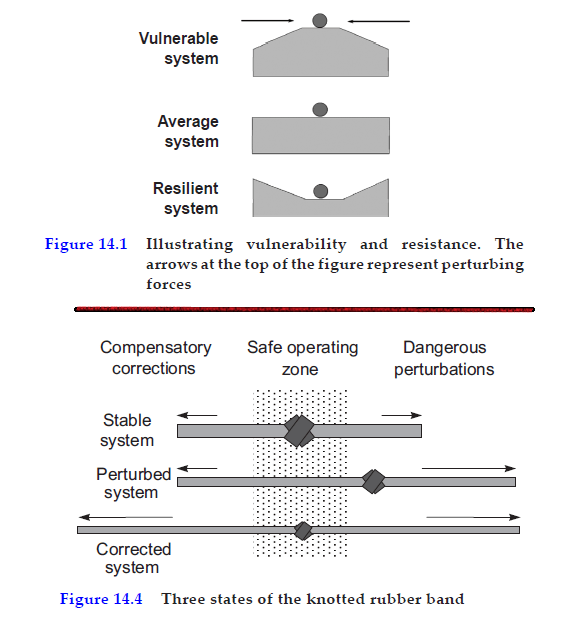
Achieving a safe and stable high-risk system: James Reason ‘Human Contribution’
A few extracts from James Reason’s ‘Human Contribution’. He proposes a couple of different representations of safety (image 1) · The first (14.1), represents the notions of vulnerability and resilience · The ball bearing is sitting at different locations on blocks – in the vulnerable system, perturbations topple the ball · It’s of course the most stable in… Continue reading Achieving a safe and stable high-risk system: James Reason ‘Human Contribution’
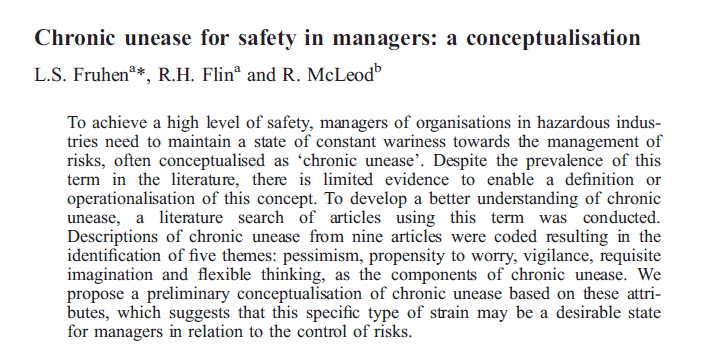
Chronic unease for safety in managers: a conceptualisation
Just a basic post today – some extracts from a paper exploring chronic unease: · Drawing on Reason’s concept, chronic unease has gone by various definitions over the years (image 1) · For Reason, it was the “tendencies of wariness towards risks” · And as a “contrast to complacency, resulting from the absence of negative events, leading ‘people… Continue reading Chronic unease for safety in managers: a conceptualisation

Human Success: Old wine in new bottles, or a shift of mindset for HRA in an automated world?
A really interesting conference paper from Andreas Bye, discussing whether shifting Human Reliability Analysis (HRA) terminology from human error to human success would help alleviate some of the blame-connotations. Also discussed is the human role in automated systems. It was meant to be a mini-post with a few dot-points and a couple of images, but… Continue reading Human Success: Old wine in new bottles, or a shift of mindset for HRA in an automated world?

Understanding Accidents – From Root Causes to Performance Variability
This 2002 discussion paper from Erik Hollnagel unpacks some assumptions of different accident models. Note: In this work, accident model isn’t the specific tool or method (e.g. ICAM), but a “frame of reference as the accident model, i.e., a stereotypical way of thinking about how an accident occurs”. i.e. the mental models and justifications on… Continue reading Understanding Accidents – From Root Causes to Performance Variability
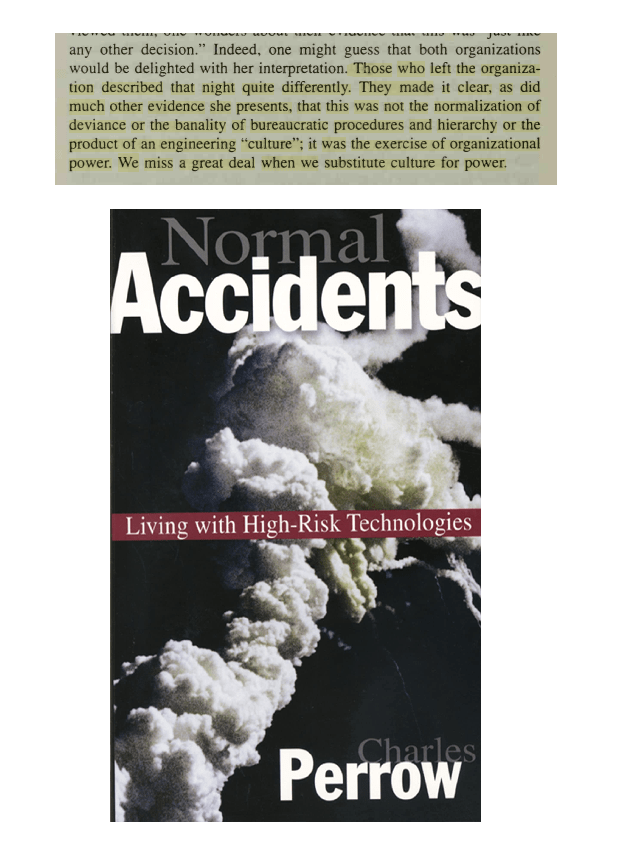
“We miss a great deal when we substitute culture for power” – Charles Perrow on the role of power in disaster
“We miss a great deal when we substitute culture for power” I love this quote from Perrow in Normal Accidents (emphasis added). Perrow briefly discusses the role of power in organising risky technology. Discussing Vaughan’s interpretation of the Challenger disaster: · “I also find the role of power and interests minimized in Diane Vaughn’s otherwise excellent… Continue reading “We miss a great deal when we substitute culture for power” – Charles Perrow on the role of power in disaster

Safety Management Systems may struggle with psychosocial factors and other complex phenomena
Certified safety management systems (OHSM) may struggle with complex, multi-factorial matters, like psychosocial safety. Extracts: · The OHSM “does not necessarily tackle the most urgent work environment issues and may exclude important aspects of the work environment such as psychosocial factors” · “some [OHSM] approaches may be ill-equipped to tackle complex sociotechnical issues and psychosocial matters, and… Continue reading Safety Management Systems may struggle with psychosocial factors and other complex phenomena
 SafetyInsights.org