
This thesis from Jennifer Serne explored how construction safety professionals attribute accident causes. 37 participants were included with 20 accident scenarios, 13 individual semi-structured interviews and 8 summative focus groups. For background: · Originally proposed by Heider in 1958, it’s said that people are “psychologically driven to determine the causes of others’ behavior” · And… Continue reading Attributing Cause for Occupational Accidents in Construction: A Descriptive Single Case Study
Tag: safety science
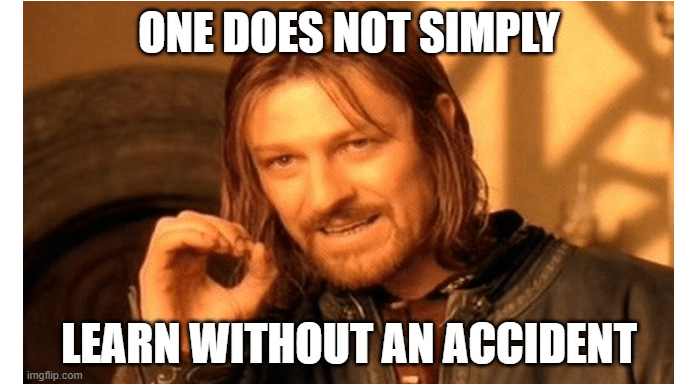
Compendium: Learning and improvement without incidents
Here’s a mini-compendium of…well, probably a lot of stuff with only a tenuous link to ‘learning’. I tried to focus on learning that doesn’t require incidents, but you’ll find those here, too. There’s >100 articles, mostly full-text. I think I went overboard. Unfortunately, it’s barely sorted. It includes: Shout me a coffee Learning Strengths &… Continue reading Compendium: Learning and improvement without incidents

Analyzing Procedure Performance using Abstraction Hierarchy: Implications of Designing Procedures for High-risk Process Operations
This paper explored the use of procedures and operator performance from the perspective of work domain analysis/abstraction hierarchy. I’ve skipped heaps – the ‘doing’ part of the abstraction hierarchy, but their descriptions of the problem and the discussion had some gold. For context: · Procedural issues have been linked in a number of major accidents… Continue reading Analyzing Procedure Performance using Abstraction Hierarchy: Implications of Designing Procedures for High-risk Process Operations
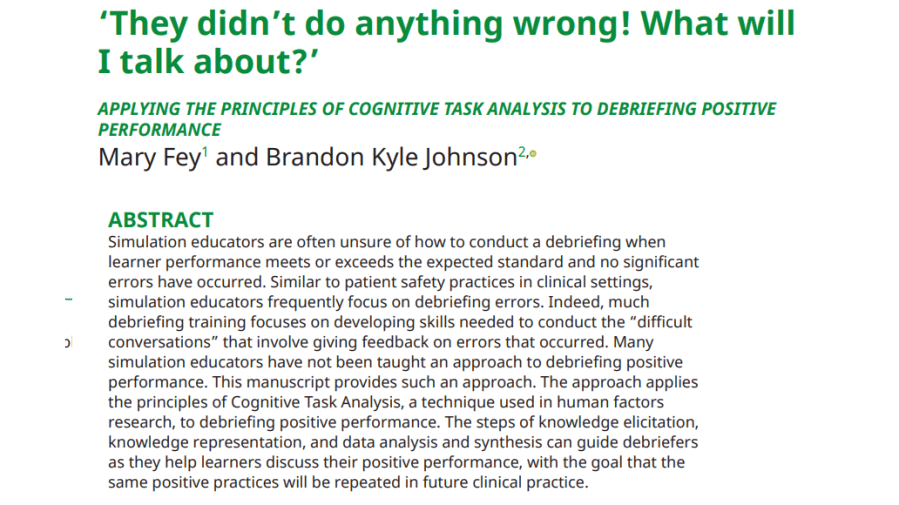
‘They didn’t do anything wrong! What will I talk about?’ Applying the principles of cognitive task analysis to debriefing positive performance
An interesting paper exploring the use of Safety-II inspired debriefs, learning from successful performance. They used cognitive task analysis techniques. Not a summary, but it’s open access and really brief – so check it out 👍 Extracts: · “simulation cases are often deliberately designed to push learners to their zone of proximal development .. where perfect… Continue reading ‘They didn’t do anything wrong! What will I talk about?’ Applying the principles of cognitive task analysis to debriefing positive performance

Human Factors and Ergonomics in Industry 5.0 —A Systematic Literature Review
This open access article may interest people – it explored the future of human factors/ergonomics in Industry 5.0 (I05). Not a summary but you can read the full paper freely. Some extracts: Shout me a coffee Study link: https://doi.org/10.3390/app15042123 LinkedIn post: https://www.linkedin.com/posts/benhutchinson2_this-open-access-article-may-interest-people-activity-7300617102564933632-WGPj?utm_source=share&utm_medium=member_desktop&rcm=ACoAAAeWwekBvsvDLB8o-zfeeLOQ66VbGXbOpJU
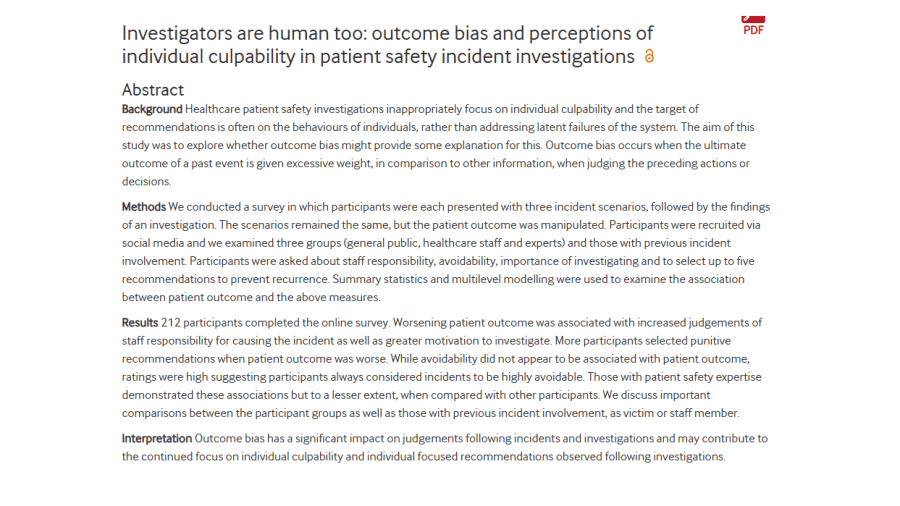
Investigators are human too: outcome bias and perceptions of individual culpability in patient safety incident investigations
This study explored whether outcome bias might explain why healthcare investigations focus on individual culpability over addressing latent conditions in the system. 212 participants were allocated to one of three scenarios followed by the findings of an investigation (see scenario overviews below). For background: · Prior work has identified that the “overwhelming majority of recommendations… Continue reading Investigators are human too: outcome bias and perceptions of individual culpability in patient safety incident investigations
Fukushima was a disaster “Made in Japan” according to the independent commission
Gotta love these really poetic parts of major accident inquiries… This from the Fukushima independent commission:“What must be admitted – very painfully – is that this was a disaster “Made in Japan.” AND “Its fundamental causes are to be found in the ingrained conventions of Japanese culture: our reflexive obedience; our reluctance to question authority;… Continue reading Fukushima was a disaster “Made in Japan” according to the independent commission
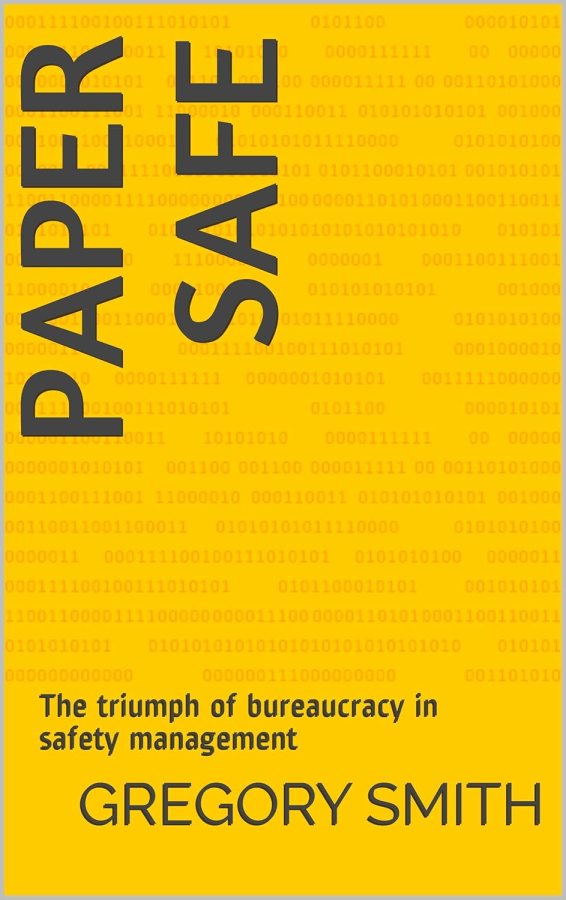
Safety metrics and reports “make no contribution to proving the effectiveness of our crucial systems” – Paper Safe, Greg Smith
A few apt extracts from Greg Smith’s excellent ‘Paper Safe’. If you’ve not yet read this or Proving Safety, then do yourself the favour. Greg argues: · Many indicators in use are measures of activity and usually tell us something has been done · But, “They tell us nothing about the quality or effectiveness of the activity”… Continue reading Safety metrics and reports “make no contribution to proving the effectiveness of our crucial systems” – Paper Safe, Greg Smith

Human Performance Tools: Engaging Workers as the Best Defense Against Errors & Error Precursors
This article covered a more progressive view on human performance, with suggestions on some tools. Too much to cover, so just a few points. They start by saying to consider three truisms: “To err is human. Workers are fallible. Errors are inevitable (as well as predictable)”. These are fundamentals to understanding the human performance approach… Continue reading Human Performance Tools: Engaging Workers as the Best Defense Against Errors & Error Precursors

“Those found responsible have been sacked”: some observations on the usefulness of error
Another interesting paper co-authored by the late Richard Cook. This paper discusses the usefulness of error. It’s a larger post with a lot of quotes – I just can’t do a better or more succinct job of restating what they’ve already written. Providing background, they argue that while some see “error” as a dead-end, others… Continue reading “Those found responsible have been sacked”: some observations on the usefulness of error
 SafetyInsights.org