What does Safety-II tell us about workload, adaptations, and error?
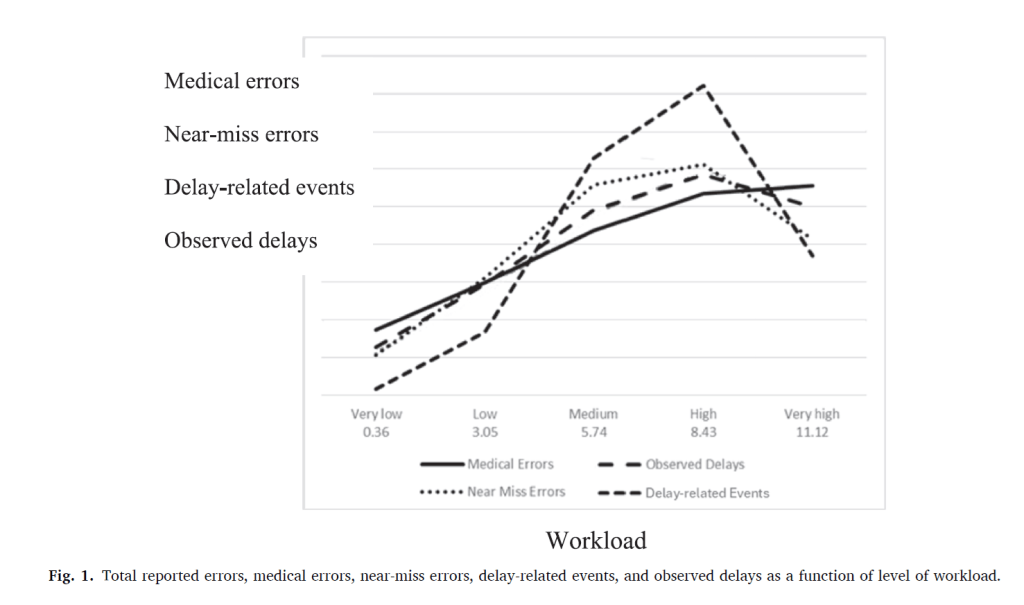
This study analysed the effects of workload on error and adaptations across >580 days in 6 hospital departments and 924 reported safety events.
PS. Check out my YouTube and recent Critical Control / barrier vid: https://youtube.com/@safe_as_pod?si=iUaDPJynPemQRZhY
Shout a coffee: https://buymeacoffee.com/benhutchinson
Extracts:
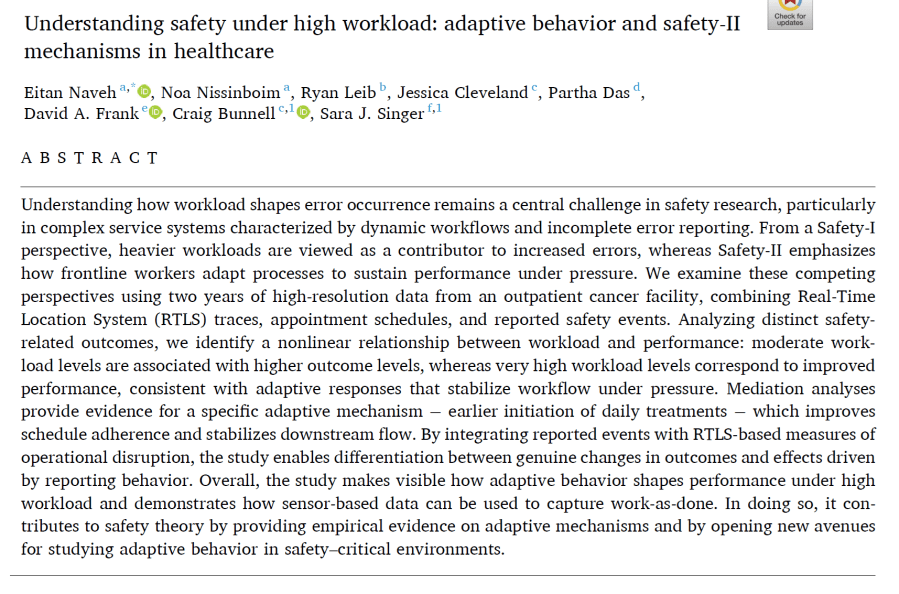
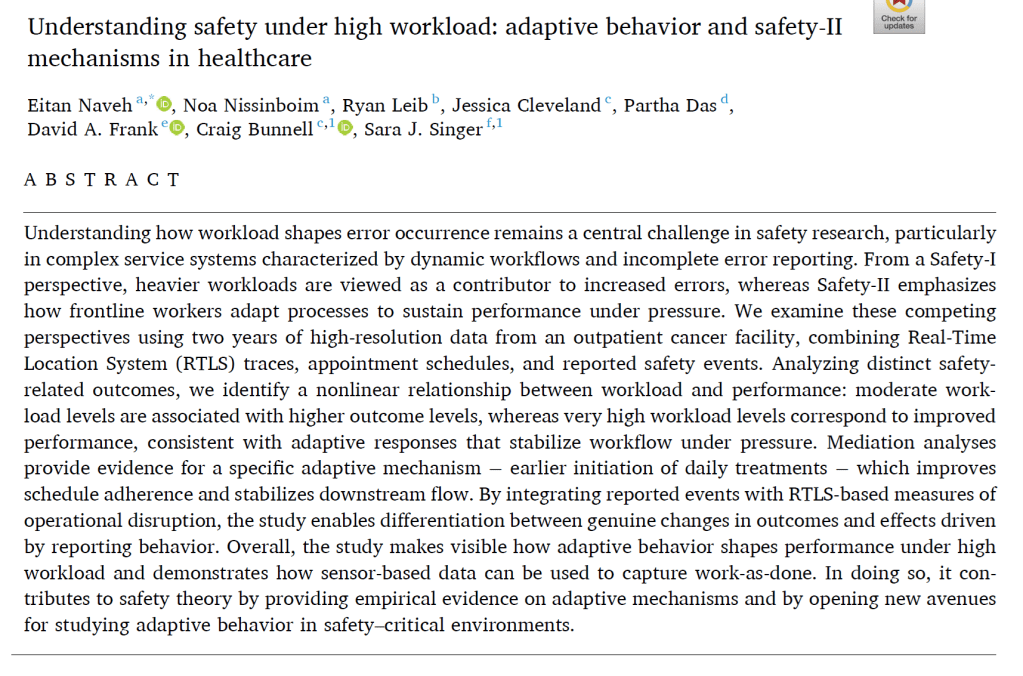
· “From a Safety-I perspective, heavier workloads are viewed as a contributor to increased errors, whereas Safety-II emphasizes how frontline workers adapt processes to sustain performance under pressure”
· However these findings show “that workload influences outcomes through adaptive changes in FTST [first treatment start time] and appointment punctuality, which together shape downstream system performance”
· “frontline staff actively modify their work practices in response to increasing workload. Specifically, heavier workload prompts earlier initiation of the first treatment of the day. This adaptation improves appointment punctuality and stabilizes downstream processes, reducing operational disruptions and several outcome measures”
· “Such behaviors align closely with Safety-II and resilience engineering perspectives, which emphasize that safe performance depends on workers’ capacity to adjust to variable conditions rather than simply follow prescribed work designs”
· “studies of adaptive behavior show that frontline workers regularly alter workflows, reprioritize tasks, or compensate for system constraints through informal coordination”
· “Importantly, the adaptive behaviors observed in this study reflect process improvement, not the corner-cutting or quality-reducing trade-offs often assumed in operations under pressure”
· “Similar to continuous improvement research demonstrating that redesigned processes can reduce trade-offs between safety and productivity … our findings illustrate how micro-level adaptations can enable higher workload to be handled safely and efficiently”
· “our findings provide empirical evidence consistent with Safety- II mechanisms of adaptive performance, particularly the role of frontline adaptation in sustaining performance under pressure”
· “heavy workload is not inherently associated with worse safety outcomes”
· And “managers should be cautious about interpreting decreased error reporting during busy periods as evidence of reporting failure”
· “These findings highlight the importance of managing not only workload levels, but also how work is performed under pressure”
· “Earlier initiation of treatment can reduce queue buildup and congestion, even when overall workload levels remain high”
· “Adaptive behaviors should be understood as context-dependent responses that may both mitigate and redistribute risks across different dimensions of system performance”

 SafetyInsights.org