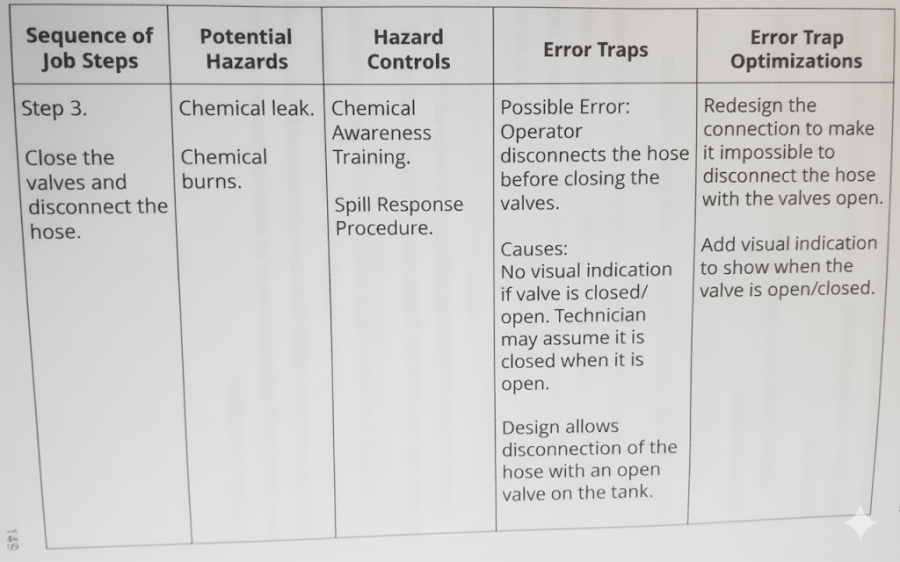
‘Re-Imagining Risk Assessment’ Another extract from Marcin’s book ‘Learning from Normal Work’. These extracts come from the chapter about how we can expand the imagination of the risk assessment – focusing on John and Sarah: · “ … we were still seeing accidents. In some cases, the accidents were repeating themselves. Our traditional risk assessments focused… Continue reading Re-imagining risk assessment with error traps
Cultural contributors to the Fukushima Daiichi disaster – groupism, obedience to authority, wilful blindness
This article explored some cultural aspects underpinning the Fukushima disaster. Extracts: · Org failure types contributing to the disaster included “inadequate risk assessments and lack of safeguards against known threats”, “inadequate levels of knowledge and equipment inspection related to severe accidents”, “inadequate emergency response training and preparedness” & “inadequate regulatory oversight by regulators and the government”… Continue reading Cultural contributors to the Fukushima Daiichi disaster – groupism, obedience to authority, wilful blindness

Safe As 39: How biased are incident investigators?
Investigations are reputed to be ‘fact finding’ exercises: objective searches for facts and truth. How what role does investigator bias play in constructing the incident findings? Today’s article is: MacLean, C. L., & Dror, I. E. (2023). Measuring base-rate bias error in workplace safety investigators. Journal of safety research, 84, 108-116. Spotify: https://open.spotify.com/episode/2sd92JGDTL4vq4s9AGJ2ac?si=tWpXuga6RwqmF0r-AiWPnw Apple: https://podcasts.apple.com/us/podcast/e39-how-biased-are-incident-investigators/id1819811788?i=1000728238089 Make sure… Continue reading Safe As 39: How biased are incident investigators?
Principles for managing barriers in the petroleum industry
Principles for managing barriers in the petroleum industry – the Norwegian approach. Here’s some extract from this 40 page guide: · Barriers are “measures intended to detect failure, hazard and accident situations at an early stage, reduce their potential for propagating and limit harm and disruption” · “No matter how safely and robustly we design and operate… Continue reading Principles for managing barriers in the petroleum industry

Safe As 38: 4Ds – Dumb, Dangerous, Different, Difficult – for learning (quickisode)
This quickisode unpacks the 4D method for learning: Dumb, Dangerous, Different, Difficult. The source is Sutton et al. 2023. 4Ds for HOP and Learning Teams: A practical how-to guide to facilitate learning from everyday work, critical and dynamic risks with the 4Ds. Spotify: https://open.spotify.com/episode/5kVSsQBISQK3vMREbUGExv?si=LOvB1DE1SfCE-8E7uYSK_Q Apple: https://podcasts.apple.com/us/podcast/e38-4ds-dumb-dangerous-different-difficult-for-learning/id1819811788?i=1000727889641 Make sure to subscribe to Safe As on Spotify/Apple,… Continue reading Safe As 38: 4Ds – Dumb, Dangerous, Different, Difficult – for learning (quickisode)
Brent Sutton and I talk shop on the HOP Into Action podcast
Brent and I talked shop about safety, research and learning. Link: https://lnkd.in/gFhqKa7A
Lack of vehicle crash protection in 1980 was one of “the greatest and most tragic health scandals of our century” – Haddon Jr
Not much to say here – on a current Haddon reading bender and found this a pretty cool statement. Haddon, lamenting that as of 1980, vehicles lacking sufficient crash protection was one of: “the greatest and most tragic health scandals of our century”. Ref: Haddon Jr, W. (1980). Advances in the epidemiology of injuries as… Continue reading Lack of vehicle crash protection in 1980 was one of “the greatest and most tragic health scandals of our century” – Haddon Jr
Articles on safety voice, silence, interpersonal risk and psychological safety
Buncha links on safety voice, silence, interpersonal risk and psychological safety. No other rhyme or reason to it. Heaps more on my site. PS. Check out the latest Safe As pod – this covers psyche safety. 1. https://safetyinsights.org/2022/10/21/the-asymmetry-of-voice-silence-or-the-sounds-of-silence/ 2. https://podcasts.apple.com/us/podcast/e37-psychological-safety-what-is-it-good-for-a-meta/id1819811788?i=1000727734335 3. https://www.linkedin.com/pulse/making-soft-intelligence-hard-multi-site-qualitative-study-ben 4. https://www.linkedin.com/pulse/re%25EF%25AC%2582ections-voice-silence-workplace-conversations-ben-hutchinson-k7bic 5. https://www.linkedin.com/pulse/staying-silent-safety-issues-conceptualizing-silence-ben-hutchinson 6. https://www.linkedin.com/posts/benhutchinson2_what-is-the-relationship-between-different-activity-7185411204012507136-dh-1?utm_source=share&utm_medium=member_desktop 7. https://www.linkedin.com/pulse/taking-your-team-behind-curtain-effects-leader-safety-ben-hutchinson 8. https://www.linkedin.com/pulse/voices-carry-effects-verbal-physical-aggression-ben-hutchinson 9. https://safetyinsights.org/2021/02/16/upward-voice-participative-decision-making-trust-in-leadership-and-safety-climate-matter/ 10.… Continue reading Articles on safety voice, silence, interpersonal risk and psychological safety

Safe As 37: Psychological Safety – what is it good for? A meta-analysis of research
Psychological safety has reached almost Deity levels. Every third business, HR or tech article and its dog seems to mention Psychological Safety, in the context of almost everything. But what evidence underpins the construct? As we’ll find, even by 2017, quite a lot. Today’s article is Frazier, M. L., Fainshmidt, S., Klinger, R. L., Pezeshkan,… Continue reading Safe As 37: Psychological Safety – what is it good for? A meta-analysis of research

Deming: “Eliminate numerical quotas for the work force” and exhortations for accountability, since they are “directed at the wrong people”
“What is wrong with posters and exhortations? They are directed at the wrong people”. So Deming wisely argues. For Deming: · Such exhortations are problematic since they to “arise from management’s supposition that the production workers could, by putting their backs into the job, accomplish zero defects, improve quality, improve productivity, and all else that is… Continue reading Deming: “Eliminate numerical quotas for the work force” and exhortations for accountability, since they are “directed at the wrong people”

