
Do metaphors in health messages improve (intention for) self-protective behaviours? This study manipulated a few health messages (sun danger) via metaphorical vs literal risk messages, and sun damage as enemy combat. Extracts: · “People regularly encounter messages encouraging lifestyle behaviors that reduce the risk of illnesses such as cancer, influenza, and diabetes. But all too frequently… Continue reading Do metaphors in health messages work? Exploring emotional and cognitive factors

On “Black Swans” and “Perfect Storms”: Risk Analysis and Management When Statistics Are Not Enough
Really interesting 2012 article from Pate-Cornell about black swans, perfect storms and risk management. Although Pate-Cornell isn’t likely a household name within safety, she’s one of the GOATs in risk analysis. As usual, I’ve skipped a lot. Her key thesis is that popularised concepts like black swans and perfect storms have “struck the public’s imagination”… Continue reading On “Black Swans” and “Perfect Storms”: Risk Analysis and Management When Statistics Are Not Enough
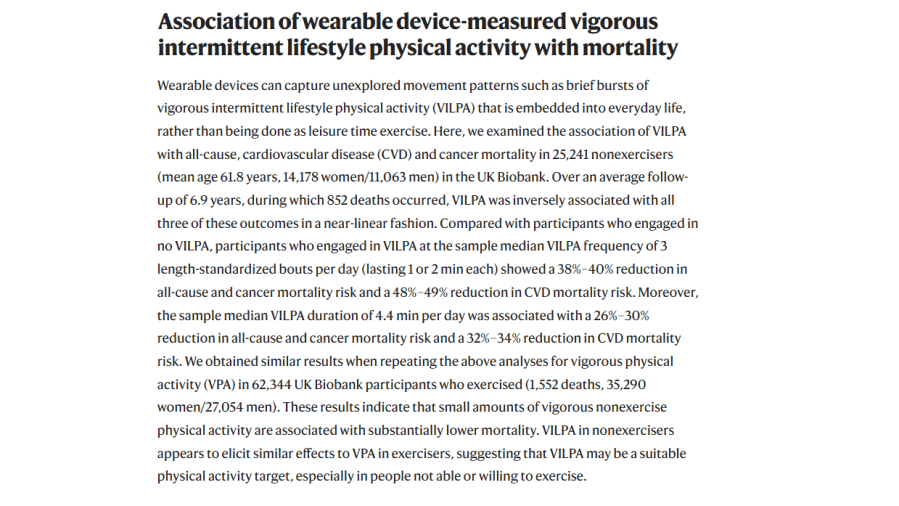
Association of wearable device-measured vigorous intermittent lifestyle physical activity with mortality
Can brief bursts of vigorous activity, like running up stairs, or walking quickly through the shops, reduce all-cause mortality? Yes according to this study. This paper was discussed on a YT channel I follow called Physionic (link to YT and paper in comments). Physical activity was measured via wearables from 25k non-exercisers (UK Biobank data)… Continue reading Association of wearable device-measured vigorous intermittent lifestyle physical activity with mortality

Compendium: Rules / Procedures / Procedural Departure / Writing Procedures
This mini-compendium covers a range of papers talking generally about rules and procedures. This includes the role, benefits and risks of rules, writing better rules incorporating HF/E and human-centred design, some literature specifically on workarounds, and then papers on rule departures and more. Feel free to shout a coffee (one-off or recurring monthly) if you’d… Continue reading Compendium: Rules / Procedures / Procedural Departure / Writing Procedures
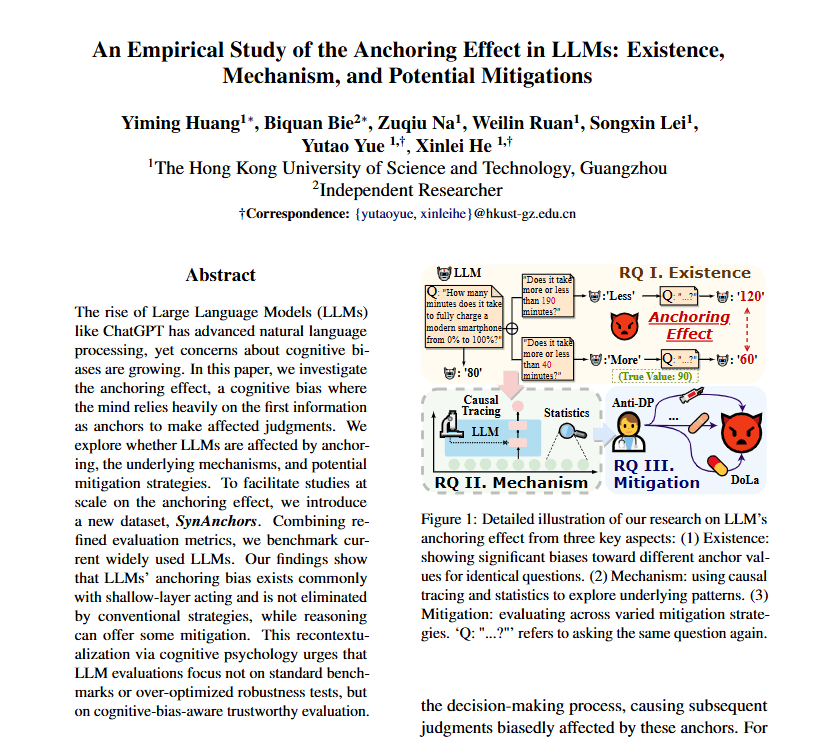
An Empirical Study of the Anchoring Effect in LLMs: Existence, Mechanism, and Potential Mitigations
This study found that several LLMs are fairly easily influenced by anchoring effects, consistent with human anchoring bias. Extracts: · “Although LLMs surpass humans in standard benchmarks, their psychological traits remain understudied despite their growing importance” · “The anchoring effect is a ubiquitous cognitive bias (Furnham and Boo, 2011) and influences decisions in many fields” · “Under uncertainty,… Continue reading An Empirical Study of the Anchoring Effect in LLMs: Existence, Mechanism, and Potential Mitigations
Learning from experience
More practical wisdom from the late, great Trevor Kletz. This explored a few elements of learning from experience – like the problems of just blaming people or changing procedures. First he targets the focus on changing procedures instead of improving designs. First, our first step should be, wherever reasonably practicable, is to remove the hazard… Continue reading Learning from experience
“We might just as well reprimand a light-bulb for going out” than tell people to be more careful: Trevor Kletz and his classic aphorisms
There’s no use telling people to be more careful, “We might just as well reprimand a light-bulb for going out”. Trevor Kletz with his classic aphorisms about focusing on error and blame when we should instead be improving the design of workplaces and plant. Other extracts from his 1976 article ‘Accident Data – the need… Continue reading “We might just as well reprimand a light-bulb for going out” than tell people to be more careful: Trevor Kletz and his classic aphorisms
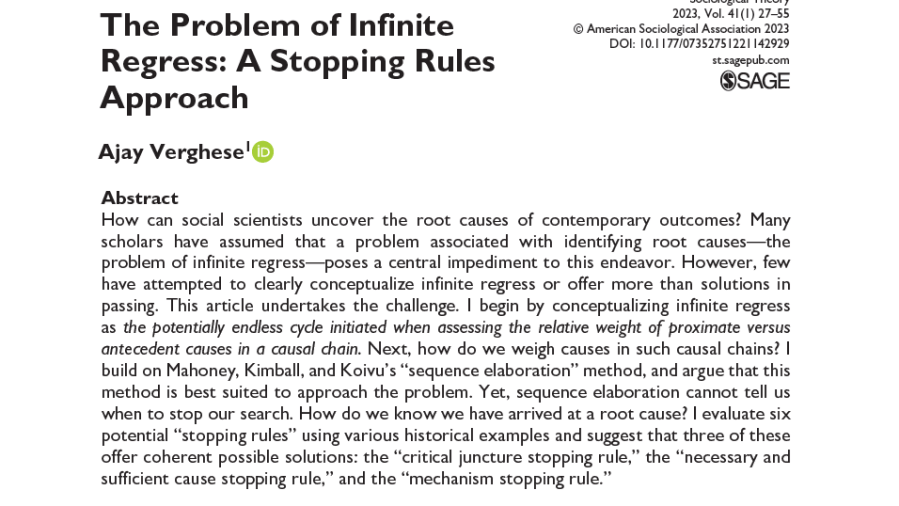
The issues of ‘root causes’ and infinite regression (the endless search for the causes of causes)
A really interesting, but challenging, read about the ontological status of ‘root causes’ and more pointedly, the problem of infinite regression. The author also proposes some stop rules to help navigate infinite regression. I’ve previously posted articles critical of the status of ‘root causes’, who argue it is more a process of implicit or explicit… Continue reading The issues of ‘root causes’ and infinite regression (the endless search for the causes of causes)
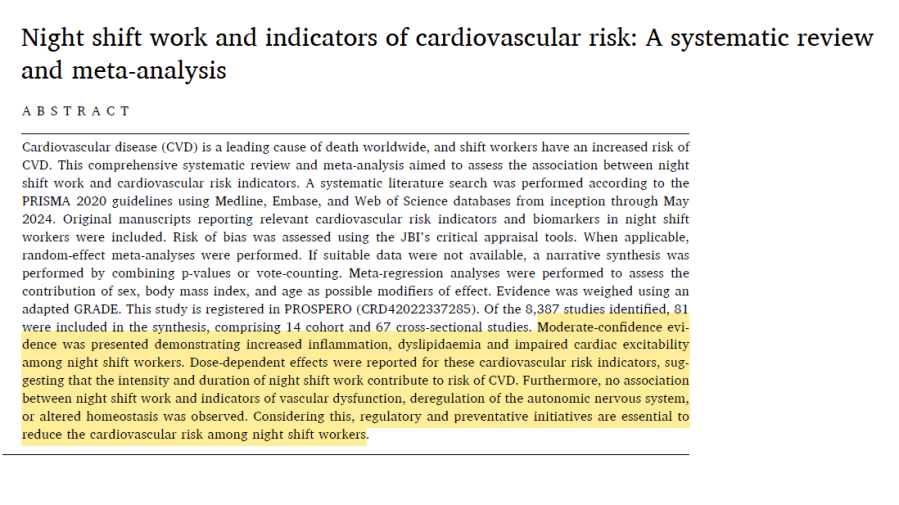
Night shift work and indicators of cardiovascular risk. A systematic review and meta-analysis
Night shift work linked to various indices of cardiovascular disease (CVD) risk in this systematic review and meta-analysis. 81 studies were evaluated. Extracts: · “Dose-dependent effects were reported for these cardiovascular risk indicators, suggesting that the intensity and duration of night shift work contribute to risk of CVD” · “This systematic review reports moderate-confidence evidence for inflammation,… Continue reading Night shift work and indicators of cardiovascular risk. A systematic review and meta-analysis
Ineffective audits and systems and false safety: Maritime NZ legal case
Third post from the Maritime NZ case where the CEO was charged under a failure to exercise due diligence for a work fatality (Ports of Auckland Limited (POAL). Some extracts on audits (and systems in post 2 in comments): · “Any effective system should also incorporate regular review and audit processes” · “the prosecution submits that prior… Continue reading Ineffective audits and systems and false safety: Maritime NZ legal case

