
This was pretty interesting – it compared GPT-4o to people in extracting takeaways from visualised data. They were also interested in how well the LLM could simulate human respondents/responses. Note that the researchers are primarily interested in whether the GPT-4o model acts as a suitable proxy for human responses – they recognise there are other… Continue reading LLMs Are Not Reliable Human Proxies to Study Affordances in Data Visualizations
Tag: artificial-intelligence
Leverage points to intervene in a system – Donella Meadows
In the lead up to next week’s compendium on systems thinking, here’s a banger from Donella Meadows. She explores system leverage points. Not a summary, but some extracts: · Leverage points are “places within a complex system .. where a small shift in one thing can produce big changes in everything” · The “state of the system”… Continue reading Leverage points to intervene in a system – Donella Meadows

Avoiding ‘second victims’ in healthcare: what support do staff want for coping with patient safety incidents, what do they get and is it effective? A systematic review
This systematic review evaluated evidence for what support staff want vs what they receive, and whether the support is effective. 99 studies were included. Some extracts: · PSI (patient safety incident) lead to emotional shame, guilt, anger, shock, depression, fear, flashbacks, helplessness, fatigue, withdrawal and more · The three most desired support types staff want before and… Continue reading Avoiding ‘second victims’ in healthcare: what support do staff want for coping with patient safety incidents, what do they get and is it effective? A systematic review

ChatGPT for analysing investigations
I think this is one of the better uses of LLMs regarding investigations – they trained their model to evaluate accident reports and extract key details from the reports. They found: · It could extract key information from unstructured data and “significantly reduce the manual effort involved in accident investigation report analysis and enhance the overall… Continue reading ChatGPT for analysing investigations

Human factor analysis of cockpit work incidents in high-speed workboats: the mystery hidden between the lines
This study unpacked what investigators look at and how they construct causes in high-speed workboats. It employed a Safety-II / HOP / HF perspective. Tl;dr: human factors are poorly evaluated and largely seen as individual-level factors. Some extracts: · “Although the analysis focused on negative observations, it also identified HFs that supported the activity” · “Many pivotal… Continue reading Human factor analysis of cockpit work incidents in high-speed workboats: the mystery hidden between the lines
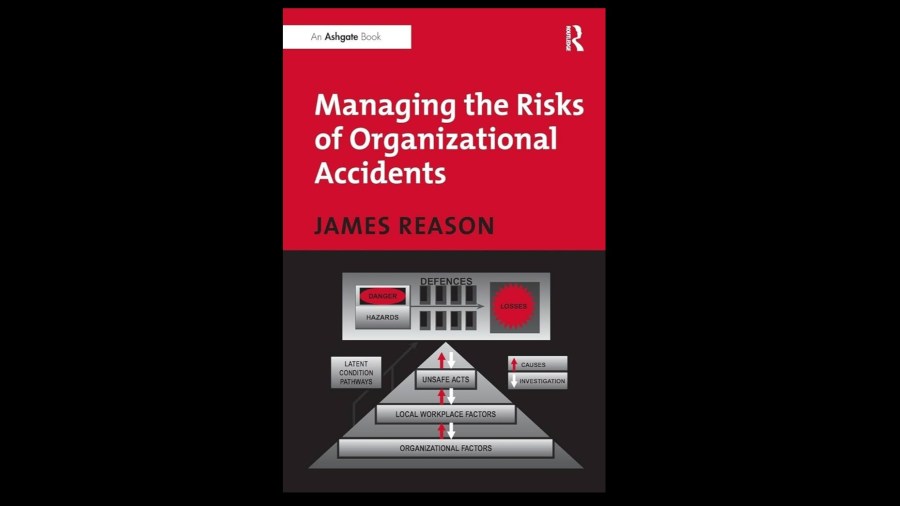
The mixed blessing of risk defences and redundancy: James Reason
A few random extracts from James Reason’s timelessly awesome Managing the Risks of Organizational accidents. (Note: This isn’t an endorsement of the somewhat linearity of defences-in-depth, since we have evidence that emergent behaviour can playout in reality and with equifinality etc) There’s hundreds of things I could extract (and maybe will in time), but here’s… Continue reading The mixed blessing of risk defences and redundancy: James Reason

“I think, therefore I err”: An article about ‘good errors’, heuristics and intelligent systems
“Every intelligent system makes errors”, so said Gerd Gigerenzer. Here’s a couple of page extracts from a 2005 paper. Not sure if I’ll summarise it or not (it’s really interesting, but tough to capture in a summary…) The paper: · Challenges the rationalistic and normative ideal as cognition as purely a logical and rational one, ignoring… Continue reading “I think, therefore I err”: An article about ‘good errors’, heuristics and intelligent systems

Automation’s lacklustre effects on fatal accidents & cheap migrant labour hampering adoption of engineering controls
REALLY interesting findings from Associate Professor Masahiro Yoshida. It suggests that automation over a historical context didn’t really drive down workplace injuries since it tended to be employed in already mature industries. And, ready access to cheap migrant workforces may hinder broader industrial risk reduction due to a negative correlation with automation investment. And the… Continue reading Automation’s lacklustre effects on fatal accidents & cheap migrant labour hampering adoption of engineering controls
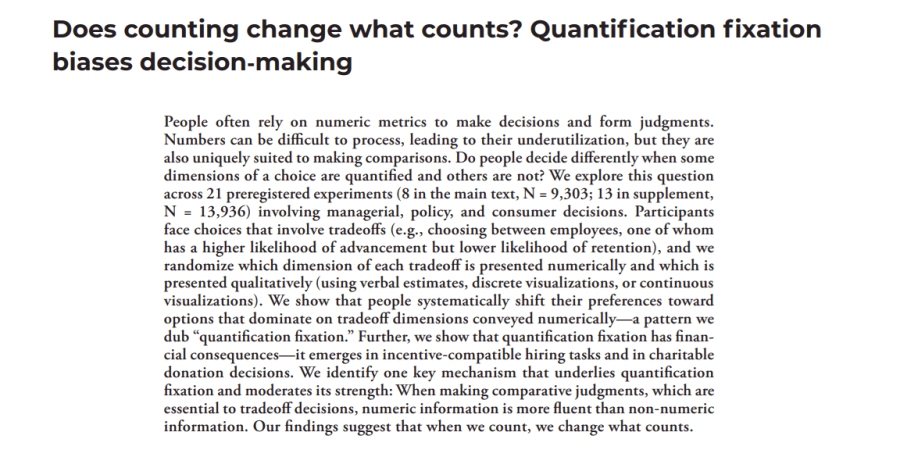
Does counting change what counts? Quantification fixation biases decision-making
Saw this posted on LinkedIn (forget who shared it) and found it really interesting. This study, across 21 experiments and 23k participants in managerial, policy and consumer contexts, studied how numbers and quantification distorts decision-making Context: · Quantification is spreading and has reached into almost every personal and professional area · New-borns are given Apgar… Continue reading Does counting change what counts? Quantification fixation biases decision-making

Compendium: Blame, Just Culture & language
Here’s another compendium of articles exploring blame and language in the construction of post-hoc causality explanations, or how blame effects learning and investigations. The other part covers some articles around Just Culture and restorative culture. Note: I’ve mostly focused on articles that I’ve either already summarised or that I could find a full text link… Continue reading Compendium: Blame, Just Culture & language
 SafetyInsights.org