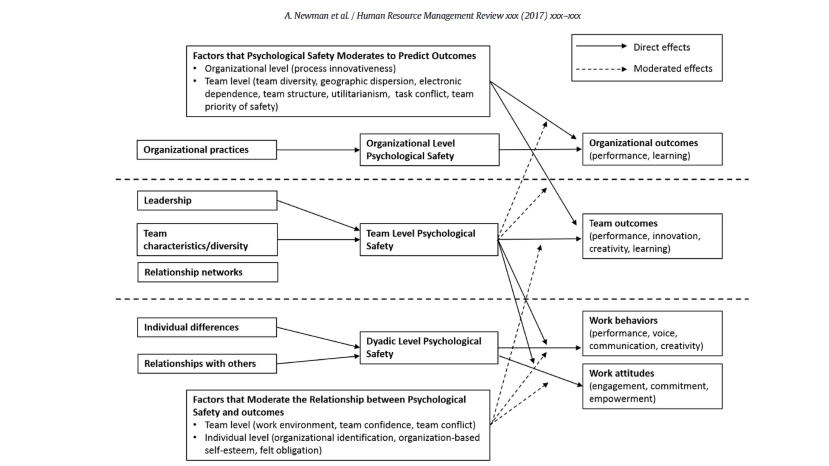
Given the prominence of Psychological Safety (PS), it’s worth sharing some research. It’s likely among the most studied modern concepts in organisational theory – so I can barely scratch the surface. Focus first is articles I’ve summarised, and then on any other full-text items I can find. In my haste, I’ve probably included some psychological… Continue reading Mini-Compendium: Psychological Safety
Tag: safety

The systems approach to medicine: controversy and misconceptions — Dekker & Leveson
This was a really brief discussion paper from Dekker and Leveson, covering systems thinking in medicine. Three parts – see comments. Nothing new for most, but they cover: · “The ‘systems approach’ to patient safety has recently led to questions about its ethics and practical utility” · E.g. A recent paper from a retired neurosurgeon questioned systems… Continue reading The systems approach to medicine: controversy and misconceptions — Dekker & Leveson
1910 Pittsburgh Survey challenging worker ‘carelessness’ as main ’cause’ of accidents
Really interesting findings from 1910 challenging the concept of carelessness and workers as the main ‘cause’ of traumatic accidents. From Eastman’s book 2 of the Pittsburgh’s Survey. Was meant to be a mini-post. But, too many interesting statements. Extracts: · Eastman starts with “So you’ve come to Pittsburgh to study accidents, have you?” says the… Continue reading 1910 Pittsburgh Survey challenging worker ‘carelessness’ as main ’cause’ of accidents
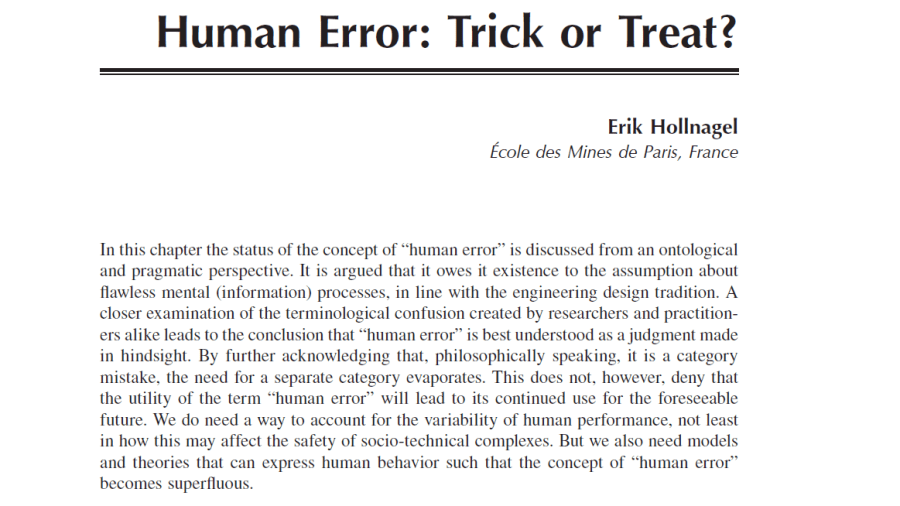
Human Error: Trick or Treat?
This 2007 chapter from Hollnagel unpacked whether we really need the concept of “human error” (HE). It’s a whole chapter, so I’ve skipped HEAPS. Tl;dr according to Hollnagel: · “there is no need of a theory of “human error” because the observed discrepancies in performance should be explained by a theory of normal performance rather… Continue reading Human Error: Trick or Treat?

Mini-Compendium: Power, Safety, Authority Gradients, and the Power of Elites
Here’s some articles, mostly full-text links, exploring power within organisations. Includes broader social power, power gradients, voice, and more. Feel free to shout me a coffee if you’d like to support the growth of my site: Full-Text Articles [Below link will say ‘Discursive effects of safety science’. Download it and its a whole book with… Continue reading Mini-Compendium: Power, Safety, Authority Gradients, and the Power of Elites
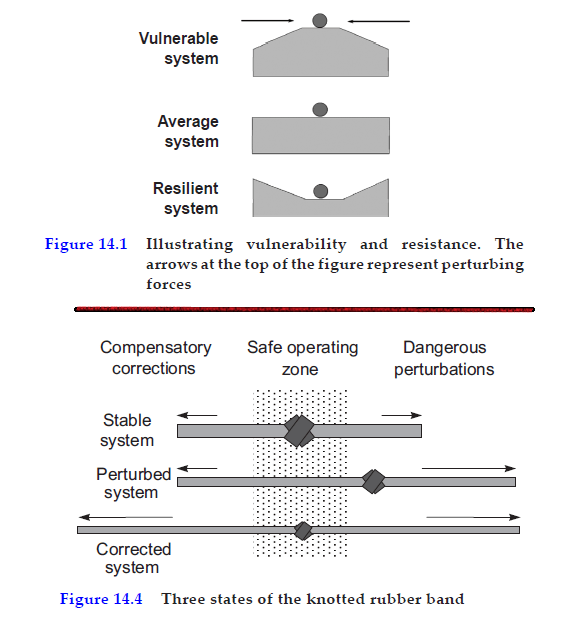
Achieving a safe and stable high-risk system: James Reason ‘Human Contribution’
A few extracts from James Reason’s ‘Human Contribution’. He proposes a couple of different representations of safety (image 1) · The first (14.1), represents the notions of vulnerability and resilience · The ball bearing is sitting at different locations on blocks – in the vulnerable system, perturbations topple the ball · It’s of course the most stable in… Continue reading Achieving a safe and stable high-risk system: James Reason ‘Human Contribution’

Human Success: Old wine in new bottles, or a shift of mindset for HRA in an automated world?
A really interesting conference paper from Andreas Bye, discussing whether shifting Human Reliability Analysis (HRA) terminology from human error to human success would help alleviate some of the blame-connotations. Also discussed is the human role in automated systems. It was meant to be a mini-post with a few dot-points and a couple of images, but… Continue reading Human Success: Old wine in new bottles, or a shift of mindset for HRA in an automated world?

What Control Measures Should I Use? Applying the Total Worker Health Hierarchy of Controls to Manage Workplace Fatigue
This new paper from Drew Dawson and others reconceptualised fatigue risk management within Total Worker Health (TWH) Hierarchy of Controls (HOC). THW HOC works as an extension to the traditional HOC, and “presents strategies in order of effectiveness, ranging from “eliminate,” “substitute,” “redesign,” “educate,” and “encourage” categories” They say that while is mostly associated with… Continue reading What Control Measures Should I Use? Applying the Total Worker Health Hierarchy of Controls to Manage Workplace Fatigue
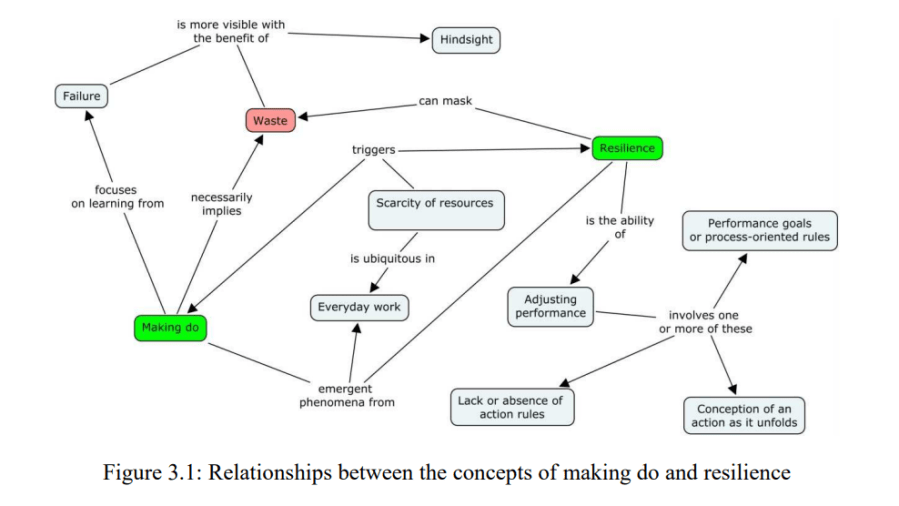
The difference between ‘making do’ and resilience in complex systems
This paper explores the difference between ‘making do’ and resilience. Not a summary, but a few extracts: · Making do has been defined, from a waste perspective as “a situation where a task is started without all its standard inputs, or the execution of a task is continued although the availability of at least one standard… Continue reading The difference between ‘making do’ and resilience in complex systems
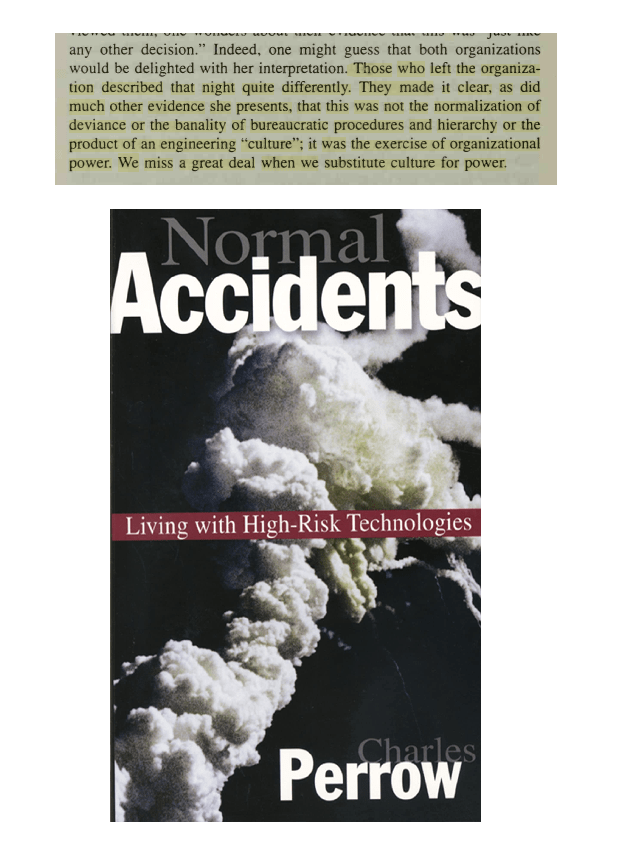
“We miss a great deal when we substitute culture for power” – Charles Perrow on the role of power in disaster
“We miss a great deal when we substitute culture for power” I love this quote from Perrow in Normal Accidents (emphasis added). Perrow briefly discusses the role of power in organising risky technology. Discussing Vaughan’s interpretation of the Challenger disaster: · “I also find the role of power and interests minimized in Diane Vaughn’s otherwise excellent… Continue reading “We miss a great deal when we substitute culture for power” – Charles Perrow on the role of power in disaster
 SafetyInsights.org