
A brief read covering the concept of noise, pertaining to judgements. This is based on the work from Kahneman, Sibony and Sunstein. From the article: · While biases in judgements have captured a lot of attention, “it has been suggested that ‘noise’ (defined as an undesirable variability in human judgements) is a highly important, yet under-recognised… Continue reading Why do doctors make poor decisions? Spotlighting ‘noise’ as an under-recognised source of error in clinical practice
Tag: safety
Compendium: Learning and improvement without incidents
Here’s a mini-compendium of…well, probably a lot of stuff with only a tenuous link to ‘learning’. I tried to focus on learning that doesn’t require incidents, but you’ll find those here, too. There’s >100 articles, mostly full-text. I think I went overboard. Unfortunately, it’s barely sorted. It includes: Shout me a coffee Learning Strengths &… Continue reading Compendium: Learning and improvement without incidents
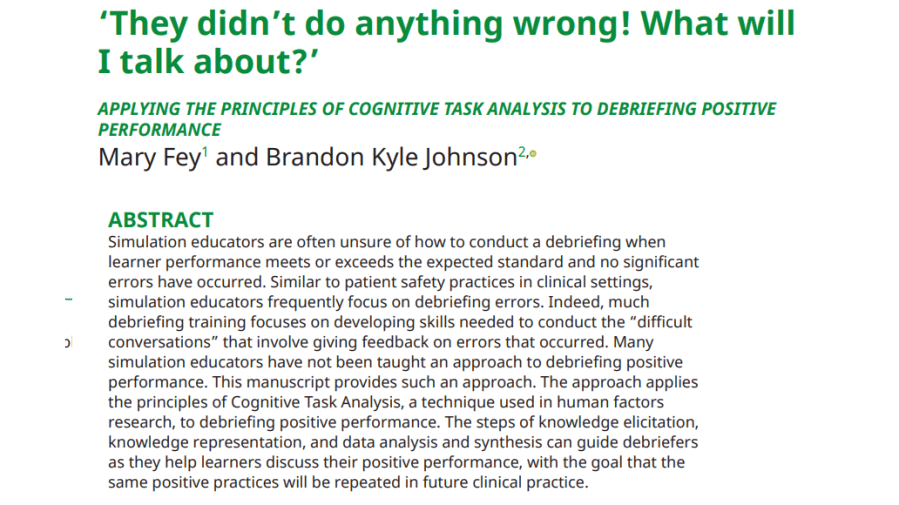
‘They didn’t do anything wrong! What will I talk about?’ Applying the principles of cognitive task analysis to debriefing positive performance
An interesting paper exploring the use of Safety-II inspired debriefs, learning from successful performance. They used cognitive task analysis techniques. Not a summary, but it’s open access and really brief – so check it out 👍 Extracts: · “simulation cases are often deliberately designed to push learners to their zone of proximal development .. where perfect… Continue reading ‘They didn’t do anything wrong! What will I talk about?’ Applying the principles of cognitive task analysis to debriefing positive performance

ChatGPT for analysing investigations
I think this is one of the better uses of LLMs regarding investigations – they trained their model to evaluate accident reports and extract key details from the reports. They found: · It could extract key information from unstructured data and “significantly reduce the manual effort involved in accident investigation report analysis and enhance the overall… Continue reading ChatGPT for analysing investigations

Human Factors and Ergonomics in Industry 5.0 —A Systematic Literature Review
This open access article may interest people – it explored the future of human factors/ergonomics in Industry 5.0 (I05). Not a summary but you can read the full paper freely. Some extracts: Shout me a coffee Study link: https://doi.org/10.3390/app15042123 LinkedIn post: https://www.linkedin.com/posts/benhutchinson2_this-open-access-article-may-interest-people-activity-7300617102564933632-WGPj?utm_source=share&utm_medium=member_desktop&rcm=ACoAAAeWwekBvsvDLB8o-zfeeLOQ66VbGXbOpJU

Human factor analysis of cockpit work incidents in high-speed workboats: the mystery hidden between the lines
This study unpacked what investigators look at and how they construct causes in high-speed workboats. It employed a Safety-II / HOP / HF perspective. Tl;dr: human factors are poorly evaluated and largely seen as individual-level factors. Some extracts: · “Although the analysis focused on negative observations, it also identified HFs that supported the activity” · “Many pivotal… Continue reading Human factor analysis of cockpit work incidents in high-speed workboats: the mystery hidden between the lines

Efficacy and Understanding of the Safety Hierarchy of Controls
This PhD thesis from Stephen Young was interesting. They studied evidence supporting the hierarchy of control (HOC), constraints on its efficacy, and more. Way too much to cover. Some extracts: · There isn’t a lot of evidence supporting the efficacy of the HOC · One reason is: “An unequivocal demonstration of efficacy [of the HOC] is problematic,… Continue reading Efficacy and Understanding of the Safety Hierarchy of Controls

An ode to Drs Richard Cook, Jens Rasmussen & Bob Wears: A mini-compendium of their legacies
This is long overdue – but I wanted to cover some of the work from these giants who have played a significant part in modern safety thinking. Focus is on articles I’ve written about or used extracts from, or could find a full-text link for, and higher-cited articles. It’s not systematic – and unfortunately a… Continue reading An ode to Drs Richard Cook, Jens Rasmussen & Bob Wears: A mini-compendium of their legacies
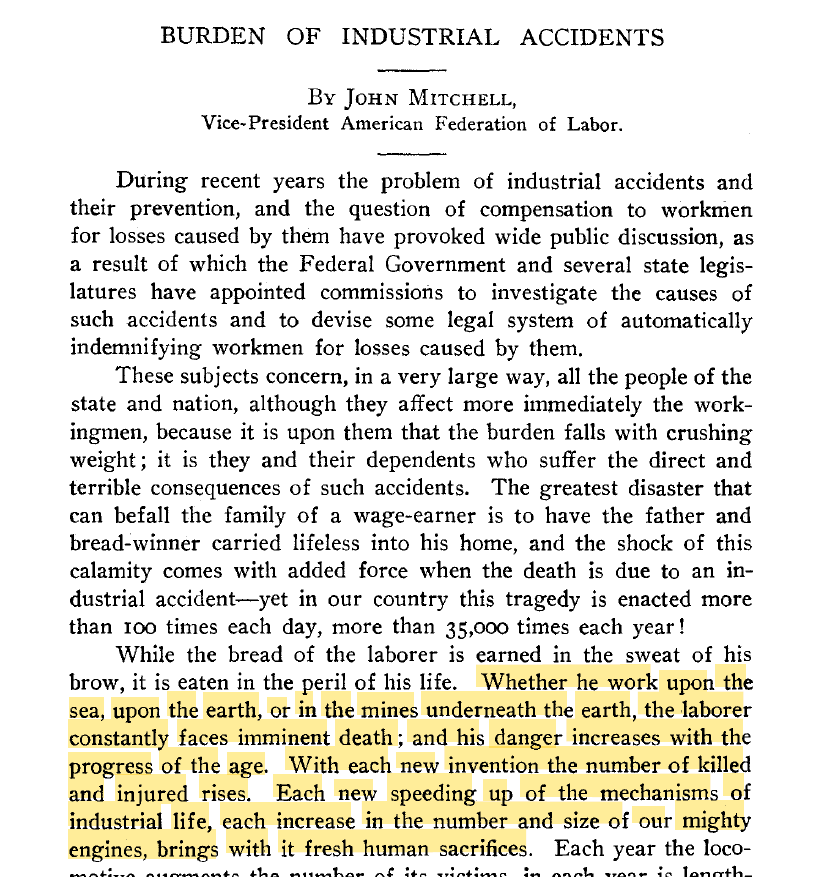
Economic progress brings with it ‘fresh human sacrifices’ in workplace accidents: 1911 article
Another article from 1911. This explores the societal burden of industrial accidents. The writer sounds pretty disgusted by the state of play in the US compared to Europe. This dude was like a poet – remarking about the progress of mighty industrial engines bringing with it “fresh human sacrifices”. Some extracts: · “Whether he work upon… Continue reading Economic progress brings with it ‘fresh human sacrifices’ in workplace accidents: 1911 article
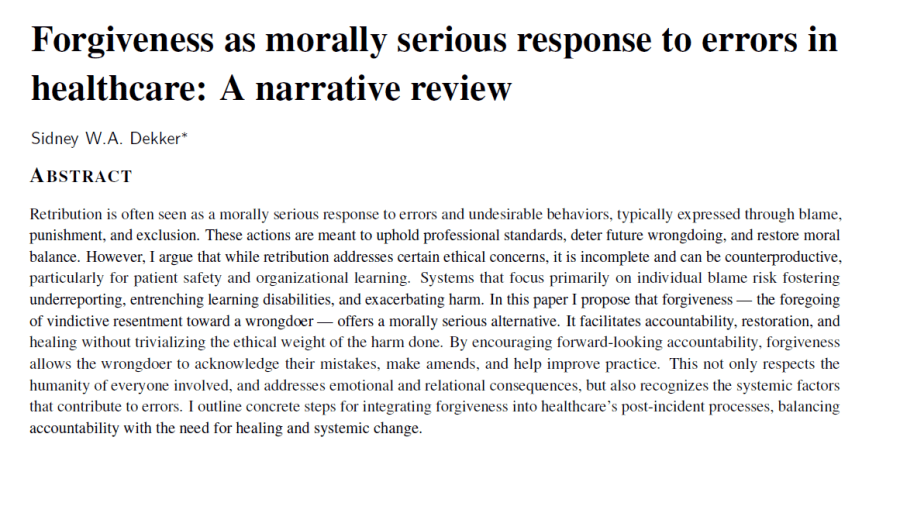
Forgiveness as morally serious response to errors in healthcare: A narrative review
An interesting and recent discussion paper from Sidney Dekker, exploring forgiveness as a ‘morally serious response’ to incidents, as opposed to retributive approaches. Tl;dr: · “while retribution addresses certain ethical concerns, it is incomplete and can be counterproductive, particularly for patient safety and organizational learning” · “Systems that focus primarily on individual blame risk fostering… Continue reading Forgiveness as morally serious response to errors in healthcare: A narrative review
 SafetyInsights.org