
This meta-analysis investigated the relationship between work injuries and mental health challenges. 139 studies included. Background: · Mental health challenge is defined as prolonged deviations from the state of an individual’s psychological well-being · “These deviations manifest as noticeable shifts in cognition, emotion, or behavior resulting in psychological distress” · “various studies have documented that work injuries are… Continue reading Work injuries and mental health challenges: A meta-analysis of the bidirectional relationship
Tag: safety

Co-exposures to physical and psychosocial work factors increase the occurrence of workplace injuries among French care workers
Psychosocial and physical workplace exposures found to be co-related in workplace injury (WI), according to this study. It’s one of heaps of studies highlighting the interactions between psychosocial factors and physical and psychological injury. E.g. Physical exposures were on their own were not great predictors of self-declared injury, and it was the interactions that best… Continue reading Co-exposures to physical and psychosocial work factors increase the occurrence of workplace injuries among French care workers

Compendium: Sleep & Fatigue Risk Management
Here’s an assortment of papers on sleep and occupational fatigue. Focus is on articles I’ve summarised or full-text I could locate. A few themes are covered: Feel free to shout a coffee if you’d like to support the growth of my site: Sleep & Fatigue https://www.academia.edu/30709111/Fatigue_proofing_A_new_approach_to_reducing_fatigue_related_risk_using_the_principles_of_error_management https://jcsm.aasm.org/doi/pdf/10.5664/jcsm.9512 https://www.academia.edu/7558212/A_Model_to_Predict_Work_Related_Fatigue_Based_on_Hours_of_Work https://doi.org/10.1016/j.aap.2021.106398 https://www.academia.edu/115005821/Effects_of_fatigue_on_surgeon_performance_and_surgical_outcomes_a_systematic_review https://www.researchgate.net/publication/6495463_The_dynamics_of_neurobehavioural_recovery_following_sleep_loss https://academic.oup.com/sleep/article-abstract/20/4/267/2732104?redirectedFrom=PDF https://www.researchgate.net/publication/49656992_Research_needs_and_opportunities_for_reducing_the_adverse_safety_consequences_of_fatigue https://www.degruyter.com/document/doi/10.1515/eng-2022-0411/pdf https://www.jstage.jst.go.jp/article/indhealth/47/5/47_5_518/_pdf… Continue reading Compendium: Sleep & Fatigue Risk Management
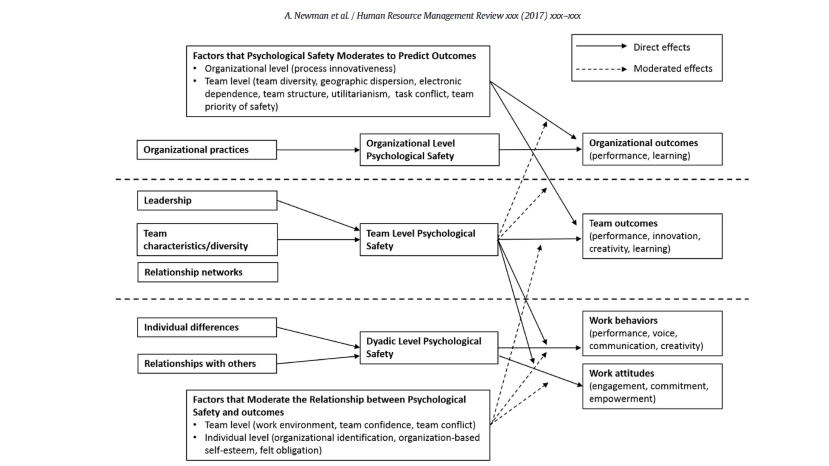
Mini-Compendium: Psychological Safety
Given the prominence of Psychological Safety (PS), it’s worth sharing some research. It’s likely among the most studied modern concepts in organisational theory – so I can barely scratch the surface. Focus first is articles I’ve summarised, and then on any other full-text items I can find. In my haste, I’ve probably included some psychological… Continue reading Mini-Compendium: Psychological Safety

The systems approach to medicine: controversy and misconceptions — Dekker & Leveson
This was a really brief discussion paper from Dekker and Leveson, covering systems thinking in medicine. Three parts – see comments. Nothing new for most, but they cover: · “The ‘systems approach’ to patient safety has recently led to questions about its ethics and practical utility” · E.g. A recent paper from a retired neurosurgeon questioned systems… Continue reading The systems approach to medicine: controversy and misconceptions — Dekker & Leveson
1910 Pittsburgh Survey challenging worker ‘carelessness’ as main ’cause’ of accidents
Really interesting findings from 1910 challenging the concept of carelessness and workers as the main ‘cause’ of traumatic accidents. From Eastman’s book 2 of the Pittsburgh’s Survey. Was meant to be a mini-post. But, too many interesting statements. Extracts: · Eastman starts with “So you’ve come to Pittsburgh to study accidents, have you?” says the… Continue reading 1910 Pittsburgh Survey challenging worker ‘carelessness’ as main ’cause’ of accidents
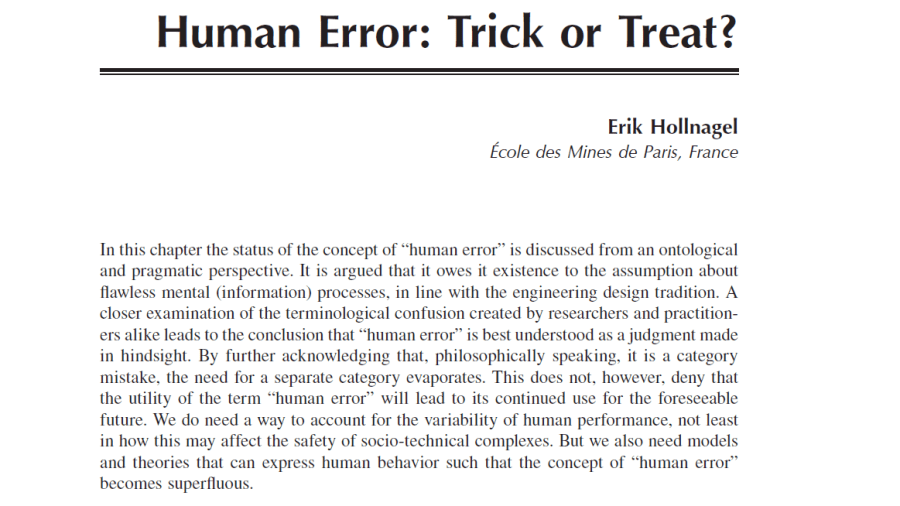
Human Error: Trick or Treat?
This 2007 chapter from Hollnagel unpacked whether we really need the concept of “human error” (HE). It’s a whole chapter, so I’ve skipped HEAPS. Tl;dr according to Hollnagel: · “there is no need of a theory of “human error” because the observed discrepancies in performance should be explained by a theory of normal performance rather… Continue reading Human Error: Trick or Treat?

Mini-Compendium: Power, Safety, Authority Gradients, and the Power of Elites
Here’s some articles, mostly full-text links, exploring power within organisations. Includes broader social power, power gradients, voice, and more. Feel free to shout me a coffee if you’d like to support the growth of my site: Full-Text Articles [Below link will say ‘Discursive effects of safety science’. Download it and its a whole book with… Continue reading Mini-Compendium: Power, Safety, Authority Gradients, and the Power of Elites
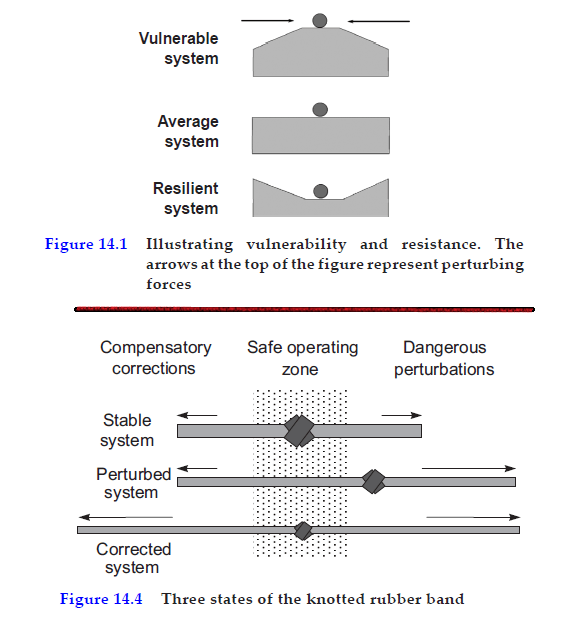
Achieving a safe and stable high-risk system: James Reason ‘Human Contribution’
A few extracts from James Reason’s ‘Human Contribution’. He proposes a couple of different representations of safety (image 1) · The first (14.1), represents the notions of vulnerability and resilience · The ball bearing is sitting at different locations on blocks – in the vulnerable system, perturbations topple the ball · It’s of course the most stable in… Continue reading Achieving a safe and stable high-risk system: James Reason ‘Human Contribution’

Human Success: Old wine in new bottles, or a shift of mindset for HRA in an automated world?
A really interesting conference paper from Andreas Bye, discussing whether shifting Human Reliability Analysis (HRA) terminology from human error to human success would help alleviate some of the blame-connotations. Also discussed is the human role in automated systems. It was meant to be a mini-post with a few dot-points and a couple of images, but… Continue reading Human Success: Old wine in new bottles, or a shift of mindset for HRA in an automated world?
 SafetyInsights.org