
Poor sleep increases mortality risk by 14 – 34% according to a new meta-analysis. 79 cohort studies were included. Findings: · Inadequate sleep was defined as fewer than 7 h per night · 1/3 of adults regularly experience insufficient sleep which are “driven by lifestyle factors deeply rooted in modern society” · Chronic sleep deprivation has been linked… Continue reading Imbalanced sleep increases mortality risk by 14–34%: a meta-analysis
Year: 2025
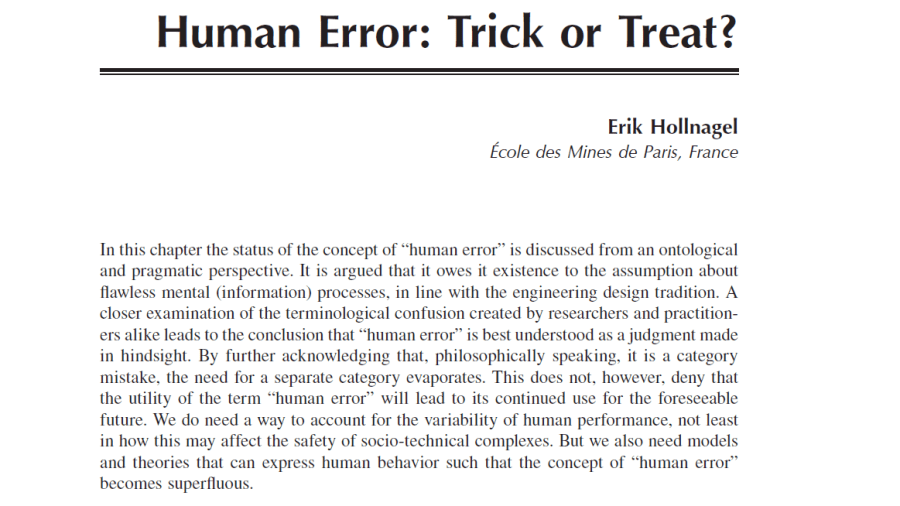
Human Error: Trick or Treat?
This 2007 chapter from Hollnagel unpacked whether we really need the concept of “human error” (HE). It’s a whole chapter, so I’ve skipped HEAPS. Tl;dr according to Hollnagel: · “there is no need of a theory of “human error” because the observed discrepancies in performance should be explained by a theory of normal performance rather… Continue reading Human Error: Trick or Treat?

1912 article discussing the role of fatigue in industrial accidents and arguing against ‘carelessness’ as an “ultimate cause”
This was an interesting article from 1912 highlighting the role that fatigue has in industrial accidents. Also challenges ‘carelessness’, saying it doesn’t account for the effects of fatigue. While scientific knowledge has progressed over the century, it’s cool how well they articulated the issue. · Image 1 top panel shows a breakdown of accidents per time… Continue reading 1912 article discussing the role of fatigue in industrial accidents and arguing against ‘carelessness’ as an “ultimate cause”

Mini-Compendium: Power, Safety, Authority Gradients, and the Power of Elites
Here’s some articles, mostly full-text links, exploring power within organisations. Includes broader social power, power gradients, voice, and more. Feel free to shout me a coffee if you’d like to support the growth of my site: Full-Text Articles [Below link will say ‘Discursive effects of safety science’. Download it and its a whole book with… Continue reading Mini-Compendium: Power, Safety, Authority Gradients, and the Power of Elites

Deming’s system of profound knowledge: 14 points for system improvement
Another from Deming while I’m on the theme. Not much needs to be said – I think it does a lot of talking itself. Deming promoted: · Ceasing the dependence of trying to inspect-in quality · Aim for continuous learning, testing and improvement (e.g. plan, do, STUDY, act) · He was critical of zero defect approaches, arguing them… Continue reading Deming’s system of profound knowledge: 14 points for system improvement

On Some Statistical Aids Toward Economic Production
A banger from Deming in 1975, talking about applying statistical control to manufacturing and production variability. He says that much of this paper is based on “principles taught in Japan since 1950”. Don’t let the topic fool you – you’ll find a lot of similarities and overlaps with principles of HF/E, work design, New View… Continue reading On Some Statistical Aids Toward Economic Production
“How can I know what I think till I see what I say?” – Karl Weick on sensemaking
“How can I know what I think till I see what I say?” I’ve always liked this expression from Karl Weick (taken from Graham Wallas), discussing the retrospective justification element of sensemaking. Pretty heavy for a Sunday morning my time. But here we are. Sensemaking is argued to entail: (image 1) · Thoughts justifying earlier words… Continue reading “How can I know what I think till I see what I say?” – Karl Weick on sensemaking
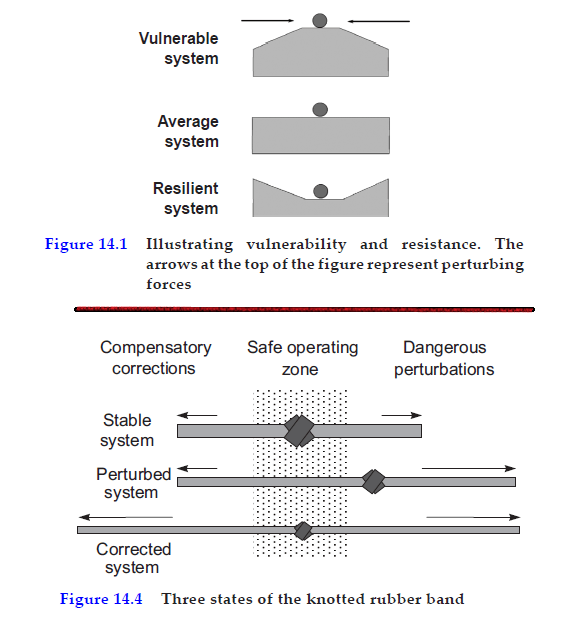
Achieving a safe and stable high-risk system: James Reason ‘Human Contribution’
A few extracts from James Reason’s ‘Human Contribution’. He proposes a couple of different representations of safety (image 1) · The first (14.1), represents the notions of vulnerability and resilience · The ball bearing is sitting at different locations on blocks – in the vulnerable system, perturbations topple the ball · It’s of course the most stable in… Continue reading Achieving a safe and stable high-risk system: James Reason ‘Human Contribution’
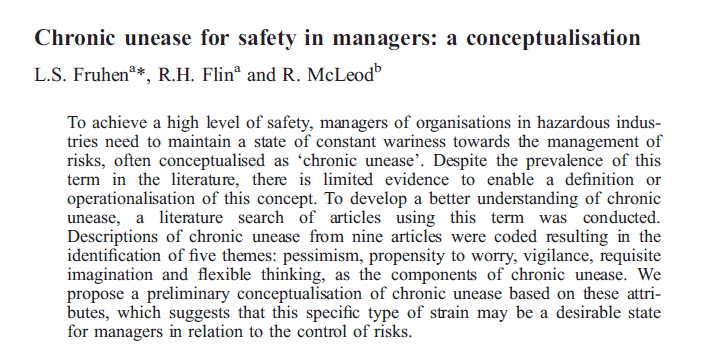
Chronic unease for safety in managers: a conceptualisation
Just a basic post today – some extracts from a paper exploring chronic unease: · Drawing on Reason’s concept, chronic unease has gone by various definitions over the years (image 1) · For Reason, it was the “tendencies of wariness towards risks” · And as a “contrast to complacency, resulting from the absence of negative events, leading ‘people… Continue reading Chronic unease for safety in managers: a conceptualisation

Human Success: Old wine in new bottles, or a shift of mindset for HRA in an automated world?
A really interesting conference paper from Andreas Bye, discussing whether shifting Human Reliability Analysis (HRA) terminology from human error to human success would help alleviate some of the blame-connotations. Also discussed is the human role in automated systems. It was meant to be a mini-post with a few dot-points and a couple of images, but… Continue reading Human Success: Old wine in new bottles, or a shift of mindset for HRA in an automated world?
 SafetyInsights.org