
Are BBS & HOP destined for conflict and silos, or can–should–they be integrated? This article from Williams & Roberts argues that they’re complimentary and proposes how we can go about this integration. Shout a coffee: https://buymeacoffee.com/benhutchinson
Tag: safety
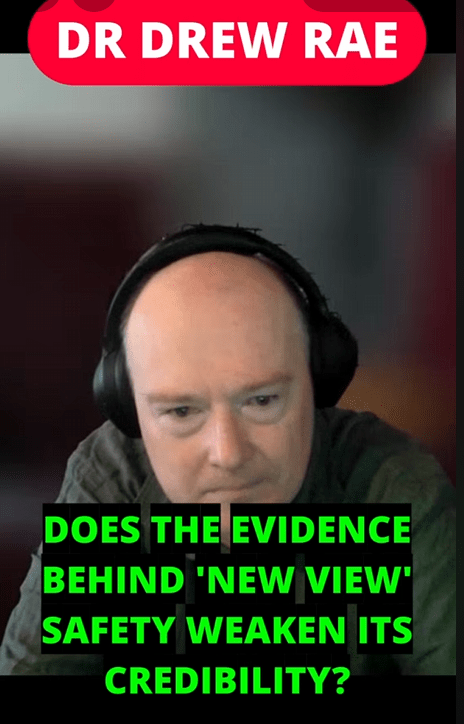
Dr Drew Rae: Does the limited New View / HOP / Safety-II empirical evidence challenge its credibility?
Does the limited empirical interventional evidence underpinning New View / HOP / Safety-II approaches challenge their credibility? Here Dr Drew Rae unpacks his perspective on how this is often framed as a confused question. We also discuss the limited evidence behind Risk Matrices, which prompts the foundational question: what are they actually used for?
Is ‘safety’ the presence of capacities?
What is your definition of ‘safety’? For some, safety is defined as the presence of capacities. Here, Drew Rae discusses his thoughts, and scientific logics, of this definition. #safety #hse #risk #science #safetyscience #safetyii

Safe As ep 24: Are leadership styles scientifically valid?
We’ve all been told about the power of positive leadership, servant leadership etc. But what if much of what we believe about these styles is more of an illusion? Today, we’re diving into research that suggests the evidence for positive leadership styles might be more steeped in how leaders are judged, not just what they… Continue reading Safe As ep 24: Are leadership styles scientifically valid?
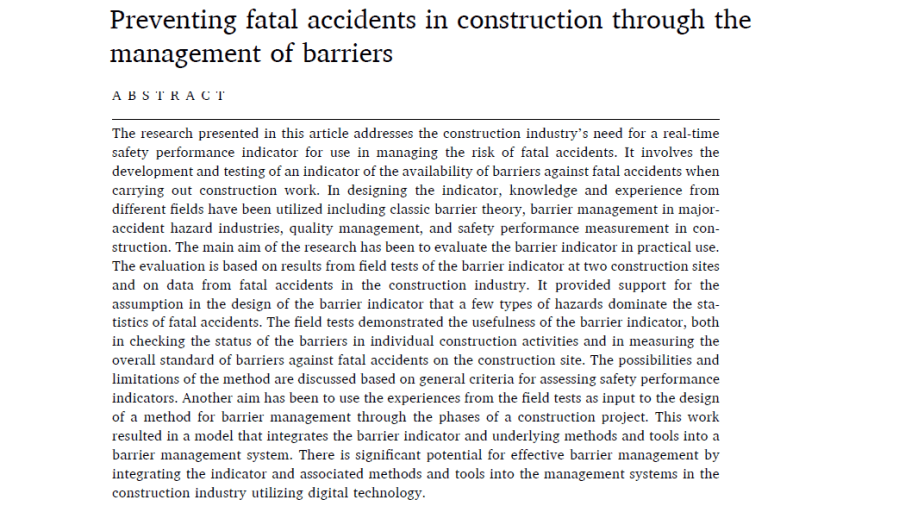
Preventing fatal accidents in construction through the management of barriers
This paper explored a (close-to) real-time safety performance indicator for barriers (sometimes called ‘controls’, although other typologies place barriers and safeguards under the broader category of ‘barriers’). The author developed and tested an indicator for the availability of barriers against fatal accidents during construction work. I’ve skipped a lot – but it’s open access, so… Continue reading Preventing fatal accidents in construction through the management of barriers
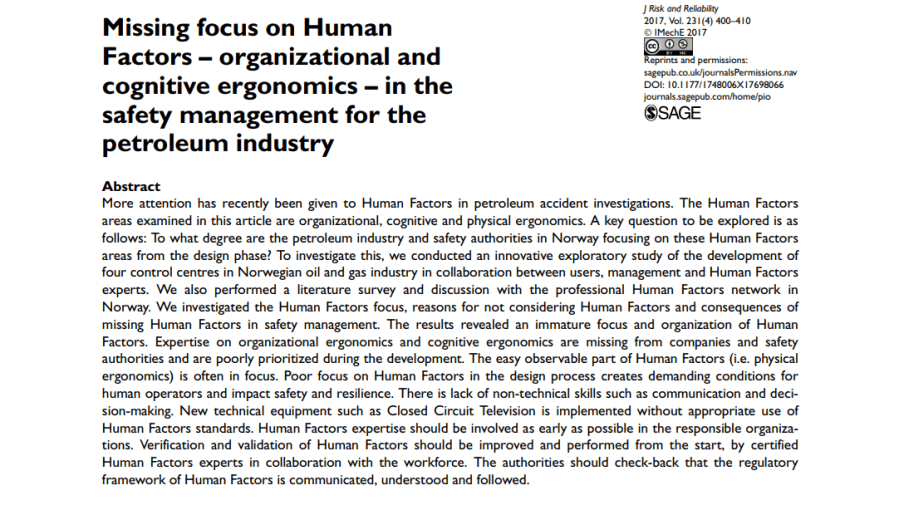
Missing focus on Human Factors – organizational and cognitive ergonomics – in the safety management for the petroleum industry
This article explored the application of HF/E in Norwegian petroleum industry (as of 2017). Some of the results were pretty interesting, and representative of elsewhere. Findings: · “results revealed an immature focus and organization of Human Factors” · “Expertise on organizational ergonomics and cognitive ergonomics are missing from companies and safety authorities and are poorly prioritized during… Continue reading Missing focus on Human Factors – organizational and cognitive ergonomics – in the safety management for the petroleum industry

Control charts for accident frequency: a motivation for real-time occupational safety monitoring
This paper compares real-time or active monitoring of safety incidents via cumulative sum (CUSUM) control charts. It’s an interesting read, and if you’re not savvy with control charts or statistics then just skip over the technical stuff. Some of the findings are still pretty relevant. In saying that, I’ve skipped most of the dense statistical… Continue reading Control charts for accident frequency: a motivation for real-time occupational safety monitoring

Failing to learn and learning to fail (intelligently): How great organizations put failure to work to innovate and improve
An interesting paper from Mark Cannon & Amy Edmondson about failing intelligently. Opening the paper they argue that while the idea of organisations learning from their failures is obvious – “yet organizations that systematically learn from failure are rare”. They’ve also found that few organisations effectively experiment to learn, which requires by necessity generating failures… Continue reading Failing to learn and learning to fail (intelligently): How great organizations put failure to work to innovate and improve
“there is no such thing as a root cause [and therefore] there is technically no such thing as the beginning of a mishap” — Dekker
Extracts from Dekker’s work about the ontological and empirical shakiness of ‘root causes’. I’ve taken material from two versions of The Field Guide to Understanding Human Error (Investigations). In Dekker’s view: · “There is no ‘root’ cause” (or ‘root causes’) · Given the multiple angles and interactions in complex systems, you “can really construct “causes” from everywhere”… Continue reading “there is no such thing as a root cause [and therefore] there is technically no such thing as the beginning of a mishap” — Dekker

Workplace Psychosocial Factors and Their Association With Musculoskeletal Disorders
More data on the links between workplace psychosocial factors and injury – this time specifically on musculoskeletal disorders (MSD). 47 studies met inclusion. Findings: · The most common MSDs investigated were lower back pain, neck and shoulder pain, and upper extremity symptoms and disorders · Workplace psychosocial factors that were statistically significant were support, collaboration, job control,… Continue reading Workplace Psychosocial Factors and Their Association With Musculoskeletal Disorders
 SafetyInsights.org