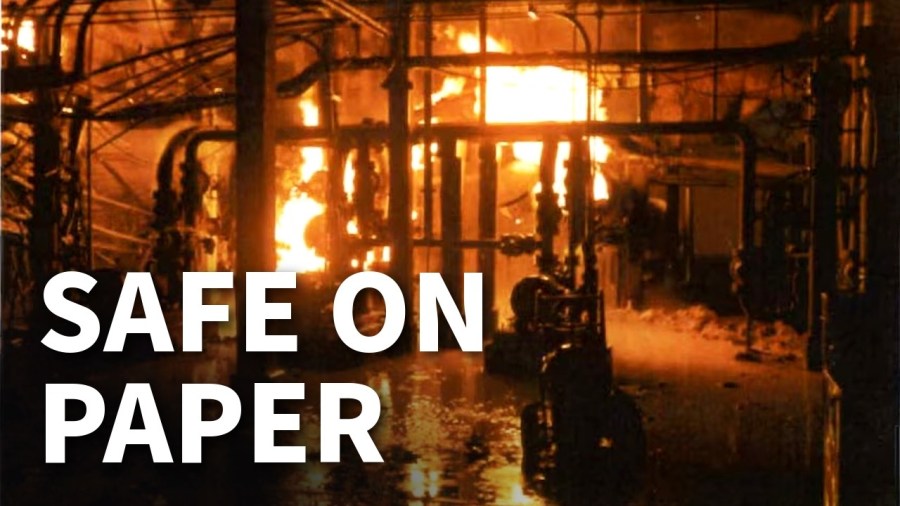
Can low injury rates hide the risk of a major disaster? This YouTube/Spotify episode based on the work from Emeritus Professor Andrew Hopkins, unpacks the limits of injury measures, reassuring audits, and explanations that end with ‘operator error’. We move past proximal causes (like equipment failure) to unpack: a) how warning signs are overlooked b)… Continue reading Why Low Injury Rates Hide Catastrophic Risk (The Longford Disaster) – YouTube video
Author: Ben Hutchinson
An interesting AI Psychosis Typology
So…a man asked ChatGPT if his world-altering maths formula was rational. And it told him he was “not even remotely crazy”. …seems legit. This was apparently 300 hrs & 21 days into a delusion, where cracks only began to crack when a different chatbot disagreed with him. You may have heard of this term ‘AI… Continue reading An interesting AI Psychosis Typology
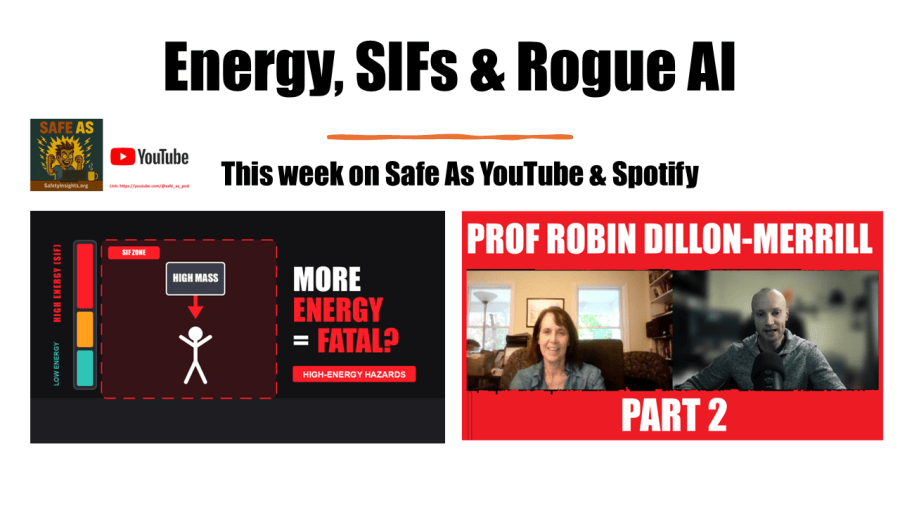
Energy-Based Safety & SIFS // Rogue AI: This week on Safe As YouTube & Spotify
Energy-Based Safety (#EBS) & #SIF risk – is higher energy exposure more likely to kill people? This week on Safe As YouTube & Spotify, we unpacked a study exploring the relationship between the energy magnitude and energy intensity involved in injuries, and their relationship to serious or fatal injuries. And as is consistent with ~70… Continue reading Energy-Based Safety & SIFS // Rogue AI: This week on Safe As YouTube & Spotify
My new study: Safety alchemy: false assurance by converting operational risks into milestone documents
Can safety paperwork make us feel safer without better addressing the risks? Happy to share my newest article with Drew Rae and Sidney Dekker where we explore a phenomenon called ‘safety alchemy’: the conversion of unresolved uncertainty and operational risk into perceived certainty and assurance through … safety artefacts, without a corresponding improvement in the… Continue reading My new study: Safety alchemy: false assurance by converting operational risks into milestone documents
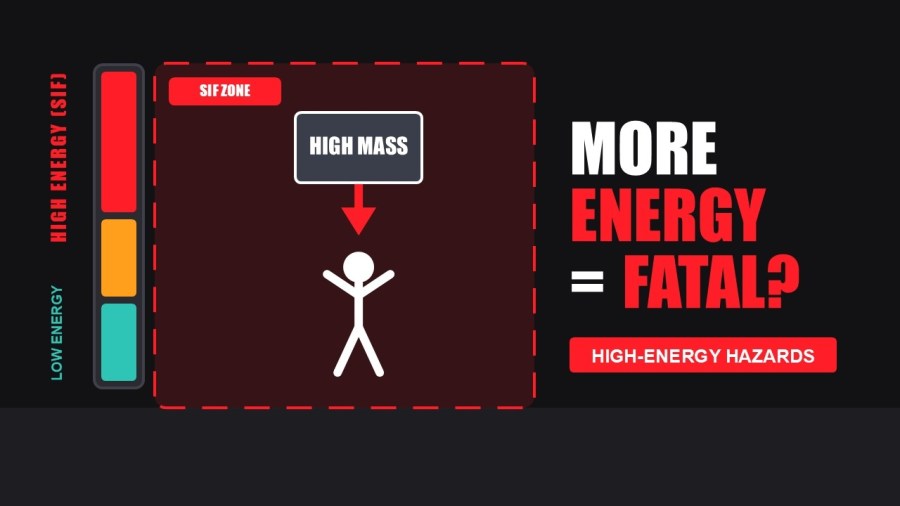
High-Energy Hazards & SIF Risk: What the Research Shows (Quickisode)
Are higher-energy hazard interactions more likely to seriously injure or kill people? In this ep, we unpack the empirical link between energy exposure and SIFs – where over 500 injury reports were analysed, and injury energy exposure was estimated using leading information. Key concepts were energy magnitude – being the amount of energy present; and… Continue reading High-Energy Hazards & SIF Risk: What the Research Shows (Quickisode)
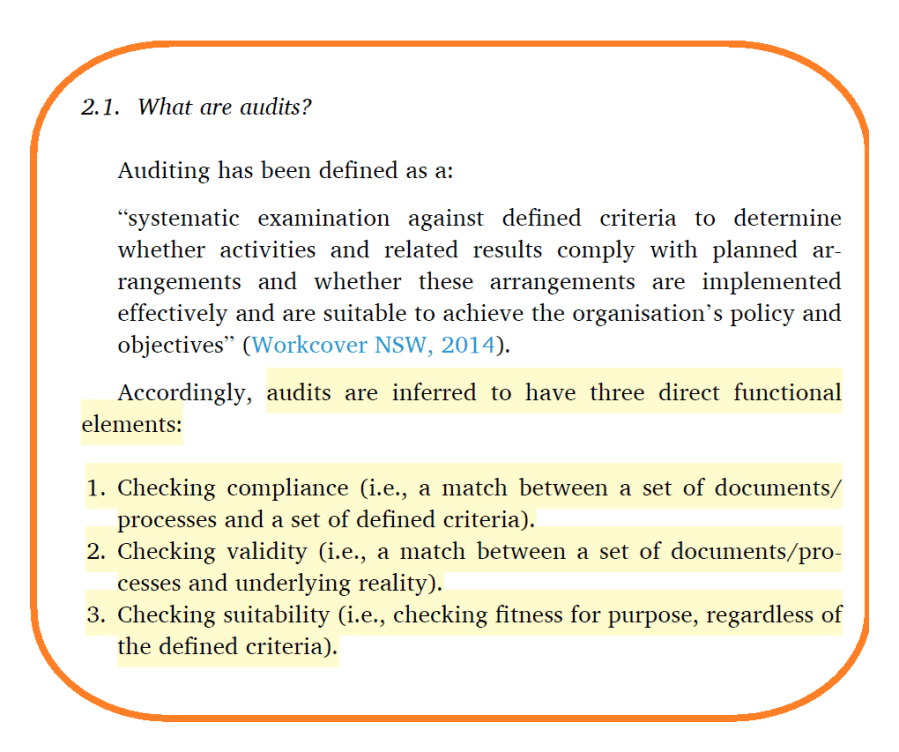
What do you expect from audits? Have you ever asked?
What do you or your board expect from safety audits? Have you ever asked this question? Many audit definitions say something like systematically evaluating activities and artefacts match defined criteria but seem to leave a lot off the table. In our 2024 study (‘Audit Masquerade’, Safety Science), we reviewed numerous definitions & goals – and… Continue reading What do you expect from audits? Have you ever asked?
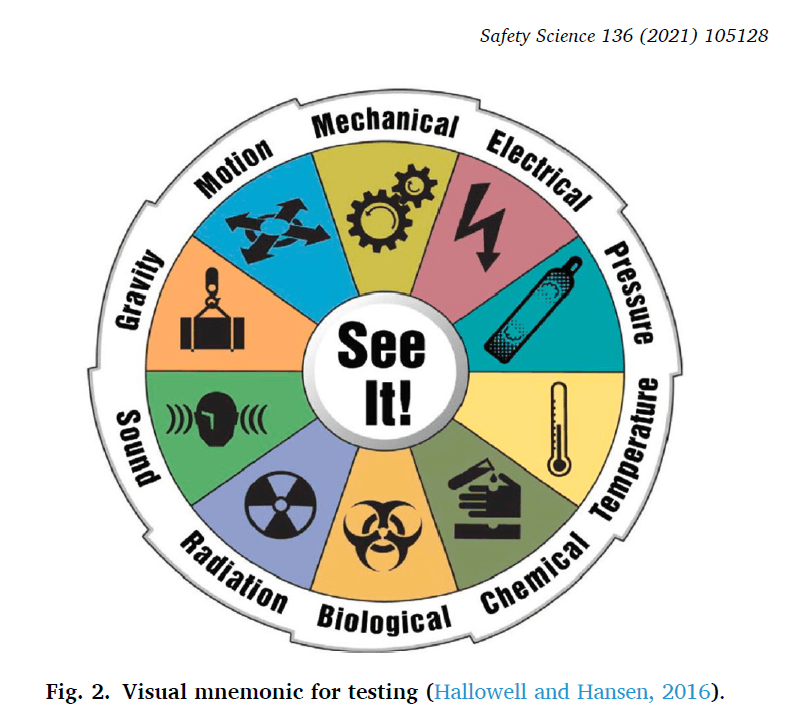
Improving firefighters hazard recognition with energy-based hazard recognition training
Does energy-based hazard recognition training improve firefighter HAZID? This tested energy-based hazard recognition on 43 US firefighters pre & post, and 3 months later, employing a control group. PS. Check out my YouTube: https://youtube.com/@safe_as_pod?si=V2dbdmW–WbnhzA9 Shout a coffee: https://buymeacoffee.com/benhutchinson Extracts: • “Hazard recognition is often regarded as the first step in the safety management process …When… Continue reading Improving firefighters hazard recognition with energy-based hazard recognition training
When operators become designers: microprojects, bricolage, and safety in high-risk systems
Does worker adaptation create safer work? This explored how offshore workers undertake microprojects via bricolage, improvising temporary solutions from available resources when original designs (WAI) don’t meet their needs (WAD). Shared under open access licence. PS. Check out my YouTube: https://youtube.com/@safe_as_pod?si=V2dbdmW–WbnhzA9 Shout a coffee: https://buymeacoffee.com/benhutchinson Extracts: • Offshore work is “exacerbated by the complexity of… Continue reading When operators become designers: microprojects, bricolage, and safety in high-risk systems
Professor Robin Dillon-Merrill Part 2: AI, Machine Learning & Near Misses
Can AI help us identify critical safety blind-spots before disaster? Part 2 interview with Professor Robin Dillon-Merrill who unpacks her 20+ years of research on decision-making under risk, outcome bias, and how organizations misinterpret near misses. We discuss: a) why near-miss biases shape human decision-making & how we can build robust systems to counter them… Continue reading Professor Robin Dillon-Merrill Part 2: AI, Machine Learning & Near Misses
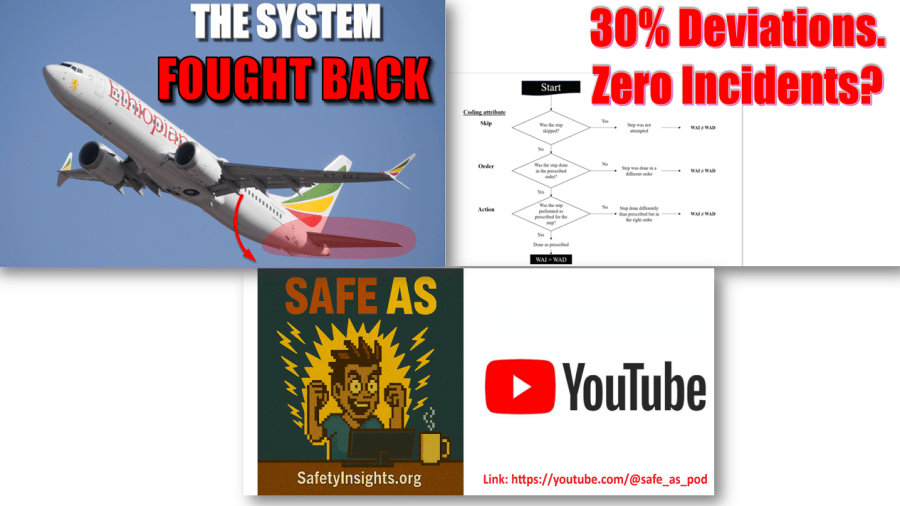
This week on Safe As: Strong, Silent & Wrong automation and procedural departures leading to success
This week on Safe As, we unpacked two types of the ‘same same, but different’ systemic blind-spots: a hazardous gap between work-as-imagined/prescribed/designed and work-as-done. 1. Dangerous software: In Dekker & Woods article ‘Strong, Silent, and Wrong’ on automation failure, they use the 838 MAX MCAS accidents to show what happens when high-authority automated systems operate… Continue reading This week on Safe As: Strong, Silent & Wrong automation and procedural departures leading to success

