This paper from Leônidas Brasileiro and colleagues evaluated common attributes across approaches grouped under ‘New View’. i.e. HRO, S-II, SD, RE & HOP – they used both literature and Delphi method. Not a summary since you can read the full paper. It’s an accessible read if you’re keen to quickly understand some key differences and… Continue reading Identification of management traits related to human factors in new views of safety approaches
Tag: resilience engineering

Human Success: Old wine in new bottles, or a shift of mindset for HRA in an automated world?
A really interesting conference paper from Andreas Bye, discussing whether shifting Human Reliability Analysis (HRA) terminology from human error to human success would help alleviate some of the blame-connotations. Also discussed is the human role in automated systems. It was meant to be a mini-post with a few dot-points and a couple of images, but… Continue reading Human Success: Old wine in new bottles, or a shift of mindset for HRA in an automated world?

Understanding Accidents – From Root Causes to Performance Variability
This 2002 discussion paper from Erik Hollnagel unpacks some assumptions of different accident models. Note: In this work, accident model isn’t the specific tool or method (e.g. ICAM), but a “frame of reference as the accident model, i.e., a stereotypical way of thinking about how an accident occurs”. i.e. the mental models and justifications on… Continue reading Understanding Accidents – From Root Causes to Performance Variability
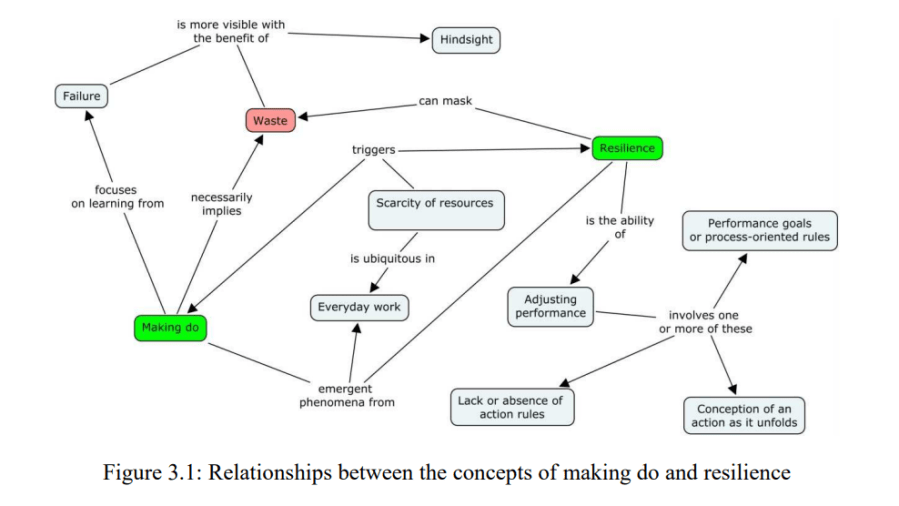
The difference between ‘making do’ and resilience in complex systems
This paper explores the difference between ‘making do’ and resilience. Not a summary, but a few extracts: · Making do has been defined, from a waste perspective as “a situation where a task is started without all its standard inputs, or the execution of a task is continued although the availability of at least one standard… Continue reading The difference between ‘making do’ and resilience in complex systems

Compendium: Learning and improvement without incidents
Here’s a mini-compendium of…well, probably a lot of stuff with only a tenuous link to ‘learning’. I tried to focus on learning that doesn’t require incidents, but you’ll find those here, too. There’s >100 articles, mostly full-text. I think I went overboard. Unfortunately, it’s barely sorted. It includes: Check out my YouTube channel: https://youtube.com/@safe_as_pod?si=sZmhFw3gB3ubXjzK Shout… Continue reading Compendium: Learning and improvement without incidents

Analyzing Procedure Performance using Abstraction Hierarchy: Implications of Designing Procedures for High-risk Process Operations
This paper explored the use of procedures and operator performance from the perspective of work domain analysis/abstraction hierarchy. I’ve skipped heaps – the ‘doing’ part of the abstraction hierarchy, but their descriptions of the problem and the discussion had some gold. For context: · Procedural issues have been linked in a number of major accidents… Continue reading Analyzing Procedure Performance using Abstraction Hierarchy: Implications of Designing Procedures for High-risk Process Operations
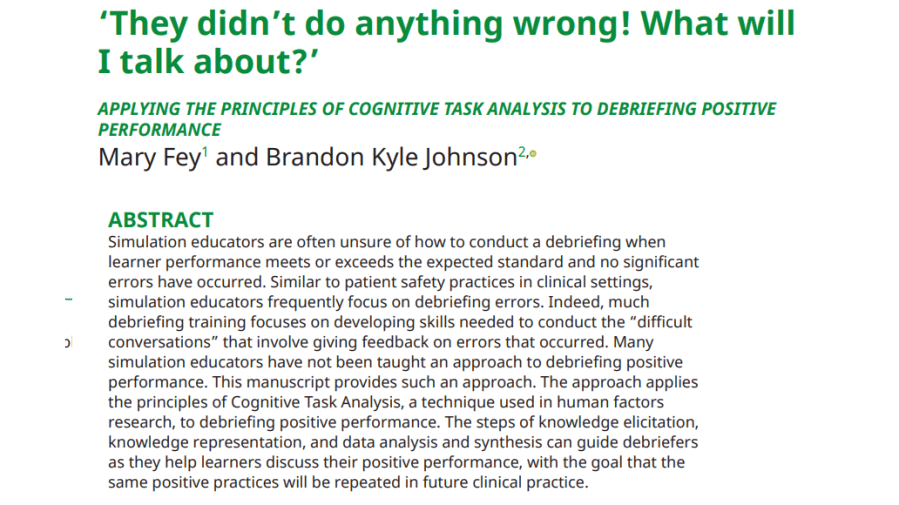
‘They didn’t do anything wrong! What will I talk about?’ Applying the principles of cognitive task analysis to debriefing positive performance
An interesting paper exploring the use of Safety-II inspired debriefs, learning from successful performance. They used cognitive task analysis techniques. Not a summary, but it’s open access and really brief – so check it out 👍 Extracts: · “simulation cases are often deliberately designed to push learners to their zone of proximal development .. where perfect… Continue reading ‘They didn’t do anything wrong! What will I talk about?’ Applying the principles of cognitive task analysis to debriefing positive performance
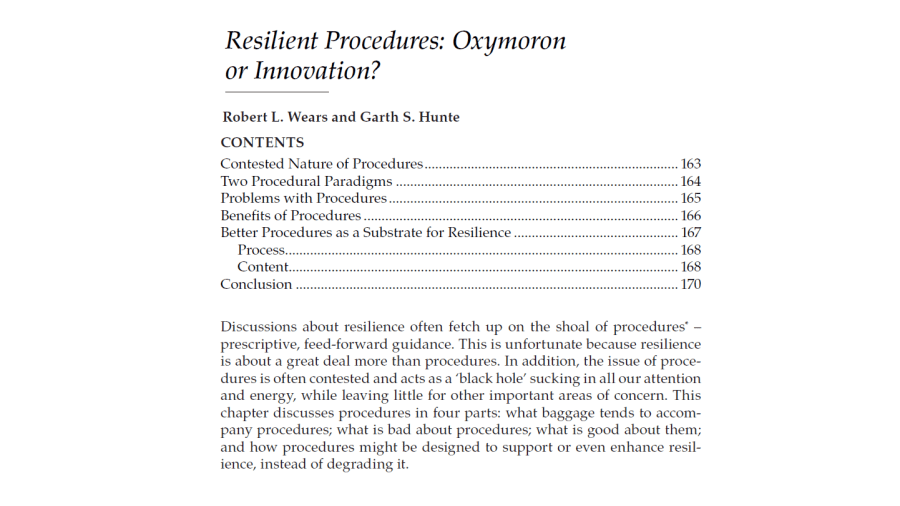
Resilient Procedures: Oxymoron or Innovation?
An interesting chapter from the late Bob Wears around ‘resilient procedures’. I’ve skipped heaps. They specifically explore: · what baggage tends to accompany procedures · what is bad about procedures · what is good about them · how procedures might be designed to support or even enhance resilience, instead of degrading it. Procedures are said… Continue reading Resilient Procedures: Oxymoron or Innovation?

Human Performance Tools: Engaging Workers as the Best Defense Against Errors & Error Precursors
This article covered a more progressive view on human performance, with suggestions on some tools. Too much to cover, so just a few points. They start by saying to consider three truisms: “To err is human. Workers are fallible. Errors are inevitable (as well as predictable)”. These are fundamentals to understanding the human performance approach… Continue reading Human Performance Tools: Engaging Workers as the Best Defense Against Errors & Error Precursors
Hollnagel on “Human error”: error as cause, process or outcome
Not much to say – some extracts from a 2007 chapter from Erik Hollnagel, unpacking whether we really need “human error”? I knocked the summary up last night and will probably post in the next couple of weeks. Oh man, I need to give up on chapters…what a slog. He argues: · Human error “is not… Continue reading Hollnagel on “Human error”: error as cause, process or outcome
 SafetyInsights.org