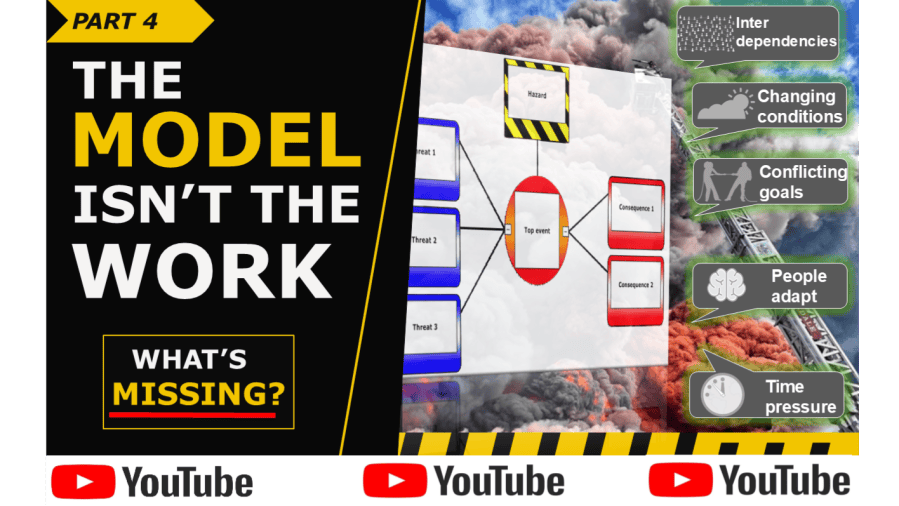
Can adding more controls / barriers create new failure modes? …maybe. Adding new controls doesn’t leave the surrounding work unchanged. A control may prevent one event while obstructing another function, shifting risk elsewhere, or introducing byproducts that weren’t initially anticipated. E.g. a barricade protecting plant / pedestrian collisions may also obstruct visibility, or an alarm… Continue reading Can adding more controls / barriers create new failure modes?
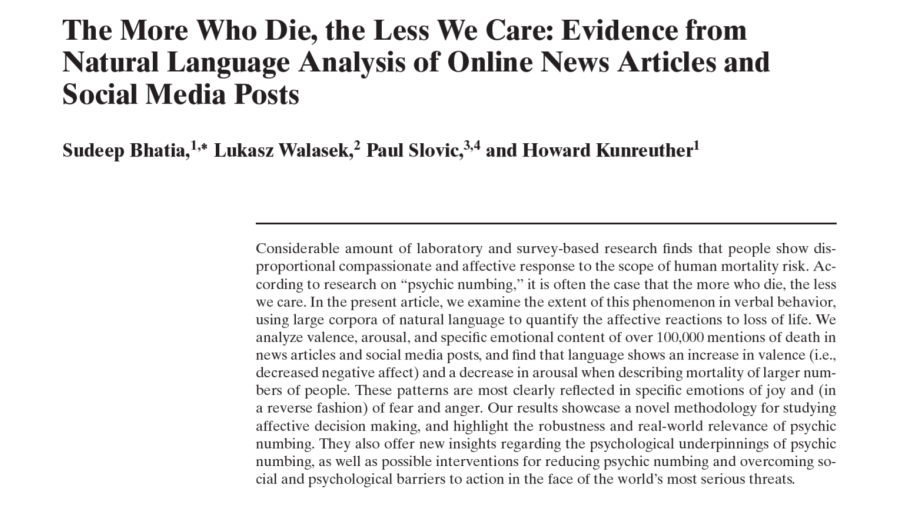
The More Who Die, the Less We Care: Evidence from Natural Language Analysis of Online News Articles and Social Media Posts
At what point does the loss of human life become mere statistics? This study analysed >100k mentions of death in news articles and social media posts based on valence (overall positive or negative qualities) and arousal (the degree of intensity people have about the text), grouped by number of deaths mentioned. Paul Slovic was a… Continue reading The More Who Die, the Less We Care: Evidence from Natural Language Analysis of Online News Articles and Social Media Posts
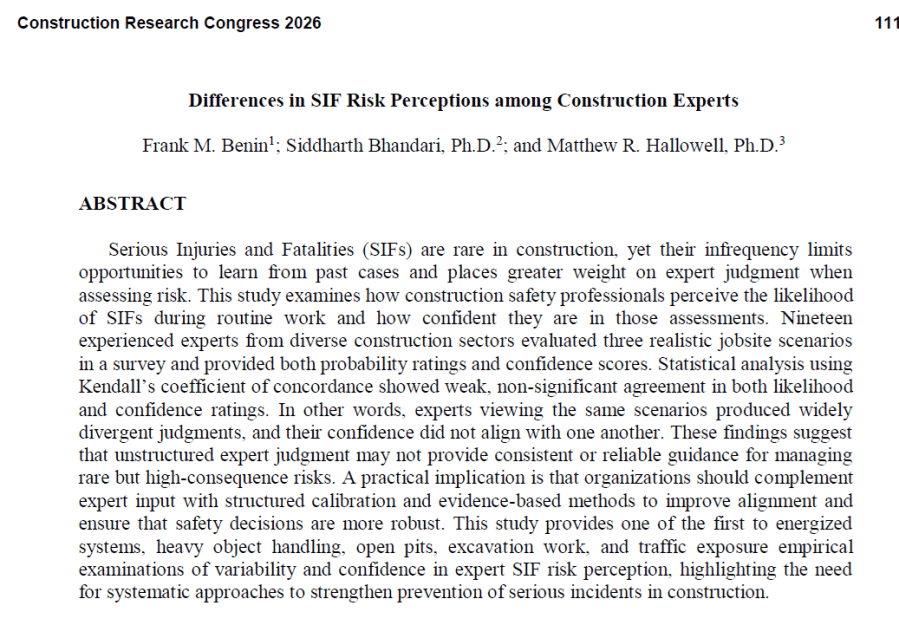
Differences in SIF Risk Perceptions among Construction Experts
Would two construction experts see the same SIF threat on the same site? This study from Frank Benin, Sid Bhandari & Matthew Hallowell evaluated how 19 construction experts perceive the likelihood of SIFs during routine work and how confident they were in those assessments. Assessments were sought via 3 work site scenario photos (so note… Continue reading Differences in SIF Risk Perceptions among Construction Experts
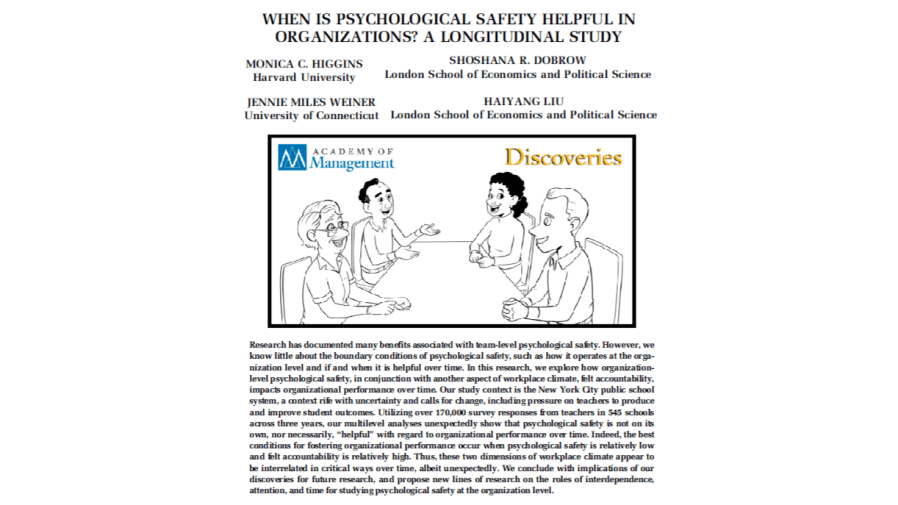
WHEN IS PSYCHOLOGICAL SAFETY HELPFUL IN ORGANIZATIONS? A LONGITUDINAL STUDY
When is psychological safety helpful in organisations? When are higher perceived levels not? This investigated New York City public score responses (545 schools) and 170k survey responses to explore the boundary conditions. They contrast the effects of PS with both psychological empowerment (the extent individuals see their work as having impact or being important) and… Continue reading WHEN IS PSYCHOLOGICAL SAFETY HELPFUL IN ORGANIZATIONS? A LONGITUDINAL STUDY
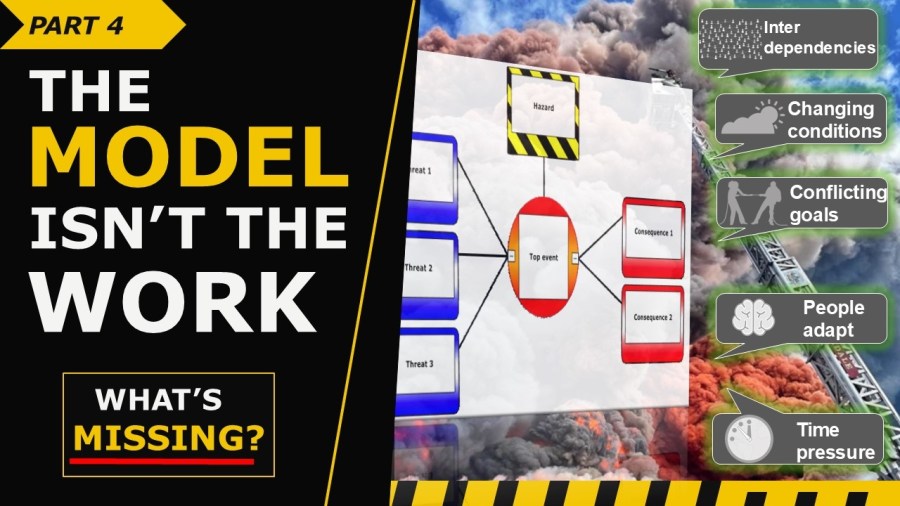
Critical Controls & Barriers / Part 4: What are barrier models leaving out? A Safety-II Critique
A bowtie or critical control register may be useful tools, but they aren’t the work itself. In Part 4 of this YouTube series, I unpack what control / barrier models can leave out: e.g. changing conditions, competing goals, control dependencies, unintended consequences and the adaptations people make to keep work functioning. I also explore how… Continue reading Critical Controls & Barriers / Part 4: What are barrier models leaving out? A Safety-II Critique
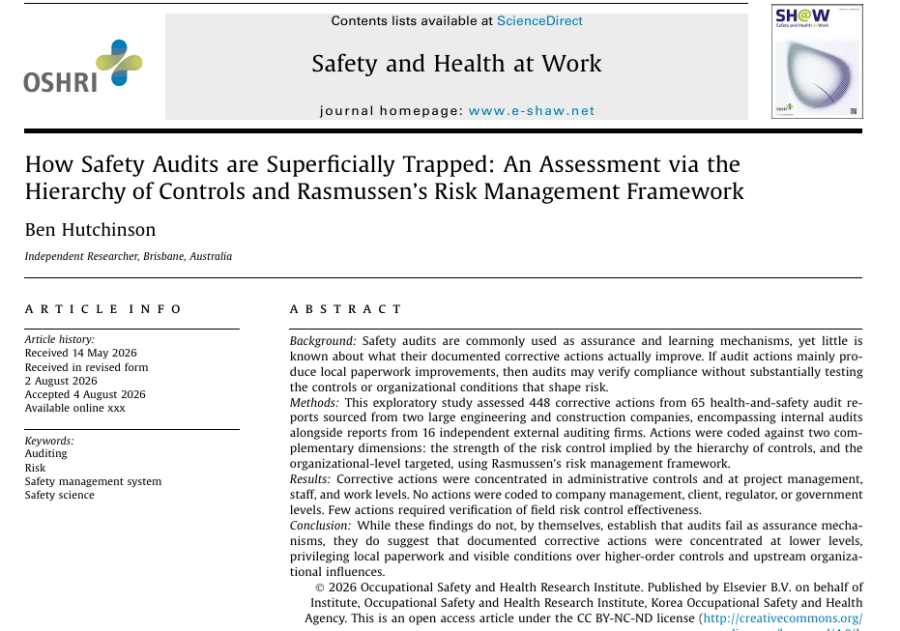
My new study: How Safety Audits are Superficially Trapped: An Assessment via the Hierarchy of Controls and Rasmussen’s Risk Management Framework
Are our safety audits improving paperwork over verifying effective safety systems? Happy to share my first solo, non-PhD study which mapped 448 corrective actions from 65 health and safety audits, using the Hierarchy of Controls and Rasmussen’s Risk Management framework. I found: · ~86% addressed ‘soft’ controls, e.g. admin & PPE, leaving just ~14% for ‘hard’… Continue reading My new study: How Safety Audits are Superficially Trapped: An Assessment via the Hierarchy of Controls and Rasmussen’s Risk Management Framework
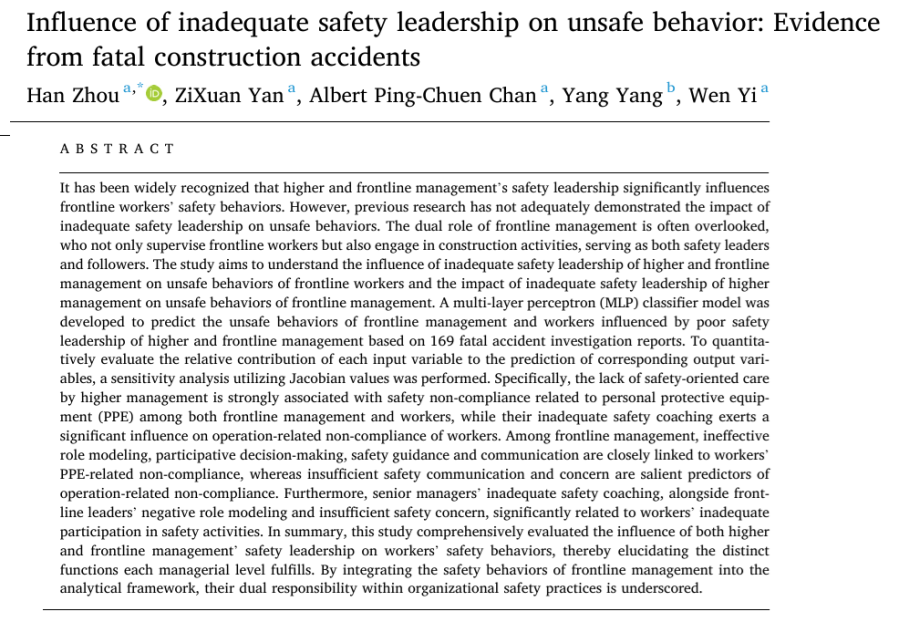
Influence of inadequate safety leadership on unsafe behavior: Evidence from fatal construction accident
What do fatal incident investigations say about the links b.t. leadership, worker PPE non-compliance & safety participation? This study investigated 169 fatal incidents in HK on the connections. PS. Check out my YouTube and recent Critical Control / barrier vid: https://youtu.be/Ly1mEn_KCLQ?si=yG3yRVOM0r2eyyKI Shout a coffee: https://buymeacoffee.com/benhutchinson Extracts: · “the lack of safety-oriented care by higher management is… Continue reading Influence of inadequate safety leadership on unsafe behavior: Evidence from fatal construction accident

When the interface fails: a patient-safety hazard hidden by the assumption of human error
How does attributions of ‘human error’ create hidden hazards? Interesting article discussing a failure type in intraocular surgery using a cannula and how it’s effectively become hidden. PS. Check out my YouTube and recent Critical Control / barrier vid: https://youtu.be/Ly1mEn_KCLQ?si=yG3yRVOM0r2eyyKI Shout a coffee: https://buymeacoffee.com/benhutchinson Extracts: · “The way we look for harm shapes what we are… Continue reading When the interface fails: a patient-safety hazard hidden by the assumption of human error
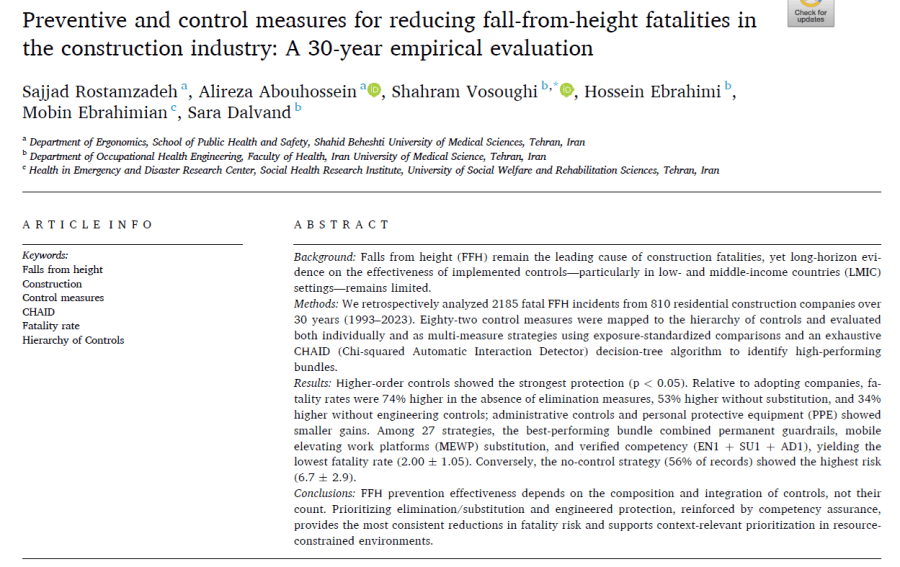
Preventive and control measures for reducing fall-from-height fatalities in the construction industry: A 30-year empirical evaluation
Is the Hierarchy of Control (HoC) effective? Seems kinda strange asking this question at this stage of the race – given how embedded HoC is across legislation, codes, industry guides & more. But interestingly, there seems to be limited rigorous published evidence supporting the HoC (at least that I can find…) Here’s a freshly published… Continue reading Preventive and control measures for reducing fall-from-height fatalities in the construction industry: A 30-year empirical evaluation
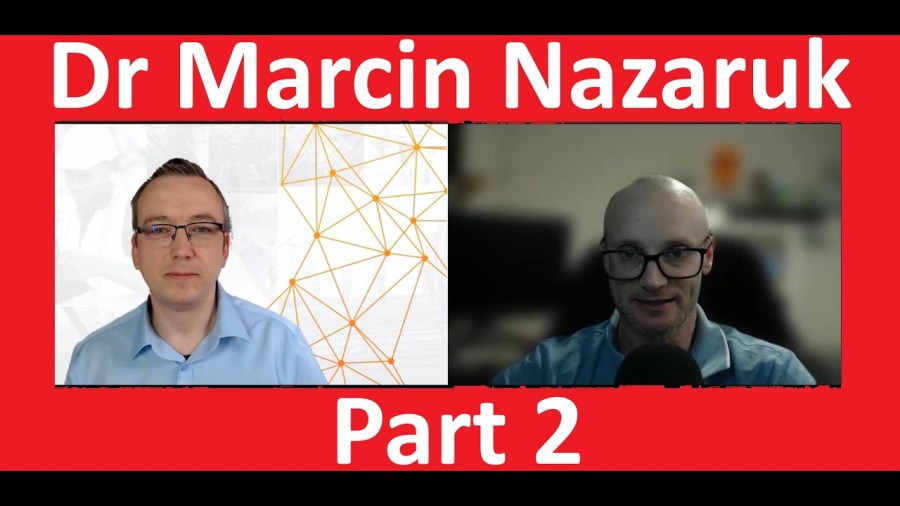
Dr Marcin Nazaruk interview Part 2: HOP, Learning from Daily Work, Just Culture / Restorative Justice
Investigators tend to find what they expect to find – or What-You-Look-For-Is-What-You-Find. In Part 2 of my interview with Marcin Nazaruk, Marcin discusses an example where two people used the same tool to review the same task, but arrived at different conclusions. One found more ‘complacency’ & the other identified issues they had not previously… Continue reading Dr Marcin Nazaruk interview Part 2: HOP, Learning from Daily Work, Just Culture / Restorative Justice

