
Does the skillset of the CEO influence workplace safety? Yes according to this study. In the lead-up to next week’s leadership research compendium, this study evaluated whether generalist or specialist CEOs have a greater impact on OSHA reported safety incidents (note the limitation). Generalists are CEOs with wider industry experience (worked in more industries) whereas… Continue reading Leading safely: The impact of generalist CEOs on workplace safety
Tag: business

Systems thinking, culture of reliability and safety
Fantastic read from Nick Pidgeon on how systems approaches, Turner’s MMD, sensemaking, failure and learning intersect to create or mask ‘safety’. Can’t do it justice, so just a few extracts: · “By 1990, it was clear that the .. intellectual focus was less on analysing how past accidents had occurred .. and more towards .. how… Continue reading Systems thinking, culture of reliability and safety

Mental Health Causation in the Construction Industry: A Systematic Review Employing a Psychological Safety Climate Model
This systematic review studied the links between psychological safety climate (PSC) on mental health in the construction industry. 71 studies included. Key findings: · 42 mental health causation factors were identified · High job demand was the most significant contributor, followed by interpersonal relationships, low job control, low job support, and physical status · High job demand was… Continue reading Mental Health Causation in the Construction Industry: A Systematic Review Employing a Psychological Safety Climate Model

Building Resilience into Safety Management Systems: Precursors and Controls to Reduce Serious Injuries and Fatalities (SIFs)
Another on SIF prevention. This (interim) report (another from the recent compendium – see comments for link) covers the findings from a few activities, including two SIF workshops about ID, implementing and monitoring critical controls for SIF hazards, and the role of human and org factors. Too much to cover, so a few extracts: · “the… Continue reading Building Resilience into Safety Management Systems: Precursors and Controls to Reduce Serious Injuries and Fatalities (SIFs)
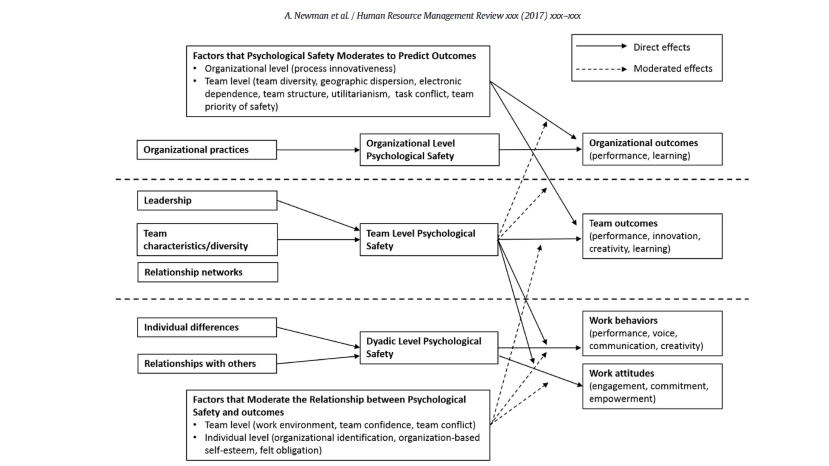
Mini-Compendium: Psychological Safety
Given the prominence of Psychological Safety (PS), it’s worth sharing some research. It’s likely among the most studied modern concepts in organisational theory – so I can barely scratch the surface. Focus first is articles I’ve summarised, and then on any other full-text items I can find. In my haste, I’ve probably included some psychological… Continue reading Mini-Compendium: Psychological Safety

Deming’s system of profound knowledge: 14 points for system improvement
Another from Deming while I’m on the theme. Not much needs to be said – I think it does a lot of talking itself. Deming promoted: · Ceasing the dependence of trying to inspect-in quality · Aim for continuous learning, testing and improvement (e.g. plan, do, STUDY, act) · He was critical of zero defect approaches, arguing them… Continue reading Deming’s system of profound knowledge: 14 points for system improvement

On Some Statistical Aids Toward Economic Production
A banger from Deming in 1975, talking about applying statistical control to manufacturing and production variability. He says that much of this paper is based on “principles taught in Japan since 1950”. Don’t let the topic fool you – you’ll find a lot of similarities and overlaps with principles of HF/E, work design, New View… Continue reading On Some Statistical Aids Toward Economic Production

The rise of learning teams: How organisations in Australia are adopting group learning practices for safety improvement
This Master’s thesis from Andrew Barrett explored group learning practices, like learning teams, for safety improvement. Specifically, he studied the following question via institutional ethnographic interviews: · how are organisations in Australia adopting group learning practices for safety improvement? Way too much to cover – so check out the thesis. Some background extracts: · “Safety… Continue reading The rise of learning teams: How organisations in Australia are adopting group learning practices for safety improvement

Human factor analysis of cockpit work incidents in high-speed workboats: the mystery hidden between the lines
This study unpacked what investigators look at and how they construct causes in high-speed workboats. It employed a Safety-II / HOP / HF perspective. Tl;dr: human factors are poorly evaluated and largely seen as individual-level factors. Some extracts: · “Although the analysis focused on negative observations, it also identified HFs that supported the activity” · “Many pivotal… Continue reading Human factor analysis of cockpit work incidents in high-speed workboats: the mystery hidden between the lines
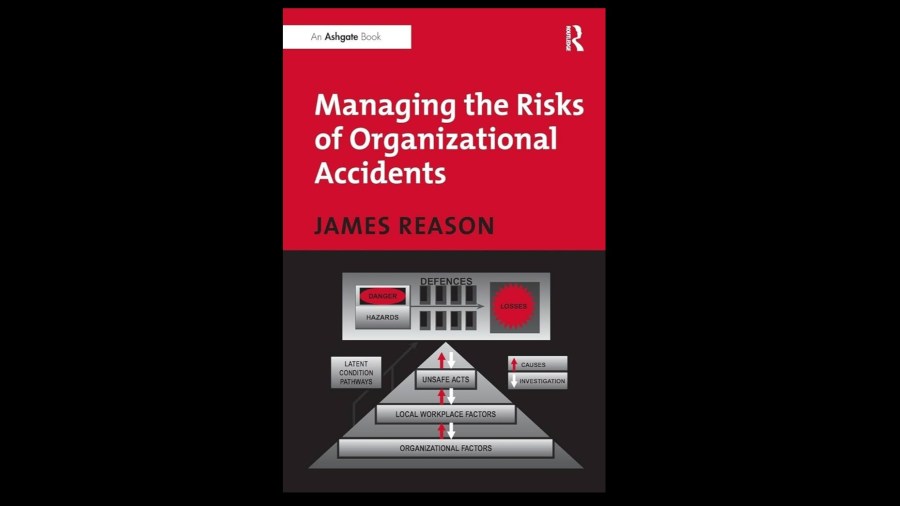
The mixed blessing of risk defences and redundancy: James Reason
A few random extracts from James Reason’s timelessly awesome Managing the Risks of Organizational accidents. (Note: This isn’t an endorsement of the somewhat linearity of defences-in-depth, since we have evidence that emergent behaviour can playout in reality and with equifinality etc) There’s hundreds of things I could extract (and maybe will in time), but here’s… Continue reading The mixed blessing of risk defences and redundancy: James Reason
 SafetyInsights.org