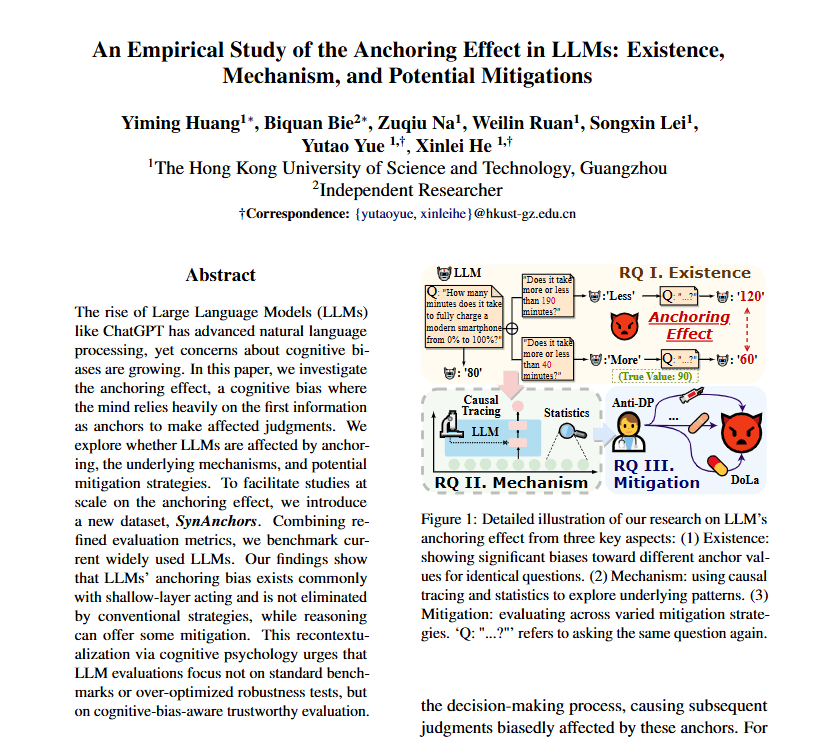
This study found that several LLMs are fairly easily influenced by anchoring effects, consistent with human anchoring bias. Extracts: · “Although LLMs surpass humans in standard benchmarks, their psychological traits remain understudied despite their growing importance” · “The anchoring effect is a ubiquitous cognitive bias (Furnham and Boo, 2011) and influences decisions in many fields” · “Under uncertainty,… Continue reading An Empirical Study of the Anchoring Effect in LLMs: Existence, Mechanism, and Potential Mitigations
Tag: technology
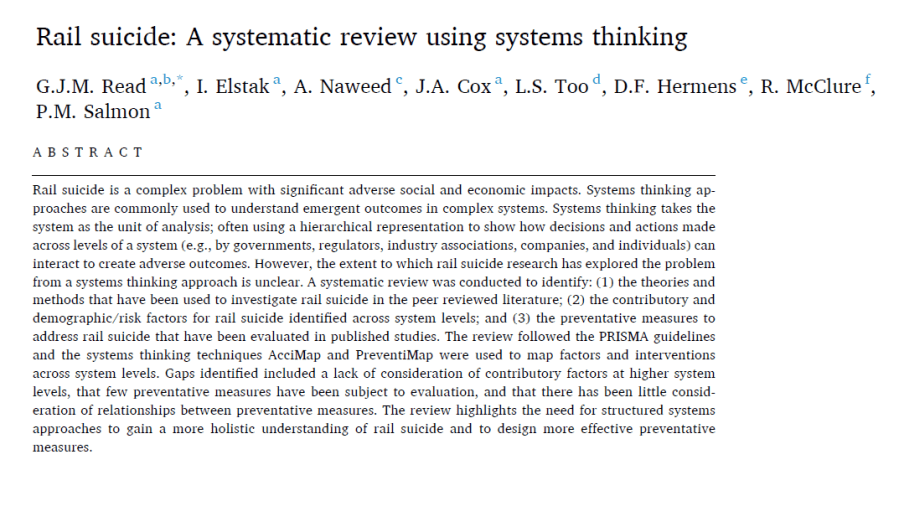
Rail suicide: A systematic review using systems thinking
This systematic review evaluated rail suicide research against the systems thinking techniques AcciMap & PreventiMap. Some extracts: · “In Australia, 67 suicides by train occurred across 2019–20, representing 80 % of all fatalities occurring on the railways” · “Rail suicide is distinct in that in addition to the person who dies by suicide [and the familiy/friends affected],… Continue reading Rail suicide: A systematic review using systems thinking

LLMs Are Not Reliable Human Proxies to Study Affordances in Data Visualizations
This was pretty interesting – it compared GPT-4o to people in extracting takeaways from visualised data. They were also interested in how well the LLM could simulate human respondents/responses. Note that the researchers are primarily interested in whether the GPT-4o model acts as a suitable proxy for human responses – they recognise there are other… Continue reading LLMs Are Not Reliable Human Proxies to Study Affordances in Data Visualizations

Systems thinking, culture of reliability and safety
Fantastic read from Nick Pidgeon on how systems approaches, Turner’s MMD, sensemaking, failure and learning intersect to create or mask ‘safety’. Can’t do it justice, so just a few extracts: · “By 1990, it was clear that the .. intellectual focus was less on analysing how past accidents had occurred .. and more towards .. how… Continue reading Systems thinking, culture of reliability and safety

Building Resilience into Safety Management Systems: Precursors and Controls to Reduce Serious Injuries and Fatalities (SIFs)
Another on SIF prevention. This (interim) report (another from the recent compendium – see comments for link) covers the findings from a few activities, including two SIF workshops about ID, implementing and monitoring critical controls for SIF hazards, and the role of human and org factors. Too much to cover, so a few extracts: · “the… Continue reading Building Resilience into Safety Management Systems: Precursors and Controls to Reduce Serious Injuries and Fatalities (SIFs)
Leverage points to intervene in a system – Donella Meadows
In the lead up to next week’s compendium on systems thinking, here’s a banger from Donella Meadows. She explores system leverage points. Not a summary, but some extracts: · Leverage points are “places within a complex system .. where a small shift in one thing can produce big changes in everything” · The “state of the system”… Continue reading Leverage points to intervene in a system – Donella Meadows

Avoiding ‘second victims’ in healthcare: what support do staff want for coping with patient safety incidents, what do they get and is it effective? A systematic review
This systematic review evaluated evidence for what support staff want vs what they receive, and whether the support is effective. 99 studies were included. Some extracts: · PSI (patient safety incident) lead to emotional shame, guilt, anger, shock, depression, fear, flashbacks, helplessness, fatigue, withdrawal and more · The three most desired support types staff want before and… Continue reading Avoiding ‘second victims’ in healthcare: what support do staff want for coping with patient safety incidents, what do they get and is it effective? A systematic review
Resilience terminology and a visualisation of resilience/robustness in practice
This may interest people. It covers concepts of resilient performance within seaports. It’s a bit random (seaports), but otherwise gives a handy overview of resilience terms and applications. The first two images are just basic definitions. Extracts: · Image 3 represents resilience elements during disruptions – from pre-disruption, to the disruption, then post-disruption. · During pre-disruption, the… Continue reading Resilience terminology and a visualisation of resilience/robustness in practice
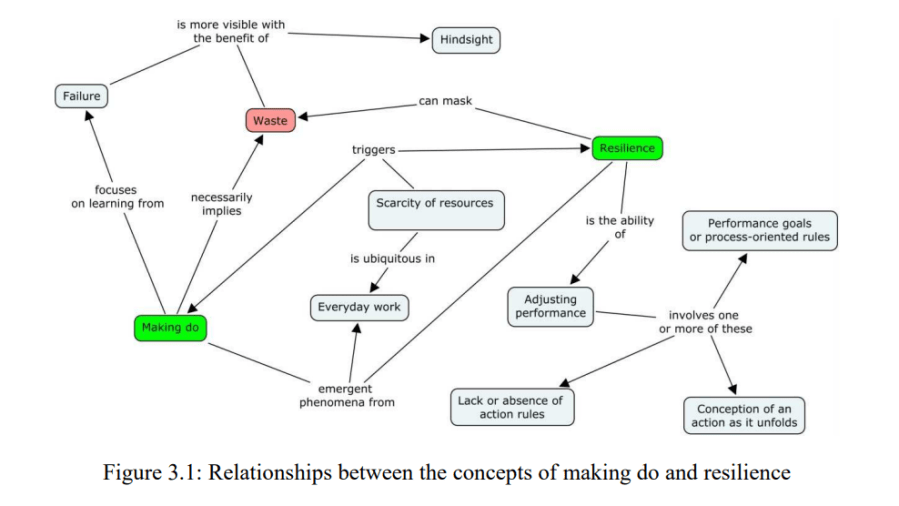
The difference between ‘making do’ and resilience in complex systems
This paper explores the difference between ‘making do’ and resilience. Not a summary, but a few extracts: · Making do has been defined, from a waste perspective as “a situation where a task is started without all its standard inputs, or the execution of a task is continued although the availability of at least one standard… Continue reading The difference between ‘making do’ and resilience in complex systems
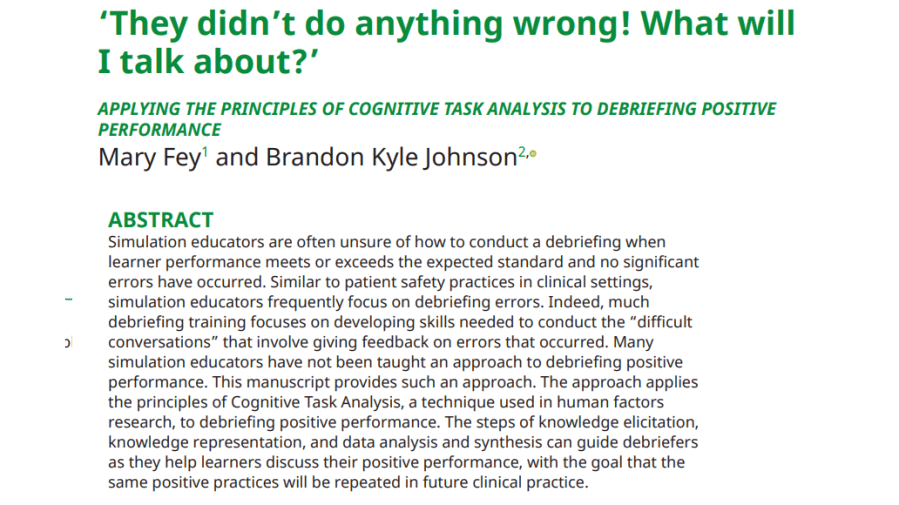
‘They didn’t do anything wrong! What will I talk about?’ Applying the principles of cognitive task analysis to debriefing positive performance
An interesting paper exploring the use of Safety-II inspired debriefs, learning from successful performance. They used cognitive task analysis techniques. Not a summary, but it’s open access and really brief – so check it out 👍 Extracts: · “simulation cases are often deliberately designed to push learners to their zone of proximal development .. where perfect… Continue reading ‘They didn’t do anything wrong! What will I talk about?’ Applying the principles of cognitive task analysis to debriefing positive performance
 SafetyInsights.org