Does adding more checks and more people make work ‘safer’? I think it’s an easy assumption to make, but in Part 2 of my Critical Control / Barrier / Safeguard series, we explore why this may not be an ideal assumption. Two related ideas are: 1. The fallacy of independence: Several controls can share the… Continue reading Does adding more checks make work ‘safer’? Critical Controls part 2
Author: Ben Hutchinson
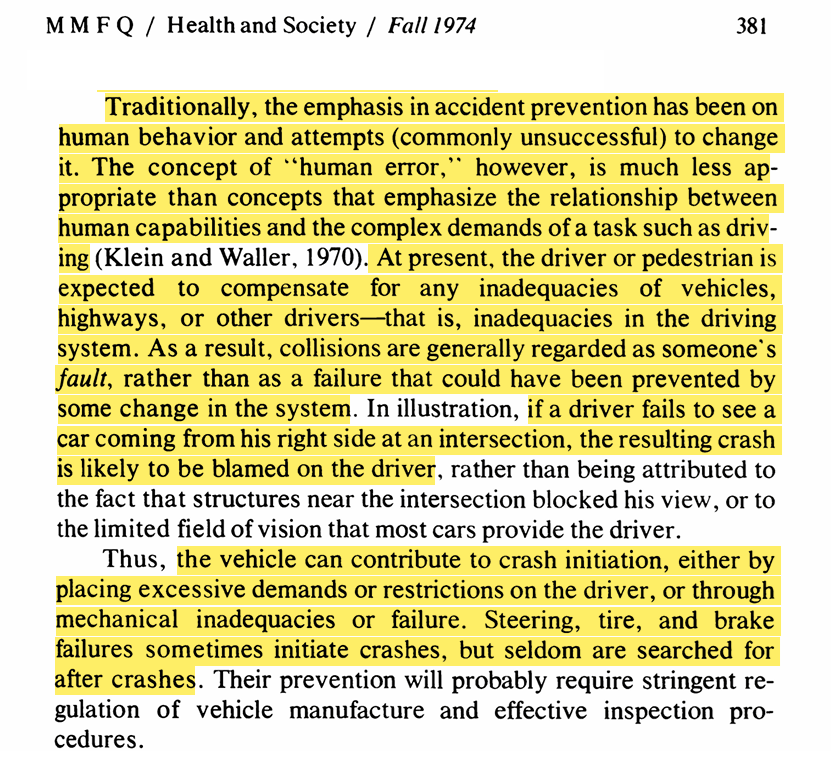
Haddon 1974: Why do we blame people instead of fixing a poorly designed system?
Why do we blame people for failing to compensate for a poorly designed system? A cool extract from Baker & Haddon’s 1974 article about people and poor design (in my view, Haddon is among the GOATs). They argue that ‘traditionally’ (lolz those silly dark age people of yesteryear, not like us modern elites who stopped… Continue reading Haddon 1974: Why do we blame people instead of fixing a poorly designed system?
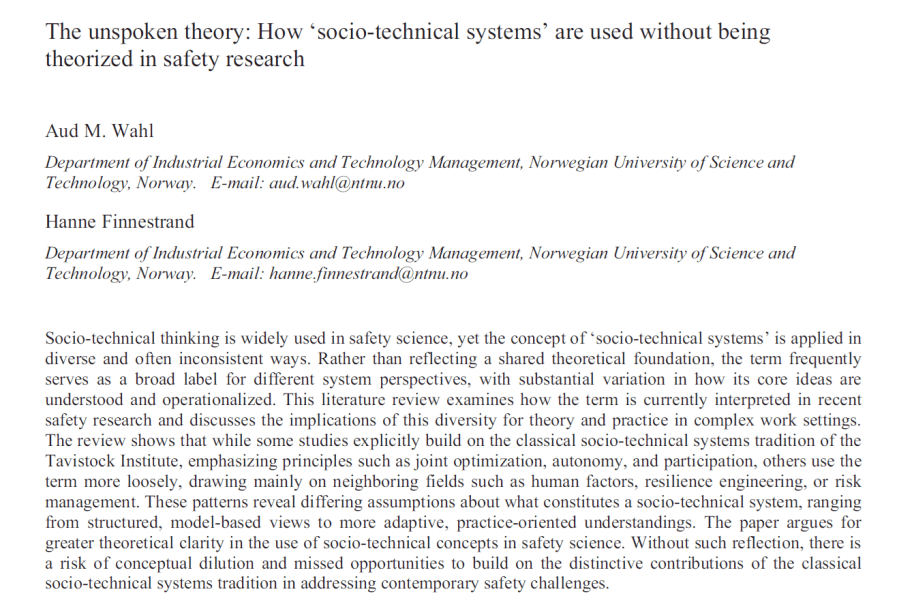
The unspoken theory: How ‘socio-technical systems’ are used without being theorized in safety research
What do you mean by a sociotechnical system? This article explores how sociotechnical system (STS) thinking is interpreted in safety research. PS. Check out my YouTube and recent Critical Control / barrier vid: https://youtube.com/@safe_as_pod?si=iUaDPJynPemQRZhY Shout a coffee: https://buymeacoffee.com/benhutchinson Extracts: · Safety is “not the outcome of isolated human or technical failures, but an emergent property of… Continue reading The unspoken theory: How ‘socio-technical systems’ are used without being theorized in safety research
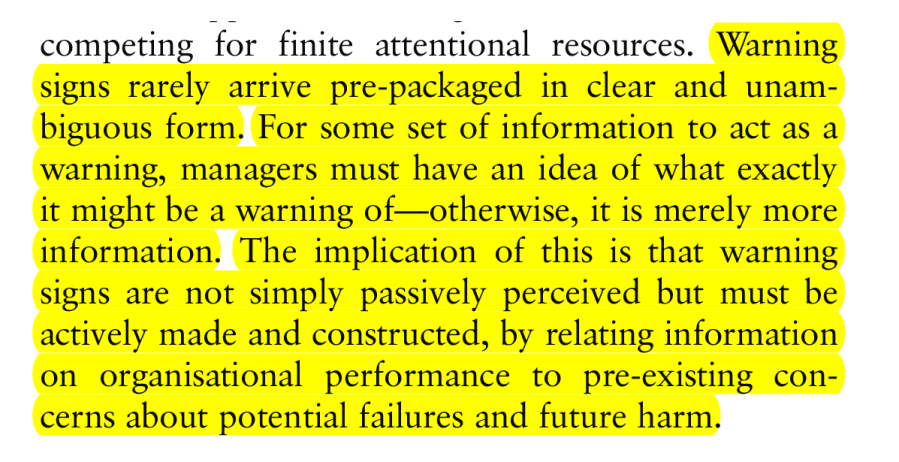
“Warning signs rarely arrive pre-packaged” – to be warnings “managers must have an idea of what exactly it might be a warning of—otherwise, it is merely more information”
When are warning signs seen as signs, or just noise? I love this quote (and article) from Carl Macrae discussing how warning signs are so readily constructed in hindsight, but difficult for organisations to construct at the time. I’ve referenced it a few times. PS. Check out my YouTube and recent Critical Control / barrier… Continue reading “Warning signs rarely arrive pre-packaged” – to be warnings “managers must have an idea of what exactly it might be a warning of—otherwise, it is merely more information”
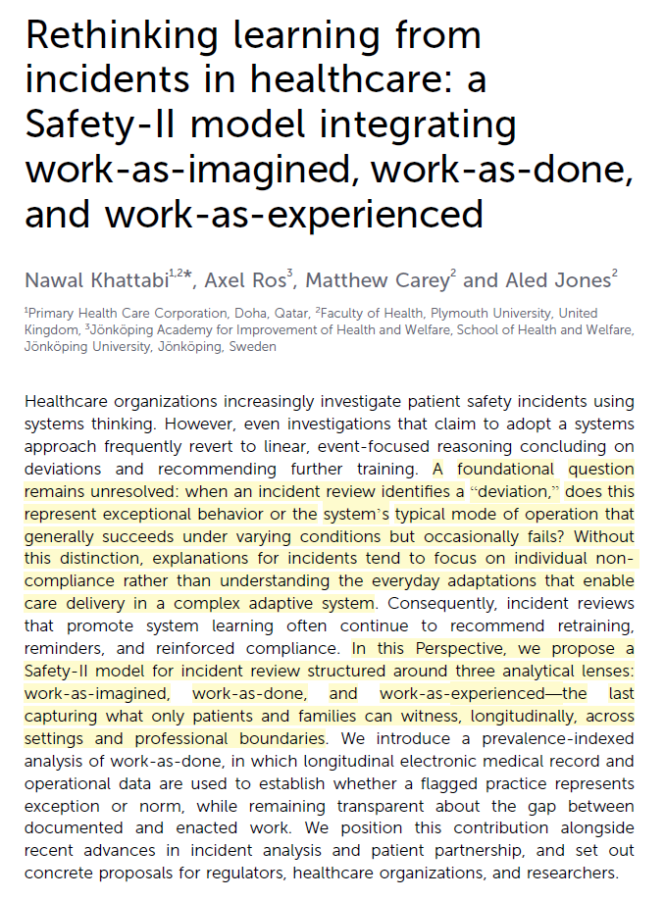
Rethinking learning from incidents in healthcare: a Safety-II model integrating work-as-imagined, work-as-done, and work-as-experienced
Can Safety-II principles expand learning within investigations? This article proposes a Safety-II framed incident review model for healthcare capturing WAI (work-as-imagined), WAD (work-as-done) and WAE (work-as-experienced). Shared under an open access licence. PS. Check out my YouTube and recent Critical Control / barrier vid: https://youtube.com/@safe_as_pod?si=iUaDPJynPemQRZhY Shout a coffee: https://buymeacoffee.com/benhutchinson Extracts: · “A foundational question remains unresolved:… Continue reading Rethinking learning from incidents in healthcare: a Safety-II model integrating work-as-imagined, work-as-done, and work-as-experienced
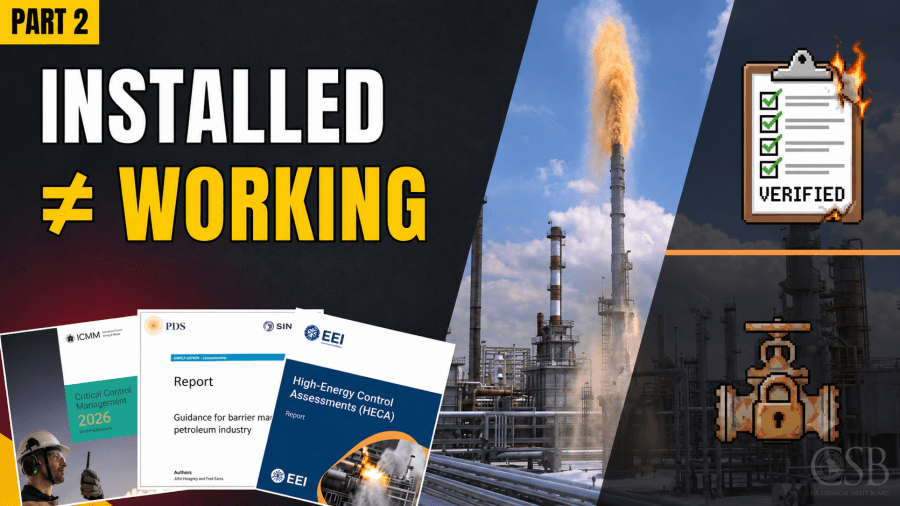
Critical Controls & Barriers Part 2: Is close enough good enough?
Is a control that’s present ‘close enough’ to a control that works? I’d expect most would say ‘prob not’. This is a gap explored in Part 2 of my series on Critical Controls / Barrier frameworks. Hopes and dreams and gumdrop smiles about a control in a plan or JSA is one thing, but that… Continue reading Critical Controls & Barriers Part 2: Is close enough good enough?
“There is no such thing as risk in reality” – it’s constructed by humans, but it shapes & constricts social life
Is risk discovered or simply constructed, visualised and governed? A cool read from Cavallo’s ‘Aesthetics of Risk’, which asks us to look beyond hazards towards the future and production of risk. Extracts from just a couple of chapters. Can post more if people are interested. PS. Check out my YouTube and recent Critical Control /… Continue reading “There is no such thing as risk in reality” – it’s constructed by humans, but it shapes & constricts social life
Critical Controls, Barriers, Safeguards: YT Part 2
How do we translate a paper barrier system into one that’s functional and verified as effective? Whereas part 1 looked at key definitions of control, barrier, safeguard, support, and verification activity – this episode dives deeper into the use of such frameworks. In particular, we unpack escalation / degradation / erosion factors, and the necessary… Continue reading Critical Controls, Barriers, Safeguards: YT Part 2
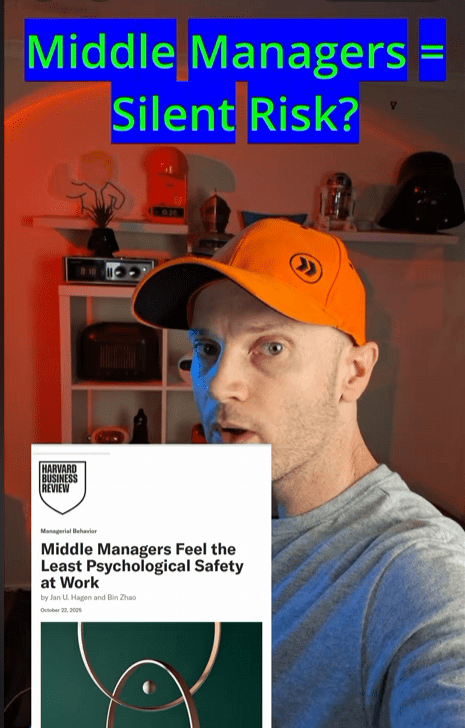
YT vid: Why Psychological Safety Fails Middle Managers
What if the people in the middle of an organisation are the least safe to speak honestly or take necessary interpersonal risks? Research has suggested that in an ongoing study of over 1000 managers, middle managers felt the least safe psychologically safe compared with c-suite executives and their direct reports. (** Though, as some have… Continue reading YT vid: Why Psychological Safety Fails Middle Managers
What is a ‘system’? Part 1 of 3 extracts from Leveson’s book on systems engineering
What is a system? Post 1 of 3 extracts from Nancy Leveson’s book ‘An introduction to Systems Engineering’. Not reproducing everything from the images – just a few points. This is from a systems engineering perspective. For Leveson, systems engineering considers a system more by its goal or objective, rather than the connected sum of… Continue reading What is a ‘system’? Part 1 of 3 extracts from Leveson’s book on systems engineering
 SafetyInsights.org