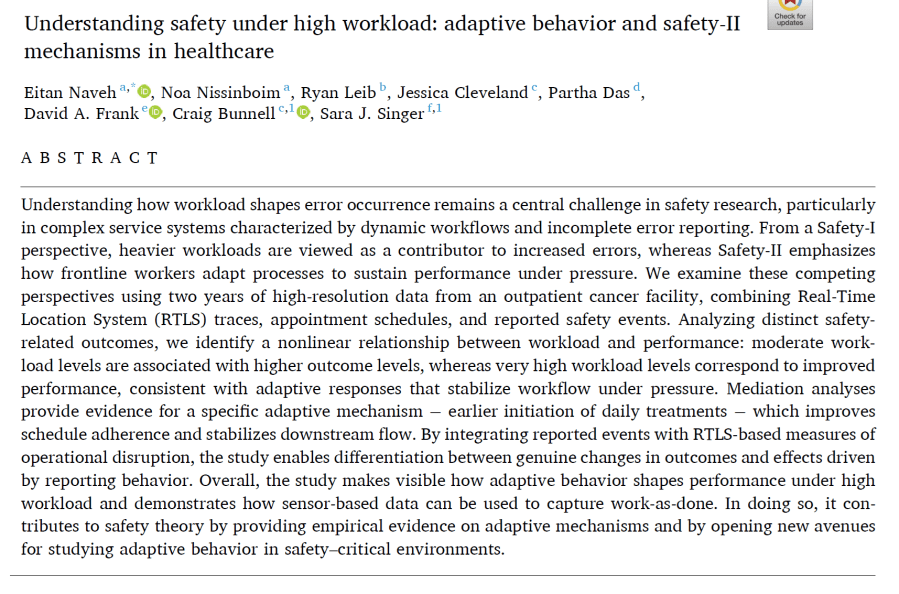
What does Safety-II tell us about workload, adaptations, and error? This study analysed the effects of workload on error and adaptations across >580 days in 6 hospital departments and 924 reported safety events. PS. Check out my YouTube and recent Critical Control / barrier vid: https://youtube.com/@safe_as_pod?si=iUaDPJynPemQRZhY Shout a coffee: https://buymeacoffee.com/benhutchinson Extracts: · “From a Safety-I perspective,… Continue reading Understanding safety under high workload: adaptive behavior and safety-II mechanisms in healthcare
Author: Ben Hutchinson
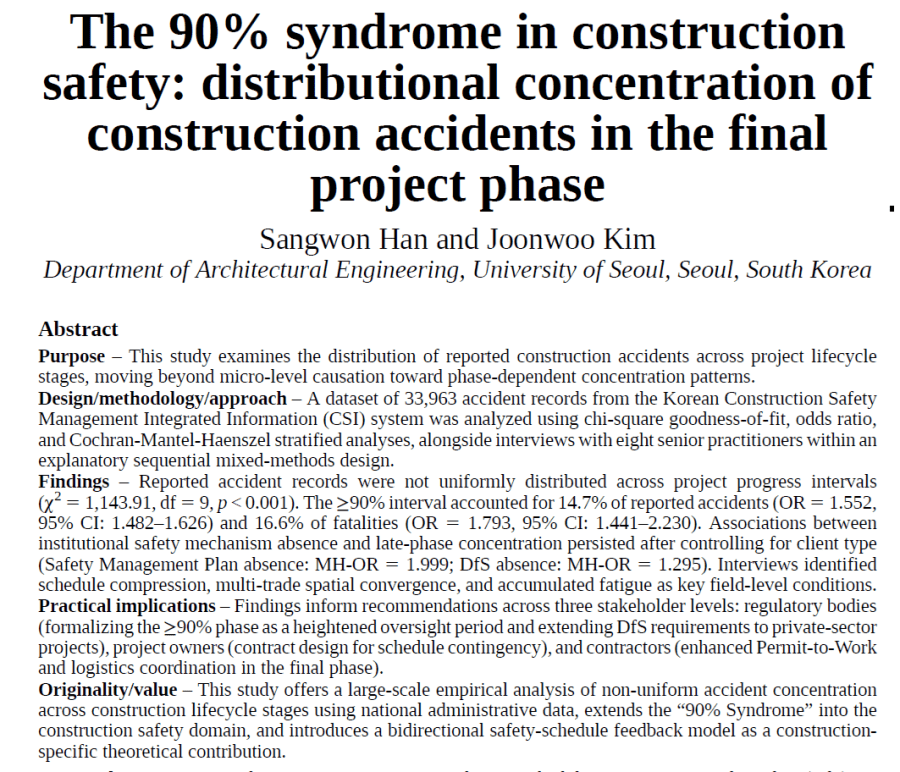
The 90% syndrome in construction safety: distributional concentration of construction accidents in the final project phase
Do construction accidents peak near the end of the project? This analysis of >33k Korean construction accidents examined when accidents occurred during the project phases. They describe the ‘90% Syndrome’, borrowing from the 90-90 rule in software engineering: the first 90% of code accounts for the first 90% of development time, while the remaining 10%… Continue reading The 90% syndrome in construction safety: distributional concentration of construction accidents in the final project phase
Part 2 interview Dr Guido Carim Jr on Safety-II, adaptive capacities, procedures & more
Part 2 interview with Dr. Guido Carim Junior, PhD, Associate Professor of Aviation, pilot, researcher, and safety scientist. PS. Check out my YouTube and recent Critical Control / barrier vid: https://youtube.com/@safe_as_pod?si=iUaDPJynPemQRZhY Shout a coffee: https://buymeacoffee.com/benhutchinson We continue our convo about digital checklists, unpacking the potential role of AI and how so-called ‘smart’ features risk narrowing… Continue reading Part 2 interview Dr Guido Carim Jr on Safety-II, adaptive capacities, procedures & more
Have we engineered systems that exceed our capacity to intellectually manage them? Extracts from Nancy Leveson
Have we engineered systems that exceed our capacity to intellectually manage them? Some extracts from Leveson’s book ‘An Introduction to System Safety Engineering’. PS. Check out my YouTube and recent Critical Control / barrier vid: https://youtube.com/@safe_as_pod?si=iUaDPJynPemQRZhY Shout a coffee: https://buymeacoffee.com/benhutchinson First she quotes Trevor Kletz where we’re seemingly ‘willing to spend money on complexity but… Continue reading Have we engineered systems that exceed our capacity to intellectually manage them? Extracts from Nancy Leveson

Hey nature boy! Greenery and plants are good for yer (#youtube shorts)
Is the amount of greenery and nature around your home or in urban settings linked to depression and other health factors? Based on a number of (mostly observational) studies, cautious links have been established between higher levels of greenness and better sleep, higher physical activity, and lower cardiovascular disease. There are likely lots of explanatory… Continue reading Hey nature boy! Greenery and plants are good for yer (#youtube shorts)
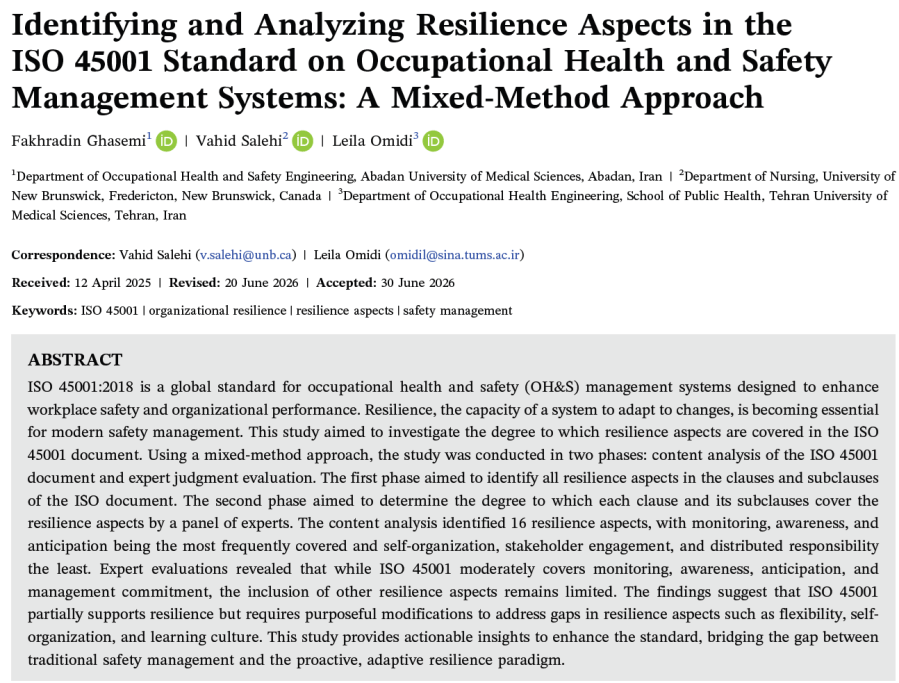
Identifying and Analyzing Resilience Aspects in the ISO 45001 Standard on Occupational Health and Safety Management Systems
How does ISO 45001 contribute to resilient capacities? This interesting study used content analysis and expert judgement evaluation to determine whether the 45001 clauses contribute to resilient capacities. PS. Check out my YouTube and recent Critical Control / barrier vid: https://youtube.com/@safe_as_pod?si=iUaDPJynPemQRZhY Shout a coffee: https://buymeacoffee.com/benhutchinson Extracts: · “Rather than focusing solely on preventing failures, resilience engineering… Continue reading Identifying and Analyzing Resilience Aspects in the ISO 45001 Standard on Occupational Health and Safety Management Systems
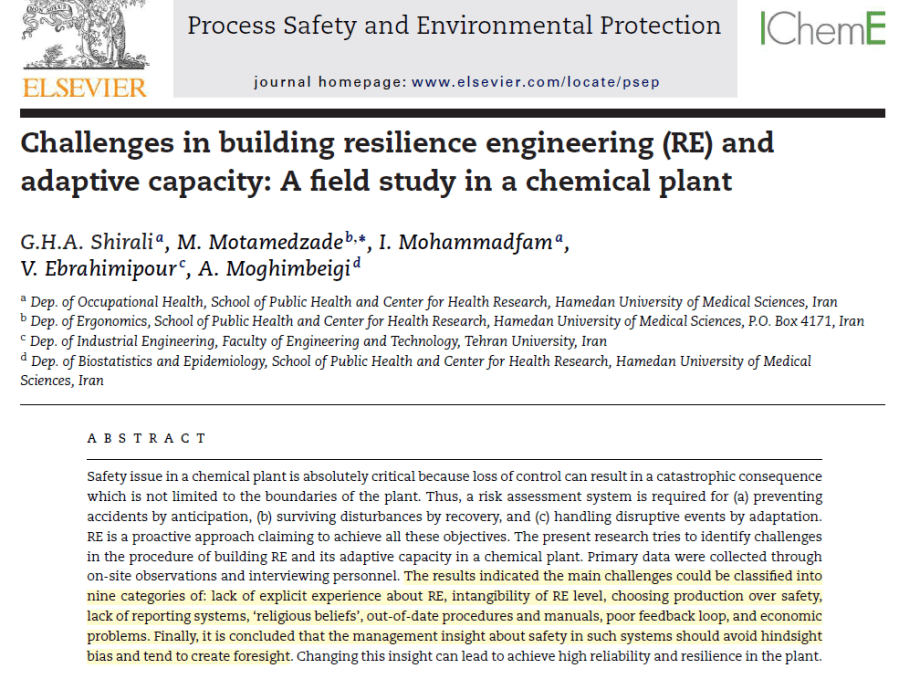
Challenges in building resilience engineering (RE) and adaptive capacity: A field study in a chemical plant
Can a complex system effectively navigate risk if it only understands failure in hindsight? This study explores the challenges of building adaptive capacity from a resilience engineering perspective in a chemical plant. On-site observations & interviews were used. PS. Check out my YouTube and recent Critical Control / barrier vid: https://youtube.com/@safe_as_pod?si=iUaDPJynPemQRZhY Shout a coffee: https://buymeacoffee.com/benhutchinson… Continue reading Challenges in building resilience engineering (RE) and adaptive capacity: A field study in a chemical plant
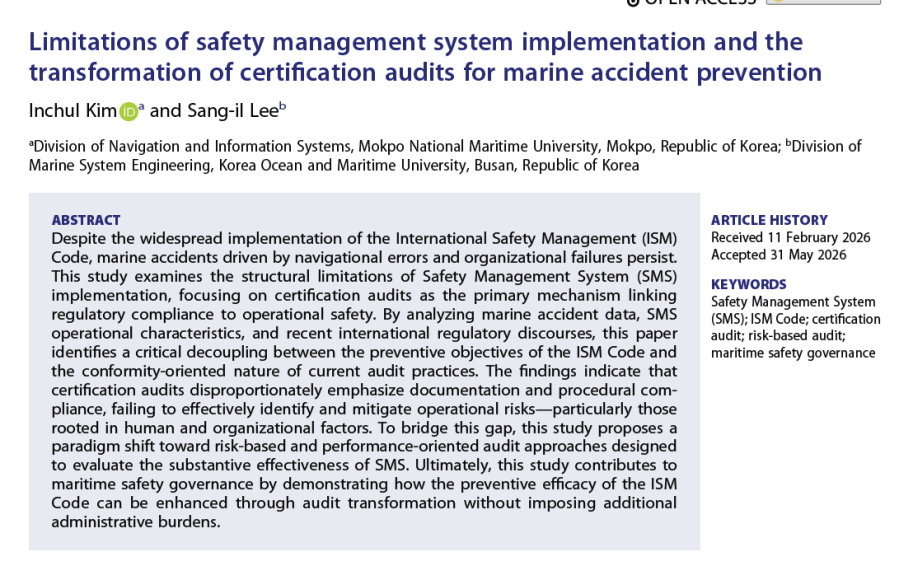
Limitations of safety management system implementation and the transformation of certification audits for marine accident prevention
Are safety audits paperwork rituals disconnected from operational risks? This article reviewed research, exploring the risk coupling of conformity-oriented maritime audits. Shared under an open access licence. PS. Check out my YouTube and recent Critical Control / barrier vid: https://youtube.com/@safe_as_pod?si=iUaDPJynPemQRZhY Shout a coffee: https://buymeacoffee.com/benhutchinson Extracts: · “accidents tend to concentrate in areas that should be directly… Continue reading Limitations of safety management system implementation and the transformation of certification audits for marine accident prevention
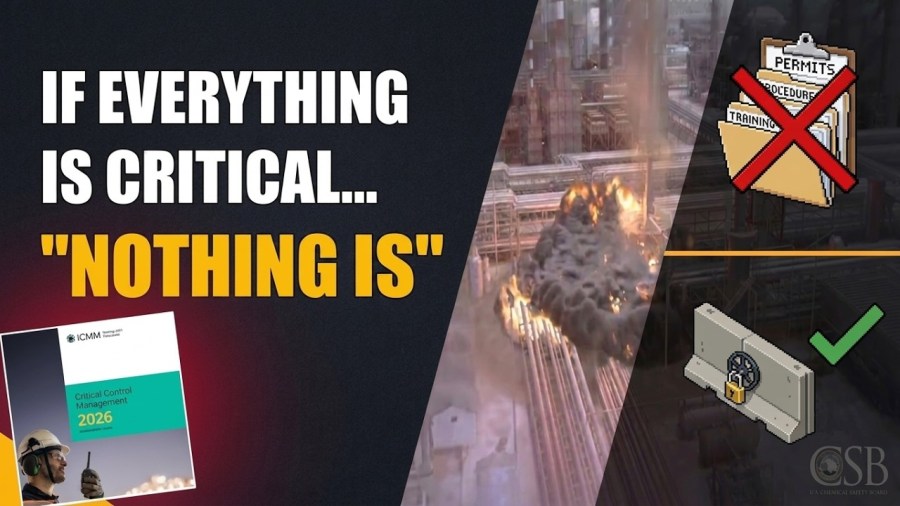
Critical Controls, Barriers, Safeguards: YT Part 1 of 4-part series
What actually counts as a control? A physical barrier? An administrative safeguard? A verification activity? A procedure? A checklist? And does it directly address the hazardous energy that could cause serious harm, or has it been given a critical label simply because it’s ‘all we have’ ? As control programs have spread and matured, the… Continue reading Critical Controls, Barriers, Safeguards: YT Part 1 of 4-part series

The Surprising Science of Self-Talk
Do self affirmations, as in positive statements about yourself to overcome negative thoughts and emotions, actually work? Or is this mostly woo-woo non-sense to sell motivational books and energy crystal retreats? Curiously, the evidence seems to suggest that…they can have lasting benefits. I was a bit surprised at this one – check it out and… Continue reading The Surprising Science of Self-Talk
 SafetyInsights.org