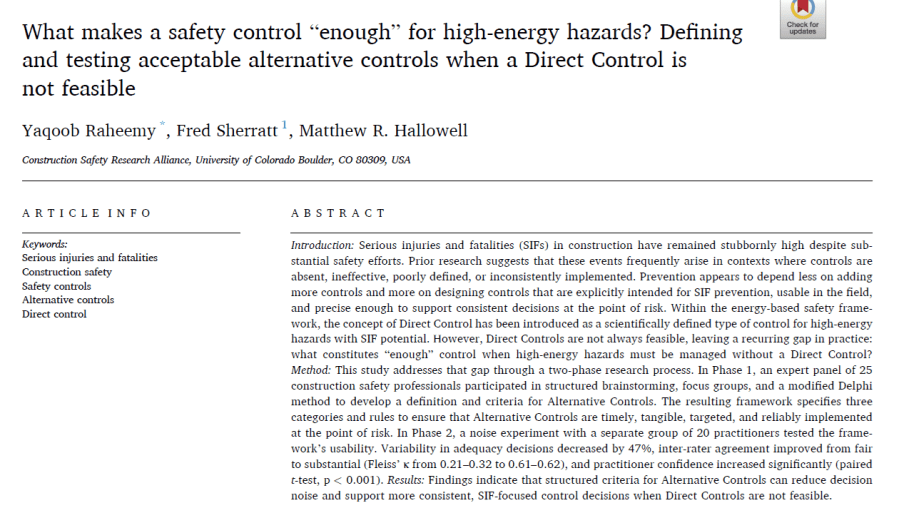
When no Direct Control (DC) is appropriate, how do we decide when alternative measures are sufficient? This study developed decision aids for answering that question and tested whether the rules helped practitioners make more consistent decisions when judging Alternative Controls (AC). Shared under an open access licence. PS. Check out my YouTube and recent Critical… Continue reading What makes a safety control “enough” for high-energy hazards? Defining and testing acceptable alternative controls when a Direct Control is not feasible
Author: Ben Hutchinson
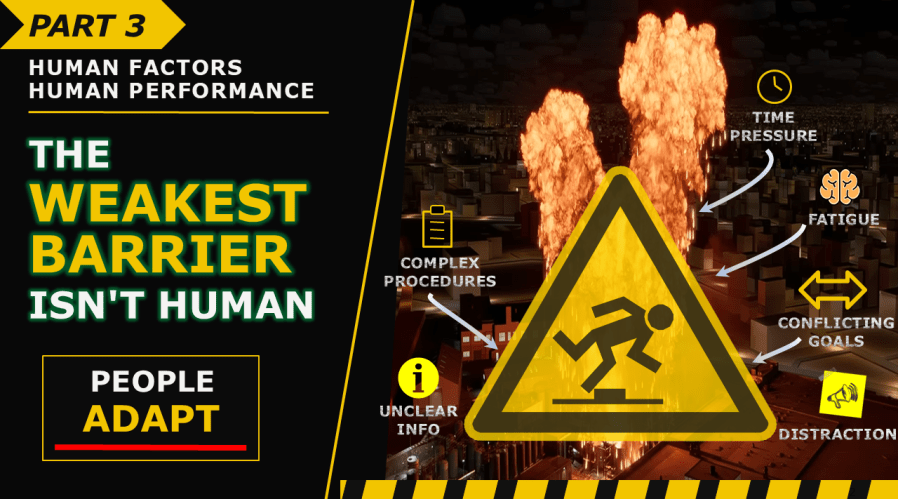
Part 3 – Critical Control / Barriers: Human Factors & realistic human performance expectations
Ogres have layers, and so do barriers. Human performance isn’t separate from the barrier system, rather in socio-technical environments, human action is often a key mechanism through which a barrier functions. In part 3 of the Critical Control / Barrier series, we unpack how to properly specify human performance as a credible control without straying… Continue reading Part 3 – Critical Control / Barriers: Human Factors & realistic human performance expectations
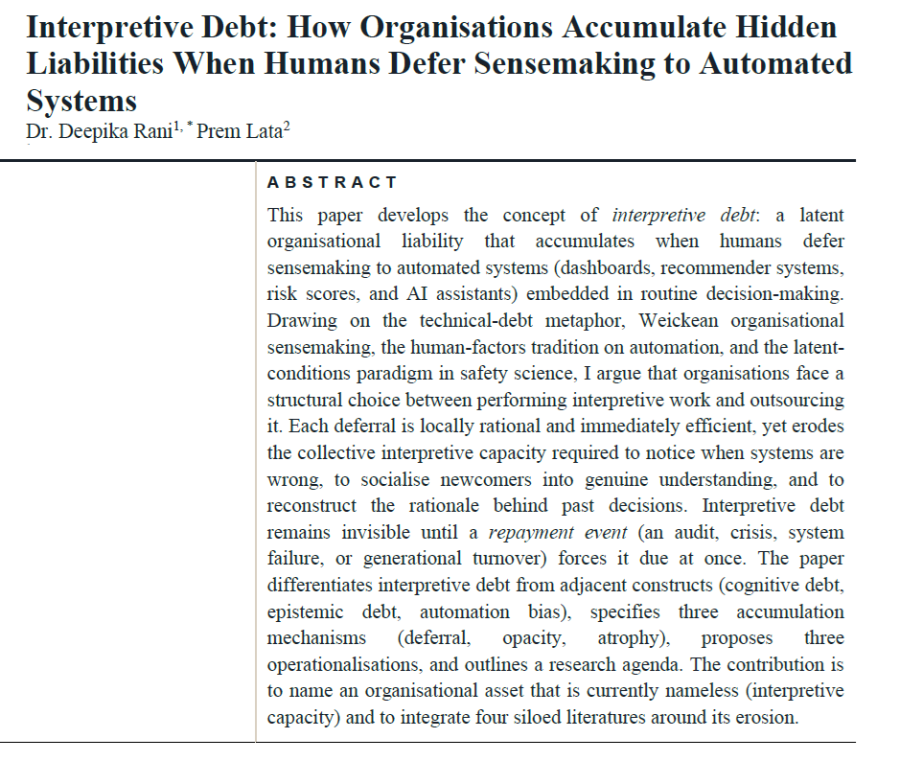
Interpretive Debt: How Organisations Accumulate Hidden Liabilities When Humans Defer Sensemaking to Automated Systems
Does deferring decision-making to automated systems degrade our ability to understand our own organisations? This Weickian sensemaking theory article argues ‘Perhaps’ – what they call interpretive debt. E.g. a loan officer dets a ‘decline’ flag from an AI tool but accepts the recommendation without reviewing the applicant’s bank statements, or a manager relies on a… Continue reading Interpretive Debt: How Organisations Accumulate Hidden Liabilities When Humans Defer Sensemaking to Automated Systems
Does it matter who manages daily ‘safety’ in a business? YT Shorts
Does it matter who manages daily ‘safety’ in a business? According to a ~32-country study, maybe. When business owners take direct control of day-to-day safety decisions and responsibilities, workplace accident rates worsened. So who delivered better results: safety officers or employee reps? Check the video to find out. PS. I expect some will challenge the… Continue reading Does it matter who manages daily ‘safety’ in a business? YT Shorts

Does the absence of incidents tell you how well risks are managed?
Does the absence of incidents tell you how well risks are managed? In part 1 of our chat, Marcin Nazaruk explores why traditional ‘safety approaches’ can miss things like: 1. The normal variability in how work is performed every day 2. Constraints that limit or shape workers’ available choices 3. And error traps that make… Continue reading Does the absence of incidents tell you how well risks are managed?
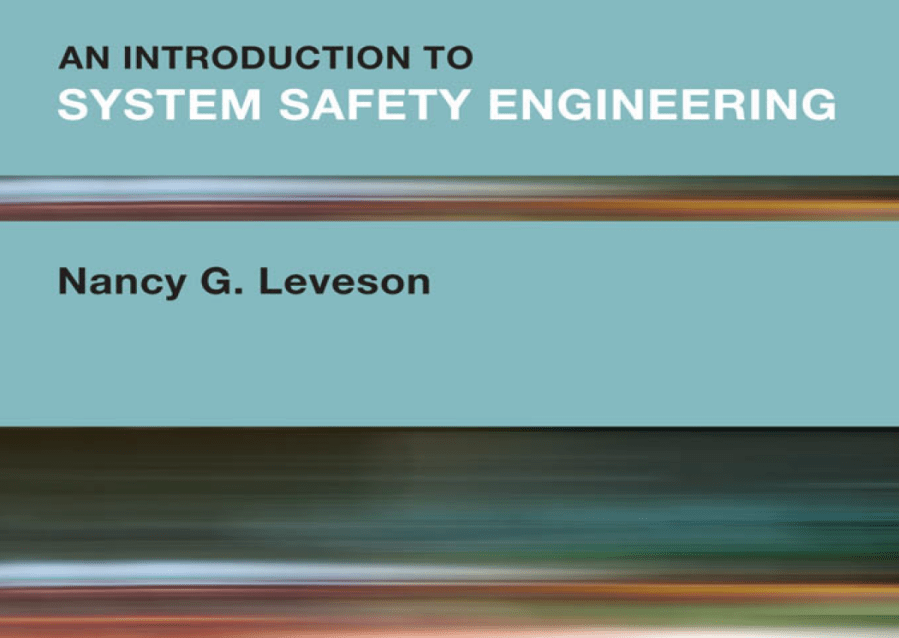
‘All useful systems are sociotechnical’ – Part 2 extracts from Leveson’s book
‘All useful systems are sociotechnical’ Part 2 extracts from Leveson’s ‘An introduction to Systems Engineering’. This is from a systems engineering & cybernetics perspective. PS. Check out my YouTube and recent Critical Control / barrier vid: https://youtube.com/@safe_as_pod?si=iUaDPJynPemQRZhY Shout a coffee: https://buymeacoffee.com/benhutchinson · Leveson argues that “All useful systems are sociotechnical”, and per the Ralph Miles Jr… Continue reading ‘All useful systems are sociotechnical’ – Part 2 extracts from Leveson’s book
What happens when operators misunderstand the design and designers misunderstand the operators?
What happens when operators misunderstand the design and designers misunderstand the operators? Couple of partial extracts from Busby & Hibberd’s 2002 article which explored accident report sources to construct mismatches between operator and designer assumptions. PS. Check out my YouTube and recent Critical Control / barrier vid: https://youtube.com/@safe_as_pod?si=iUaDPJynPemQRZhY Shout a coffee: https://buymeacoffee.com/benhutchinson Extracts: · Designers may… Continue reading What happens when operators misunderstand the design and designers misunderstand the operators?
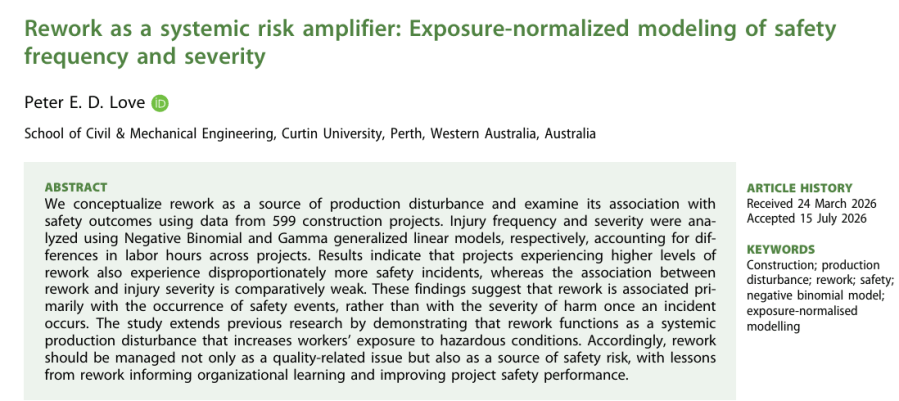
Rework as a systemic risk amplifier: Exposure-normalized modeling of safety frequency and severity
Does construction rework act as a safety risk amplifier? This study from Peter E.D Love analysed data from 599 projects. PS. Check out my YouTube and recent Critical Control / barrier vid: https://youtube.com/@safe_as_pod?si=iUaDPJynPemQRZhY Shout a coffee: https://buymeacoffee.com/benhutchinson Extracts:· “Rework is not only a response to quality deviations but also an activity that alters task organisation and… Continue reading Rework as a systemic risk amplifier: Exposure-normalized modeling of safety frequency and severity
Dr Marcin Nazaruk Part 1: HOP, New View, Learning from Daily Work
Today I chat with Dr Marcin Nazaruk, who shares his practical experience and research on learning from daily work and application on Safety-II and HOP principles to improve learning and risk management. The discussion also explores themes around risk controls, work constraints, risk assessments, and error traps. Check out Part 1 and please help like… Continue reading Dr Marcin Nazaruk Part 1: HOP, New View, Learning from Daily Work

Blame has more layers, like Ogres, compared to praise: ‘asymmetric morality’
Ogres have layers. And apparently so too blame more than praise! This explored whether we judge negative behaviour differently from positive behaviour via blame & praise. PS. Check out my YouTube and recent Critical Control / barrier vid: https://youtube.com/@safe_as_pod?si=iUaDPJynPemQRZhY Shout a coffee: https://buymeacoffee.com/benhutchinson Tl;dr: blame and praise aren’t opposite versions of the same moral judgement.… Continue reading Blame has more layers, like Ogres, compared to praise: ‘asymmetric morality’
 SafetyInsights.org